I was scrolling when the alert landed: Jensen Huang had resigned. You could feel the industry inhale and then scramble. Within minutes, Donald Trump had posted his candidate for the vacancy — in full caps: “A Legend replaces a Legend!”
I want you to see how fast a single post can reframe a corporate crisis. I’ve covered boardroom shuffles and political theater; this one mixes both. The resignation follows messy allegations involving two women — one described in press reports as a suspected Chinese spy and another a company employee — and now the question is political as much as corporate.
Markets paused when the news hit: Who’s actually available to run Nvidia?
The immediate scene was predictable: analysts posting hot takes, execs quietly calling old contacts, and headlines naming a lineup of plausible successors. You’ll recognize the usual suspects — Vice President Ian Buck, OpenAI board chair Bret Taylor, Arm Holdings CEO Rene Haas, AMD’s Lisa Su, Apple’s Johny Srouji, and former Google CEO Eric Schmidt — all floated in outlets like Bloomberg and TechCrunch.
None of those names is a straight swap. Huang built Nvidia into a geopolitical asset as much as a corporate champion. Replacing him means balancing product vision, global supply chains, and delicate ties to Washington and Beijing. That balance is exactly what makes the speculation so combustible.
Who could replace Jensen Huang at Nvidia?
Short answer: a handful of people could run the company, far fewer could keep its political strings untangled. Industry figures like Lisa Su and Ian Buck check technical and operational boxes. Board-minded candidates such as Bret Taylor or Eric Schmidt bring policy fluency and established access to capitals of power. But the job now reads less like pure engineering leadership and more like an exercise in statesmanship.
White House optics shifted in real time: Why Trump named Tim Cook on Truth Social
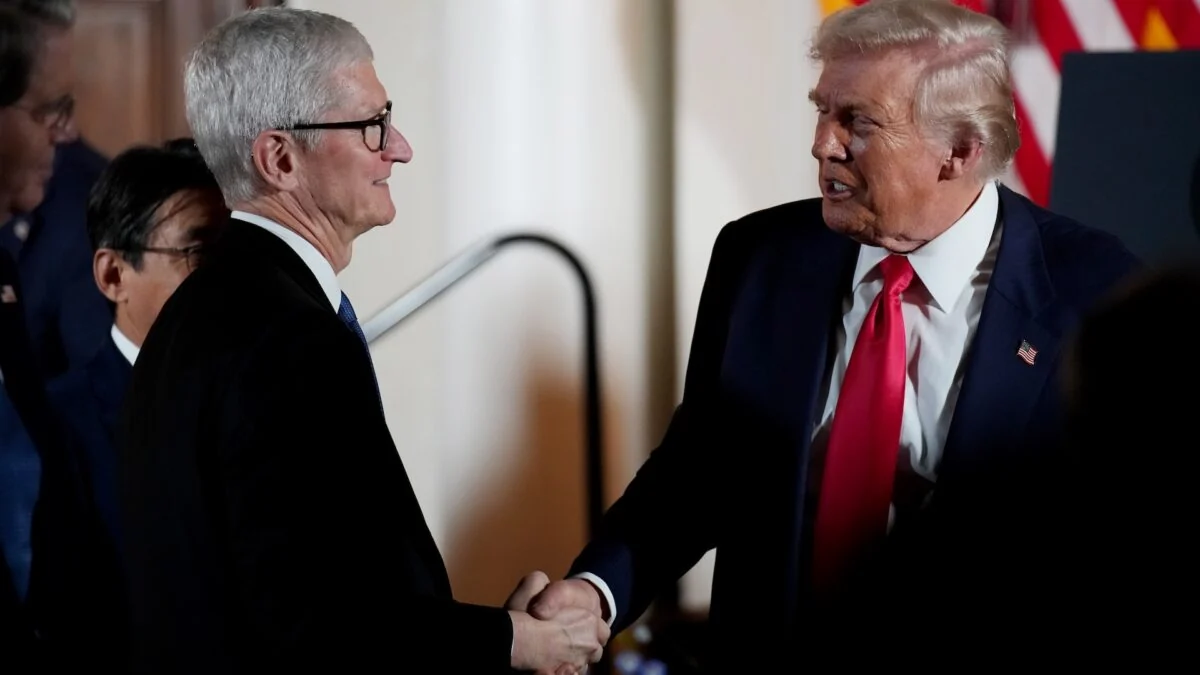
Within hours of the resignation, Trump posted on Truth Social that “NOW THAT Nvidia CEO JENSEN HUANG, who has done a fantastic job, has resigned, there is only one man to take his place – TIM COOK of Apple. A Legend replaces a Legend!” It’s unclear whether Cook was consulted.
You’ve seen this before: a former high-profile CEO becomes a political prop. Cook, who stepped down as Apple CEO in September and moved to Executive Chair, has since been described in company statements as focusing on global policy conversations — a role critics have nicknamed “Chief Oligarch.” His recent closeness to the Trump administration, including attending a private White House screening of the Amazon documentary Melania, makes him an obvious name for the president to suggest.
Would Tim Cook accept a CEO role at Nvidia?
Cook’s current role at Apple is public and powerful: he didn’t leave the company, he reshaped it. Moving to Nvidia would demand immediate immersion in data-center strategy, AI supply chains, and defense-industrial ties. You should also weigh his China relationships — a selling point for some — against the optics of swapping one high-profile tech chair for another at a moment of scandal.
Lobbying and money left fingerprints: How corporate giving plays into succession
Nvidia’s political giving has been part of the backstory. The company committed at least $26 million (€24 million) to Trump’s Washington projects — including $25 million (€23 million) toward a ballroom and $1 million (€0.9 million) to an inaugural fund — donations that drew scrutiny once reported by The Washington Post.
That stack of influence matters when presidents tweet names. CEOs who can carry both executive credibility and government relationships are suddenly more valuable. It’s not just about GPUs; it’s about access to policy levers that shape export controls, subsidies, and military procurement.
Bidders with different skills: Who can bend to politics and still run an AI powerhouse?
The list of plausible successors reads like a map of power: engineers, boardroom veterans, policy-savvy donors. Eric Schmidt would be interesting politically — a longtime Democratic donor willing to meet with Trump, and someone with deep ties to the military–technology complex. That gives him flexibility across administrations. But he also carries personal baggage that outlets like TechCrunch have flagged.
Lisa Su and Ian Buck bring operational credibility. Johny Srouji and Rene Haas would anchor hardware and ecosystem relationships. Bret Taylor brings governance chops and Cloud-native sensibilities. What none of them can do instantly is replace the combination of public stature, political interlocution, and technical leadership that Huang cultivated.
Why did Jensen Huang resign?
The public explanation centers on allegations tied to two women; media reports describe one as a suspected intelligence asset and another as a company employee. Those are explosive charges in any boardroom. You and I both know boards are allergic to the kind of reputational risk that drags regulatory scrutiny and geopolitical attention.

I’ve watched administrations and corporate boards trade favors; this moment is their intersection. Nvidia already funneled money into Washington projects and events — moves that create strings now visible in the public record.
Trump’s public pitch for Tim Cook reads like a fast-forward of influence politics: name a familiar CEO, and the narrative simplifies. But a Silicon Valley leader stepping into a company that sits at the center of AI trust, export controls, and national security is not just about handshake optics; it’s about who can steer long-term strategy while managing global risk. That’s why names like Schmidt carry more political curiosity than pure operational pedigree.
The scene is still unfolding: press reports, board updates, and every major outlet filing its own version of events. For you, the core question will be which candidate can hold the technical roadmap while keeping the foreign-policy temperature from boiling over. For me, the real question is simpler — who will the market and the state accept at the same time?
If Trump can push Tim Cook into the conversation with a single post, what does that say about the shape of corporate power in 2026?