
I was in a studio kitchen when the HR email hit — silence, then a dozen phones lighting up with the same message. People I’d shared coffee and late-night builds with suddenly became part of a statistic. That small room smelled like burnt espresso and a future I didn’t recognize.
I’ve read GDC’s State of the Game Industry: November 2026 report the way I read a patient’s chart: for patterns, warning signs, and what can still be done. You should read it too, because it names the fractures everyone in studios feels but rarely speaks aloud.
At break tables you hear resentment first — the layoff numbers that won’t let teams sleep
Layoffs aren’t an abstract headline anymore; they’re personal. GDC found 68 percent of workers laid off from AAA studios were let go in the past year. I’ve spoken to developers who’ve sent 100 or more job applications since being cut; 27 percent of those surveyed reached that number, and 54 percent remain unemployed.
That scale feels like a tide pulling talent out to sea, leaving smaller teams and skeleton crews to salvage projects. When senior leads vanish, institutional knowledge evaporates and schedules snap.
Why are there so many layoffs in the game industry?
Short answer: money, consolidation, and shifting priorities. Publishers and platform holders — from Microsoft and Sony to Steam-focused indies — are tightening budgets. Mergers, underperforming launches, and the pressure to hit quarterly targets mean studios are trimmed rather than rebuilt. You’ve likely seen hiring freezes and rescinded offers that make career planning a gamble.
In hallway conversations you hear worry about tools — generative AI is both present and feared
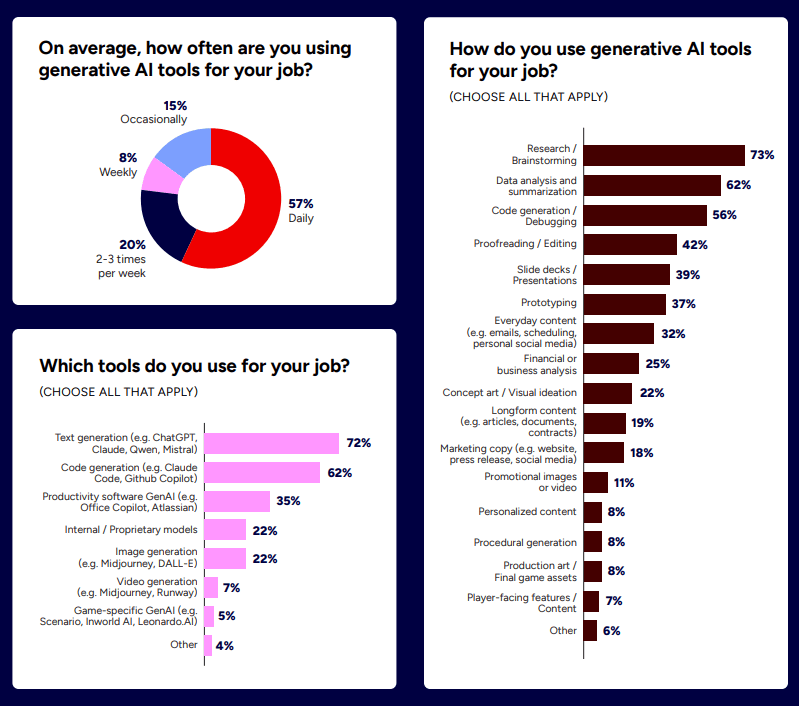
Forty percent of respondents now use generative AI at work, up from 36 percent last year, and 55 percent say it’s having a negative impact. That skepticism is strongest in QA and community support (76 percent), followed by game design, art, and audio roles.
I’ve tested models from OpenAI and watched Unity and Unreal teams run experiments; the tools are astoundingly fast for prototyping but thin on context and craft. For many, AI feels like a Trojan horse: useful for chores, risky for jobs that require taste and judgment. The industry hasn’t found a consensus beyond one point — most want AI restricted to non-creative or supportive roles.
How is generative AI affecting game development?
AI is already accelerating tasks — creating placeholder assets, generating text, and offering design suggestions — and studios use it to shave production time. But the downside is real: fear of role redundancy, blurred IP lines, and quality issues that only human iteration can fix. Companies such as Epic and Unity are racing to provide safe integrations while publishers wrestle with policy and legal exposure.
On the studio floor you sense exhaustion — overtime has become the norm
Overwork is baked into many teams. GDC reports 53 percent of respondents work over 40 hours weekly; 13 percent average 51 hours or more. That overtime shows in burn-out, missed milestones, and hiring churn.
When hours stretch and pay doesn’t keep pace, morale collapses. You face a choice: demand better work practices, which often means slower output, or accept a culture that prizes crunch as proof of commitment. Neither is sustainable.
Are game dev jobs safe from AI?
Not categorically. Roles that depend on pattern recognition, repetitive tasks, or low-context output are most exposed. Creative leads, narrative designers, and senior artists retain defensive advantages because of tacit knowledge and leadership. Still, every role should be prepared to reskill and to document craft that AI can’t replicate.
There are practical moves you can make right now: advocate for clear AI policies in your studio, insist on transparent severance and rehiring commitments, and track hours so overtime becomes negotiable rather than inevitable. Industry bodies like GDC are starting to publish guidelines, and companies such as Unity and Epic are hosting panels on AI governance — pay attention to those conversations.
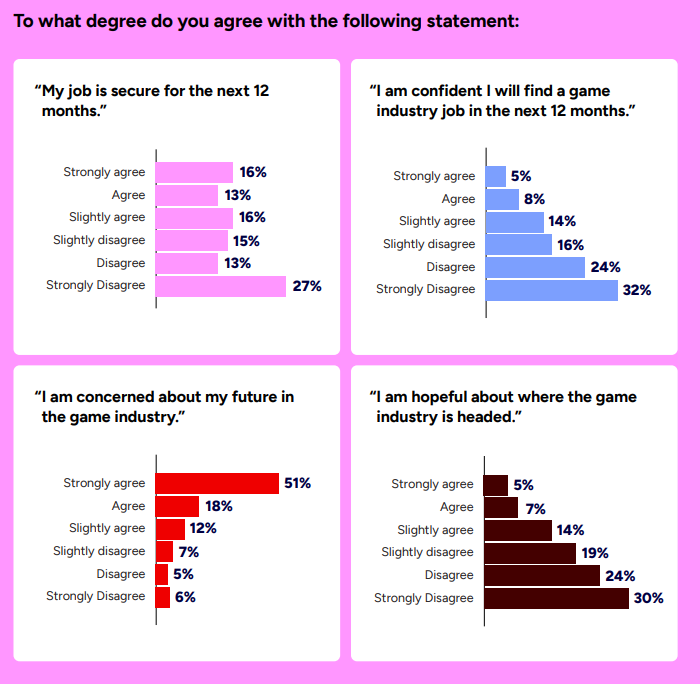
I’m not here to comfort you with platitudes. This report is a warning and a manual: it lists what’s happening and what people on the inside think about it. You can ignore it and wait for the next round of cuts, or you can use the data to press for contracts, hours, and AI rules that protect careers — which will you choose?