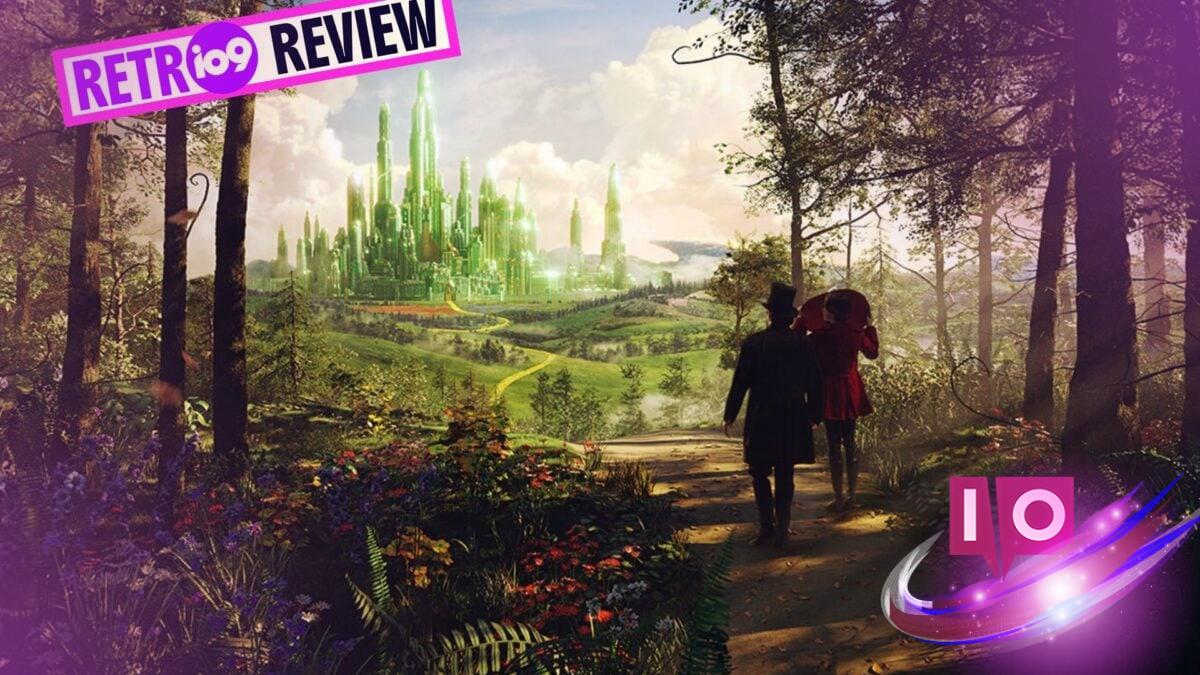
In 2013, director Sam Raimi, fresh off his horror comeback with Drag Me to Hell, took us on a magical adventure with Oz the Great and Powerful. Serving as an unofficial prequel to the iconic 1939 classic The Wizard of Oz, this film delves into the backstory of the enigmatic ruler of the Emerald City. It explores how Oscar Diggs, a flawed magician, stumbled into his pivotal role in Oz.
Much like the popular musical Wicked, which offers fresh perspectives, Oz the Great and Powerful shifts the narrative away from Dorothy, focusing on the titular character, Oscar. However, this shift faces challenges, particularly with the casting of James Franco, who plays Oscar Diggs, a con artist swept away to Oz after his hot air balloon collides with a tornado.
Franco’s career was already notable by the early 2010s, featuring in Raimi’s Spider-Man series and earning critical acclaim for 127 Hours. Yet, his off-screen controversies became a shadow over Oz, with allegations of sexual misconduct emerging and leading to a settlement in 2021, as reported by Variety. Consequently, his retreat from Hollywood has left his once-bright career dimmed.
Hollywood is no stranger to controversies surrounding its stars, and how one perceives figures like Woody Allen or Johnny Depp is often subjective. For viewers, these issues may not impact their enjoyment, or they may find it hard to separate the art from the artist. This complexity adds a meta layer to Oz the Great and Powerful, where Oscar is characterized as a charming but disingenuous man, often using his allure to manipulate those around him.
Upon his arrival in Oz, Oscar meets Theodora, portrayed by Mila Kunis. Driven by a naive belief, she mistakes Oscar for the savior Oz has been waiting for, eagerly expecting him to reclaim the throne. Oscar’s inability to act nobly sets the stage for much of the resulting drama and tension.
As audiences, we anticipate his betrayal of Theodora, especially given his past. Although she dreams of a shared future, her heartbreak leads to a turn of fate when her sister, Evanora (Rachel Weisz), ensnares her in a dark spell, transforming her into the Wicked Witch of the West.
This retelling diverges significantly from Wicked‘s empowering narrative. Theodora’s transformation into a vengeful figure highlights envy—a motif underscored by her jealousy of Oz’s meeting with Glinda (Michelle Williams), who represents purity and goodness. The color green indeed symbolizes jealousy, intensifying Theodora’s plight.
Despite the film’s appeal, it feels somewhat redundant to present the narrative as though the land of Oz waits for a male wizard to save them. While Oscar entertains by employing clever tricks, the true strength lies in the women of Oz, illustrated by Glinda’s magical prowess contrasted against Oscar’s fabricated illusions.
Many fans of The Wizard of Oz often ponder why the characters seek a male leader when Glinda’s abilities far exceed his. It’s this underlying frustration with the character reliance that can detract from the viewing experience of Oz the Great and Powerful.
This movie is overall enjoyable and filled with nostalgic nods to its predecessor, featuring Raimi’s playful style and clever Easter eggs—including a cameo by Bruce Campbell. The visual effects, while somewhat dated today, embrace the vibrant charm that evokes the magic of Oz, accompanied by endearing characters like a china doll voiced by Joey King and a helpful flying monkey voiced by Zach Braff.
As we anticipate the upcoming release of Wicked: For Good, it’s worth revisiting the legacy of The Wizard of Oz and exploring its vast universe. Those looking for something a bit darker might prefer Return to Oz, a more unsettling but fascinating take on the beloved tale.
You can stream both Oz the Great and Powerful and Return to Oz on Disney+. If you’re eager for more insights and content like this, don’t forget to check out Moyens I/O for exciting updates and explorations.
What is the significance of Oz the Great and Powerful in the context of the original The Wizard of Oz? The film expands the storyline, providing vital backstory to key characters while highlighting themes of power and deception.
How does James Franco’s casting complicate the viewing experience of Oz the Great and Powerful? Franco’s off-screen controversies create a distraction, impacting viewer reception and enjoyment of his character’s journey within the fantastical realm of Oz.
What themes are prevalent in Oz the Great and Powerful? The film explores deception, ambition, and the consequences of one’s actions, particularly through Oscar’s manipulative nature and its impact on those around him.
Is Oz the Great and Powerful suitable for all audiences? While it captures whimsical elements, themes of heartbreak and betrayal may resonate with adult viewers, making it an enjoyable watch for older children and adults alike.