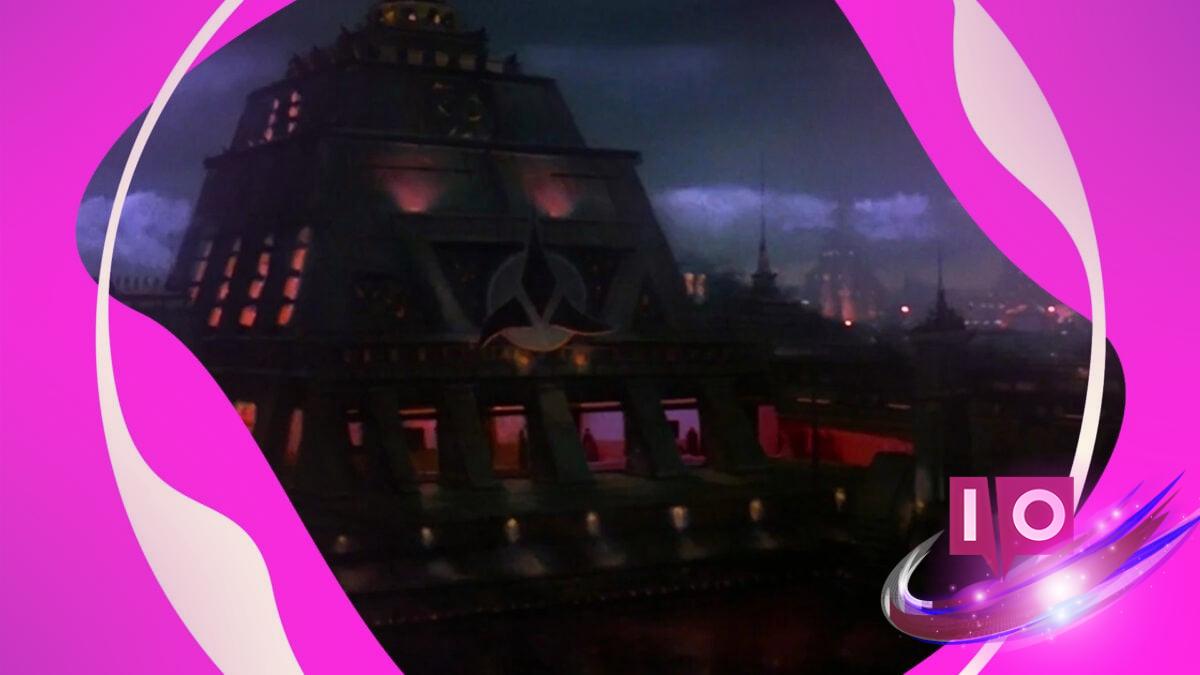
Star Trek has been captivating audiences for almost 60 years, delving deep into the intricacies of Starfleet and the Federation. Among the most captivating of its factions lies the Klingon Empire, a mysterious and enduring entity. The story of the Klingons transforms from fierce adversaries to reluctant allies throughout the saga, yet even now, the inner workings of their society remain somewhat enigmatic.
As one of the most developed alien species in the universe of Star Trek, the Klingons are not merely warriors; they embody a complex civilization filled with political intrigue. However, understanding how the Klingon Empire has functioned over millennia has often been obscured by the legends that surround it. Much of what we know about Klingon culture and structure has evolved from the insights of Ronald D. Moore, particularly during the production of the TNG season three episode “Sins of the Father,” which marked the franchise’s first visit to the Klingon homeworld.
The Birth of the Klingon Empire
To grasp the evolution of the Klingon Empire, we must explore its legendary origins. The key transformation began in the 10th century, shaped by the rise of a tyrant named Molor who ruled with an iron fist. Amidst oppression, a warrior named Kahless emerged as a beacon of hope, rallying the Klingon people against Molor. After a decisive battle at the river Srkal, Kahless defeated Molor using the first bat’leth, claiming the title of the first Emperor and marking the dawn of a united Klingon Empire.
Kahless and His Legacy
Kahless, later revered as Kahless the Unforgettable, laid the foundation for Klingon culture. His reign was instrumental in instilling the principles of honor and martial prowess that define Klingon society. The period saw a significant unification of various Klingon factions, leading to spiritual teachings that remain relevant to this day. However, after his ascendance to Sto-vo-kor, the Klingons faced centuries of dynastic monarchy, which shaped Qo’noS into the core of a vast interstellar empire.
Challenges and Transformation
Despite the enduring rule of emperors, the Empire’s authority was not without upheaval. A significant coup led by the general K’Trelan marked a turbulent chapter known as “The Dark Time,” during which the traditional imperial power was temporarily replaced by a democratically elected council. This period, though brief, prompted crucial reforms within the Empire’s governance structures before the emperor’s power was reinstated. By the early 21st century, however, the last emperor of the third dynasty passed away without an heir, paving the way for the emergence of the chancellorship.
The Role of Great Houses
In the absence of a strong imperial line, the Klingon High Council took center stage. Composed of the 24 most influential families known as the Great Houses, this council moved Klingon politics away from monarchy toward a more feudalistic structure. Each house held responsibilities within the Klingon governance, with leadership typically passing down through male lineage. However, there were provisions for women to gain power, particularly through the brek’tal ritual, reflecting the complex interplay of tradition and adaptability in Klingon society.
How powerful are the Great Houses in the Klingon Empire? The Great Houses were the backbone of Klingon political life, influencing decisions and policies, while also bearing the weight of their noble lineage. Their power dynamics have shifted over the years, with some houses fading while others rise, all within a framework that emphasizes honor and combat.
Can you explain the role of the Chancellor in Klingon society? The office of Chancellor, while paramount, remained precarious. Challenged by might, aspiring candidates could unseat a sitting Chancellor through combat, reinforcing the Klingon ethos of strength. Successors were chosen either through direct combat or other means of martial succession.
What happened to Kahless after his reign? In an intriguing twist, Kahless was cloned centuries later on the moon of Boreth, becoming a symbolic figure within the Klingon spiritual landscape. Even as a moral guide rather than a political leader, his presence continues to resonate within the Klingon psyche, bridging the past and present.
Want to learn more about the fascinating world of Star Trek? Delve deeper into the narratives that shape various factions and characters in this legendary saga. For expanded insights, feel free to explore related content available at Moyens I/O.