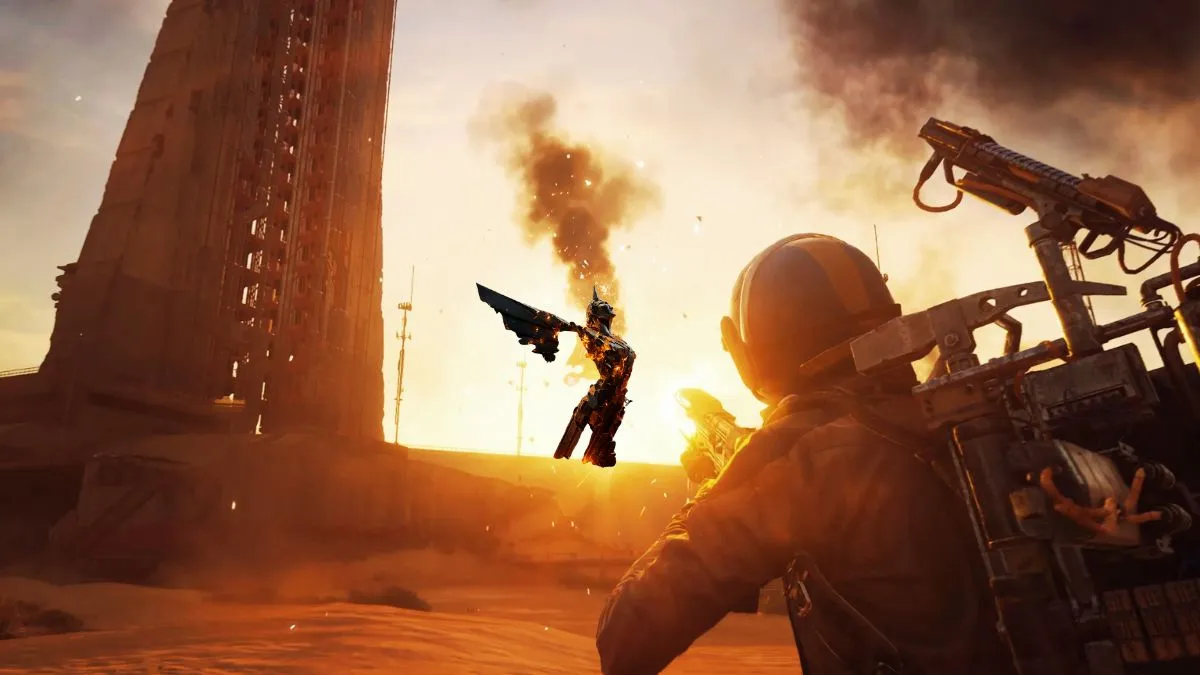
Arc Raiders’ launch has caused a massive stir across all platforms this year, making its absence from the Game Awards 2025 nominations particularly shocking. For fans of multiplayer games, this snub is painfully familiar as vast player counts often seem to have no bearing on critical recognition. Millions engage daily, yet critics frequently overlook this reality when discussing Game of the Year contenders.
Arc Raiders certainly warranted a nomination for the GOTY 2025 lineup. While it may not have been the frontrunner for the trophy, it undeniably deserved a seat at the table. The game’s ascent makes it clear this is more than just a temporary trend; it signifies something important brewing in the gaming world.
1. How Arc Raiders Dominated CCU Charts While Other GOTY Nominees Struggled
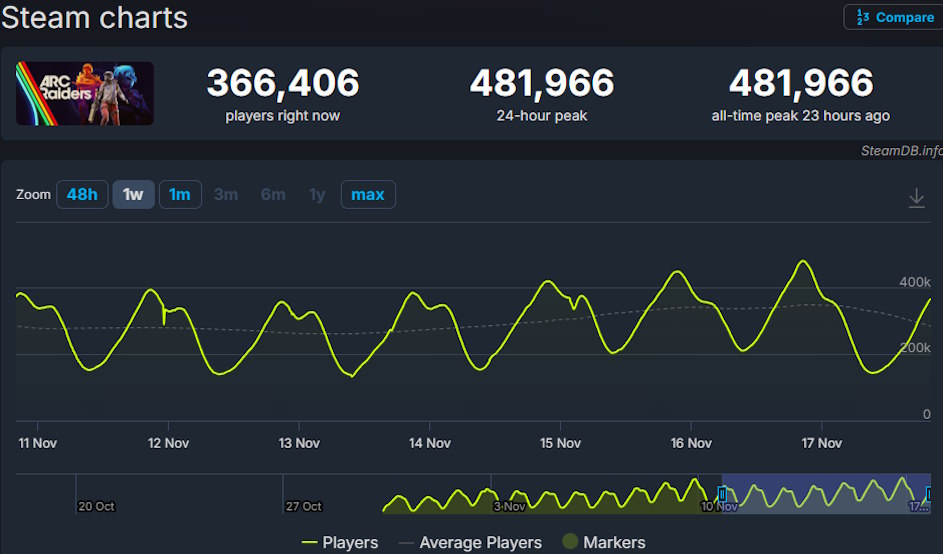
Arc Raiders didn’t just perform well; it surged past other nominated games in impressive fashion. Meanwhile, the concurrent user (CCU) numbers for other contenders look more like gentle hills, while Arc Raiders rises majestically, boasting over three hundred thousand players at any moment and often exceeding four hundred thousand. This isn’t just a launch spike—it’s a consistent performance that showcases its blockbuster potential.
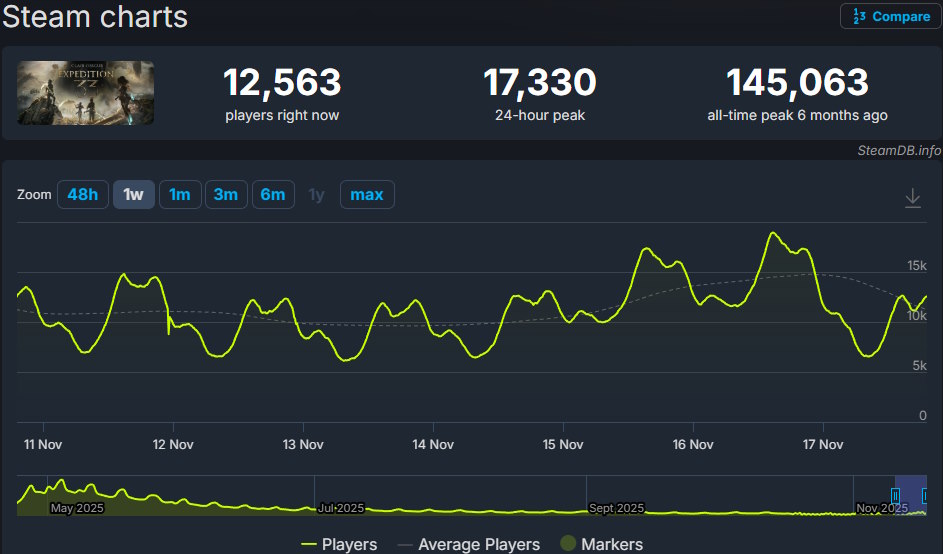
When you juxtapose these figures with this year’s GOTY contenders, the disparity is glaring. For instance, Clair Obscur: Expedition 33 failed to exceed two hundred thousand peak players on Steam. This doesn’t inherently dictate quality, but it does reveal an undeniable limitation in audience reach.
Titles like Death Stranding 2 and Donkey Kong Bananza are platform exclusives, limiting global audiences and accessibility. Critics might still find a way to support their yearly favorites from Kojima and Nintendo, but it raises the question of fairness.
Even single-player giants such as Elden Ring and Baldur’s Gate 3 demonstrate the importance of scale. Elden Ring peaked at over 900K concurrent players, while Baldur’s Gate 3 hit around 800K. This should signal a message to critics about the weight of player engagement.
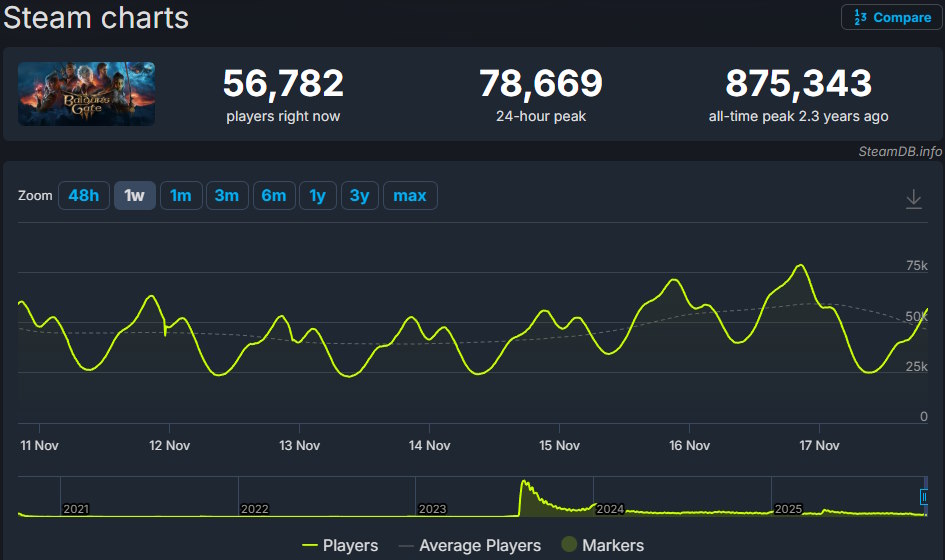

The scale of player engagement matters immensely. The conversations around a game endure longer when player counts are substantial, as we’ve seen with Baldur’s Gate 3 and Elden Ring. Even as a relatively new title, Arc Raiders holds its own against older games like Kingdom Come: Deliverance II.
Crucially, Arc Raiders achieved this level of success without the advantages of a well-known director or a legacy franchise. Its growth stems from strong word of mouth and robust gameplay systems, indicating that players are drawn to its unique offerings. Through innovative design elements, it has built a vibrant community that exemplifies a cultural footprint typically celebrated by award shows—only to be overlooked this year.
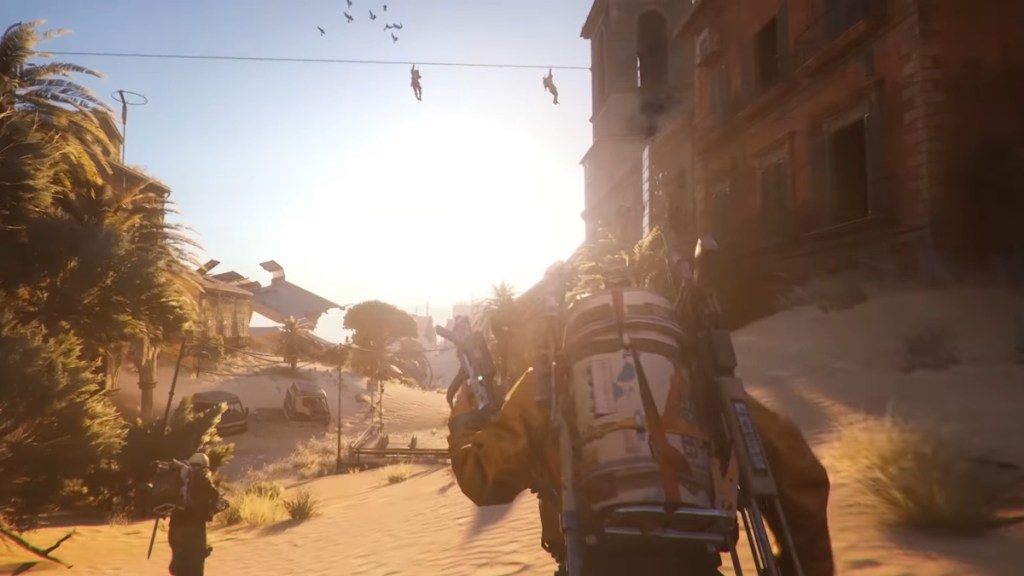
If GOTY nominations are truly supposed to highlight the year’s most impactful games, ignoring the title with the highest daily engagement seems misguided. Arc Raiders showcases extensive player reach and community involvement, yet critics refuse to recognize this impact—suggesting an outdated frame of reference.
2. The Game Awards’ Ongoing Snub of Multiplayer Titles
Herein lies the frustration: The Game Awards panel often treats multiplayer games as lesser than their single-player counterparts. There’s a clear trend of bias against games revolving around PvP, PvPvE, or cooperative gameplay, leading to their devaluation despite significant player engagement.
Large player bases do not sway critics, who often lean toward narrative-heavy, single-player experiences as the benchmark for quality. It’s reminiscent of the Oscars, where gameplay significance becomes a secondary consideration in favor of cinematic storytelling.
Critics often show a clear preference for narrative-driven works, ignoring the player counts that demonstrate a game’s cultural impact.
Each year, multiplayer games are relegated to side awards, deemed niche despite their ability to draw larger player numbers than many nominated titles combined. Arc Raiders faced the same trap; critics assessed it merely through a narrow lens without honoring its innovative contributions.
3. How Arc Raiders Revolutionizes Multiplayer Gaming
Yet, Arc Raiders innovates within its genre, establishing a natural sense of cooperation among players while skillfully merging AI and human adversaries. This game breaks free from the routine extraction shooter model by promoting strategy over mere reflexes, making its mechanics genuinely rewarding.
While single-player experiences can deliver moments through scripted scenes, multiplayer titles like Arc Raiders create narratives through the dynamics of players’ interactions. When the game orchestrates a thrilling escape or a tense confrontation, it showcases the unique storytelling possible only in multiplayer formats, demanding recognition.
The game truly enhances the experience by allowing the game world to adapt based on the choices made by players, exemplifying a new type of storytelling.
CCU statistics reveal a clear demand for this design approach. The critics’ disregard does not negate the significance of Arc Raiders’ impact on multiplayer trends in 2025. Ignoring its nomination while celebrating smaller games with less influence reflects a troubling contradiction.
While Arc Raiders might not need accolades to endure, the snub illustrates a broader issue in how critics value multiplayer games. They often regard them as inferior, despite the industry’s evidence to the contrary.

At some point, this gap must close, as the gaming future lies beyond simply quiet narratives. It’s about immersive environments where strategy, AI, and human intuition merge to create unforgettable moments. Arc Raiders belongs in this future—and it rightly deserves a spot among the GOTY 2025 nominations.
What are your thoughts on the Game Awards overlooking Arc Raiders for Game of the Year? Should the awards emphasize single-player games over multiplayer at this point? Let us know in the comments.