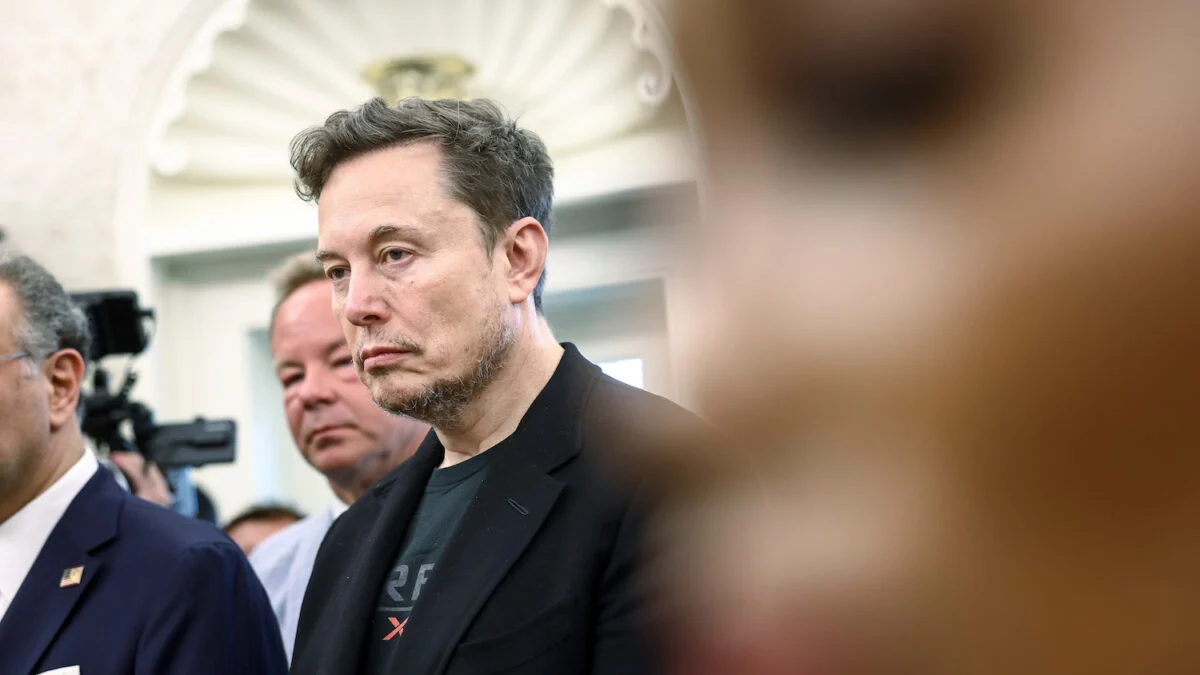
The Trump administration is currently making efforts to protect Elon Musk, the former DOGE czar, from testifying in a legal case linked to his participation in the “government efficiency” initiative. This comes amid ongoing lawsuits facing DOGE for attempts to significantly restructure the government. One prominent case involves USAID, which effectively ceased its operations earlier this year.
In February, a group of former USAID officials and contractors filed a lawsuit against Musk and DOGE, accusing them of an unconstitutional power grab. They contended that the dismantling of USAID, established by Congress, violated the separation of powers. The lawsuit claimed that Musk exercised an unconstitutional level of governmental authority, typically reserved for Senate-confirmed officials.
Musk served as a special government employee for five months this year, and the government has insisted that he was not involved in making major policy decisions at DOGE, despite claims made by both Musk and Trump suggesting otherwise.
This year, the government sought to dismiss the case but faced setbacks when a Maryland judge ruled in August that the lawsuit could proceed. Currently, the government’s primary goal is to keep Musk from taking the stand as a witness.
Bloomberg reported that the government has filed a protective order to prevent Musk from having to testify. The government’s motion outlines that plaintiffs need to demonstrate extraordinary circumstances for such depositions to be necessary, which they argue has not been accomplished.
The government asserts that deposing high-level Executive Branch personnel is restricted and should be avoided unless exceptional circumstances are demonstrated. They maintain that Musk’s deposition would intrude upon White House functions and raise significant separation-of-powers issues.
Efforts to reach the Trump administration for comments were made, alongside attempts to contact Musk through his startup xAI, which auto-responded with a message claiming, “Legacy Media Lies.”
The closure of USAID has had dire consequences, with reports indicating the loss of life of countless individuals reliant on aid, particularly children. Musk has previously referred to USAID as “evil” and a “criminal organization.”
Recent reports also surfaced stating that DOGE is now effectively defunct, according to government officials. Despite not having an expiration of its charter for another eight months, the Office of Personnel Management Director acknowledged that DOGE no longer operates as a centralized entity, with many former employees transitioning to different roles within the government.
The White House and Musk have refuted these claims from Reuters, labeling them as inaccurate. The official DOGE account stated that President Trump was tasked with modernizing the federal government and eliminating wasteful spending, claiming savings of $335 million from contract terminations just last week.
Concerns have consistently risen regarding the efficacy and efficiency of DOGE’s initiatives. Time and again, it has been criticized for misrepresenting its achievements, with numerous reports indicating operational chaos and minimal actual savings. Analysts suggest that while the organization boasted of significant cost reductions, the reality indicated a far different scenario.
As debates continue regarding DOGE’s existence and effectiveness, clarity on the organization’s true impact remains elusive. Questions persist about how these developments will influence governmental operations and the broader implications for similar entities.
What are the implications of Musk’s involvement with DOGE? The scrutiny surrounding Musk underscores the complex relationship between private sector figures and government operations, revealing potential conflicts that could arise.
How has USAID’s closure affected international aid? The shutdown has raised alarms over the increased vulnerability of populations relying on support, indicating far-reaching global consequences.
What does the lawsuit against Musk and DOGE entail? The case addresses concerns over authority and governance, challenging how private interests intersect with federal operations.
Could DOGE’s operational chaos impact future government initiatives? Observers believe that the mismanagement attributed to DOGE might have broader implications for the future efficiency of government programs.
Finally, as legal proceedings unfold, staying informed about these developments remains crucial. For further insights and analysis, be sure to continue exploring related content at Moyens I/O.