Since the launch of ChatGPT, OpenAI has solidified its reputation as a leader in the AI landscape, currently boasting an impressive valuation of around $500 billion. The entire AI sector seems to rely heavily on OpenAI’s continued success. If you’re new to the AI scene and seek to understand what OpenAI is all about, this comprehensive guide will walk you through its essence and impact.
What is OpenAI?
OpenAI is a prominent AI firm based in the United States, best known for creating ChatGPT, a highly popular AI chatbot. Founded in 2015 by a roster of tech innovators including Sam Altman, Elon Musk, Ilya Sutskever, and John Schulman, OpenAI aims to develop “safe and beneficial” Artificial General Intelligence (AGI) that serves humanity at large.
By AGI, OpenAI refers to “highly autonomous systems that surpass humans in most economically significant tasks.” The release of ChatGPT in November 2022 signaled the dawn of the Generative AI era, propelling a global AI race. OpenAI has played a crucial role in making AI accessible and mainstream.
Initially funded with $1 billion, OpenAI has evolved from a non-profit into a blended structure, where the non-profit OpenAI Foundation owns a 26% stake, Microsoft holds 27%, and employees along with other investors retain the remaining 47%. OpenAI’s pioneering role in the AI race puts it in direct competition with giants like Google and Anthropic, having already attracted 800 million weekly ChatGPT users—outperforming competitors.
Major AI Models Launched by OpenAI
OpenAI is recognized for its trailblazing GPT series of AI models. Building on Google’s revolutionary Transformer architecture unveiled in 2017, OpenAI debuted with GPT-1, utilizing 117 million parameters. This was followed in 2019 by GPT-2, which expanded to 1.5 billion parameters.
In 2020, OpenAI introduced GPT-3, a significant leap to 175 billion parameters, capable of generating human-like text across numerous contexts. The launch of GPT-3.5 in 2022 highlighted a pivotal moment in AI, powering the original ChatGPT.
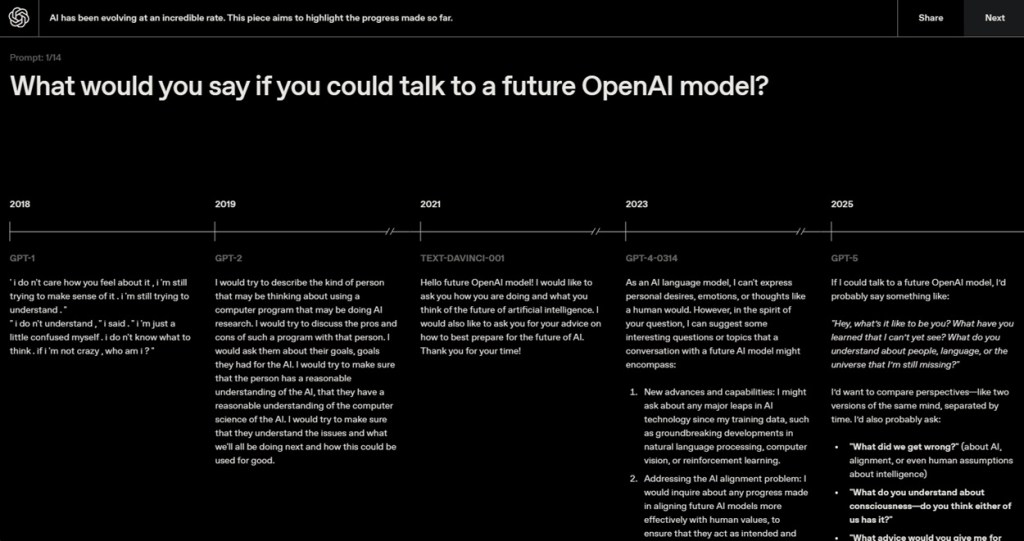
The journey continued in 2023 with the release of GPT-4, which proved to be even more sophisticated. This was accompanied by the multimodal GPT-4o, alongside reasoning models like o1, o3, and o4. The latest advancements in 2025 saw the rollout of GPT-4.5, GPT-5, and GPT-5.1, integrating a spectrum of AI capabilities.
OpenAI has also ventured into various domains, launching the ChatGPT Agent, Deep Research AI agent, and Shopping Research agent. For image generation, Dall-E made its debut in 2021, evolving through Dall-E 2 in 2022 and Dall-E 3 in 2023, shifting from traditional Diffusion models to leveraging the multimodal abilities of GPT.
Excitingly, OpenAI’s foray into video rendering came with the launch of Sora in 2024, a text-to-video generation model, which was followed by Sora 2 in 2025, featuring advanced physics simulations and synchronized audio.
The Failed Coup to Remove Sam Altman from OpenAI
Discussing OpenAI is incomplete without touching on the controversial firing and reinstatement of Sam Altman. In November 2023, the board, led by Ilya Sutskever, dismissed Altman for alleged lack of transparency in his communications. This incident echoed Elon Musk’s prior attempts to wrest leadership control.
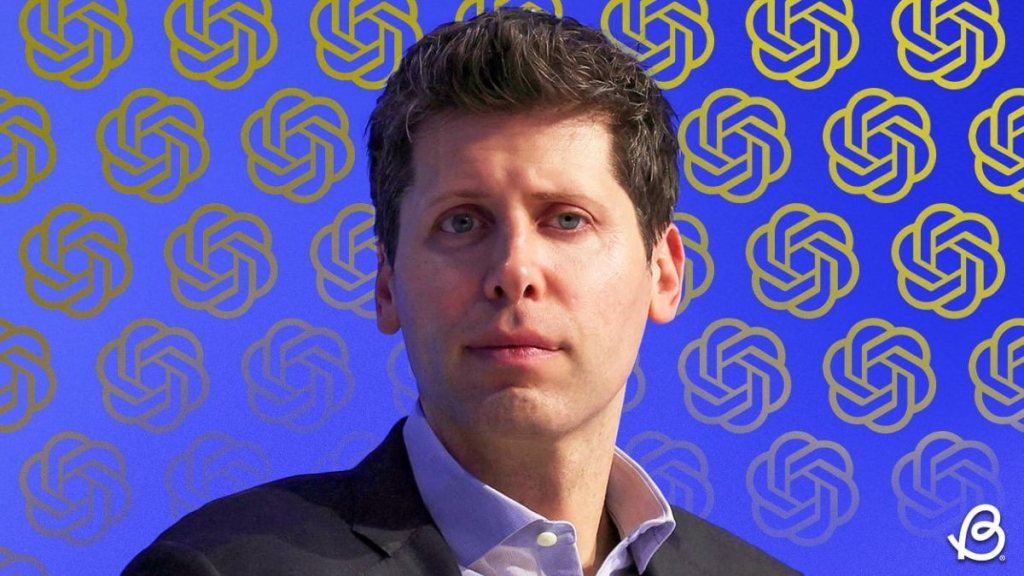
Fortunately, OpenAI’s workforce rallied to support their CEO, leading to his quick reinstatement. Following the upheaval, the board was restructured, resulting in the departure of key figures like Ilya Sutskever, John Schulman, and Mira Murati, who pursued their ventures elsewhere. Some safety researchers also resigned, citing a shift in focus towards profitability rather than prioritizing safe AI development.
Currently, among the founding members, only Sam Altman, Greg Brockman, and Wojciech Zaremba remain active at OpenAI, while the board is now composed of members including Bret Taylor (Chair), Adam D’Angelo, and several other prominent figures.
OpenAI’s Pivot to a Public Benefit Corporation (PBC)
Initially established as a non-profit, OpenAI created a hybrid model with a “capped-profit” subsidiary in 2019 to secure funding. This setup attracted significant investments—most notably from Microsoft, which provided Azure resources, a strategic boon for OpenAI.
However, by 2025, OpenAI aimed to shift entirely to a for-profit model. This led to resistance from public intellectuals and attorneys general in Delaware and California, prompting OpenAI to forgo its for-profit aspirations. Instead, it will remain under non-profit governance while converting its for-profit arm into a Public Benefit Corporation (PBC) for greater capital flexibility.
What is OpenAI’s Future?
OpenAI is committed to its original mission of developing safe AGI. Nevertheless, the focus has shifted toward creating profitable products for businesses and consumers alike. Recently, the company acquired IO, an AI hardware startup founded by Apple’s Jony Ive, and plans to unveil an AI device in 2026, albeit without a screen.
Critics have voiced concerns about OpenAI’s closing off to the previously embraced open-source community, highlighting a move towards commercial viability at the expense of its foundational ideals. While OpenAI stands at the forefront of AI innovation, it must remain vigilant in adhering to its original commitment to fostering safe and beneficial AGI.
What impact has OpenAI had on the AI landscape?
OpenAI has revolutionized AI accessibility, significantly contributing to mainstream AI adoption through tools like ChatGPT, which has surpassed 800 million users weekly.
How has OpenAI transitioned from a non-profit to a for-profit model?
Initially a non-profit, OpenAI shifted to a capped-profit model to attract funding, and later announced a transition to a Public Benefit Corporation while staying governed by a non-profit board.
What notable AI models has OpenAI launched?
The AI firm has released several pivotal models, including the GPT series, with the latest being GPT-4 and GPT-5, significantly enhancing capabilities in natural language processing and image generation.
What controversies has OpenAI faced regarding leadership?
OpenAI experienced a dramatic leadership crisis when Sam Altman was dismissed and subsequently reinstated amid employee unrest, revealing tensions regarding the company’s direction.
As you explore the future of AI, staying informed about OpenAI’s journey is essential. Its ongoing innovations and challenges shape the ever-evolving landscape of artificial intelligence. For more insightful content, visit Moyens I/O.