
I was waist-deep in crimson sand when the world opened up: a ruined tower on the skyline, a herd of riders vanishing over a dune, and a map that felt bigger than any promise. You pause, hand on your mount, and realize the distance isn’t just geography — it’s a decision about where you will fight and who you will meet. I have chased open-world maps for years; I’ll tell you what this one actually contains and why size matters.
From aerial shots the landscape stretches farther than you expect — How Big is the Crimson Desert Map Size?
I’ll be blunt: Pearl Abyss says Crimson Desert’s playable area towers above familiar benchmarks. Creative director statements and leaked estimates put the map at roughly 30–42 square miles (80–110 km²), making it at least twice the playable size of Skyrim and larger than Red Dead Redemption 2’s explorable land.
That number matters because scale is only useful if there’s purpose inside it. Bethesda and Rockstar built worlds where every road carries a story; Crimson Desert will live or die on whether those miles carry meaningful encounters, not just empty space.
How big is the Crimson Desert map?
The short answer: large enough to force a travel system that isn’t a convenience trick. If you want to compare, think in the same ballpark as the biggest AAA open worlds on Steam, IGN breakdowns, and the old benchmark conversations between Bethesda and Rockstar fans.
From the first trailer you can pick out five distinct biomes — All Crimson Desert Map Regions
There are five major regions, each with its own politics, climate, and threats. You will move from civilized spires to frozen passes to the lawless sands, and the game encourages multiple viewpoints through playable characters.
- Hernand
- Pailune
- Demeniss
- Delesyia
- The Crimson Desert
What are the regions in Crimson Desert?
Short, clear: Hernand (green and urban), Pailune (snow and mountains), Demeniss (political capital and staging ground), Delesyia (industrial and mechanical), and the titular Crimson Desert (lawless sands).
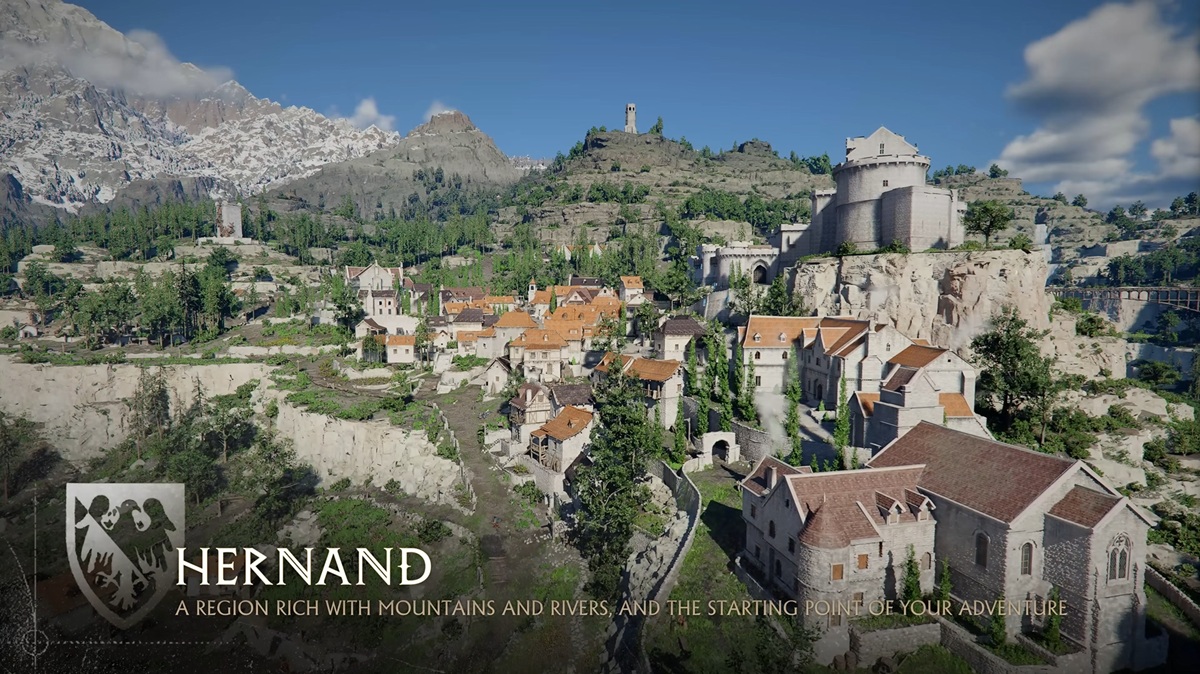
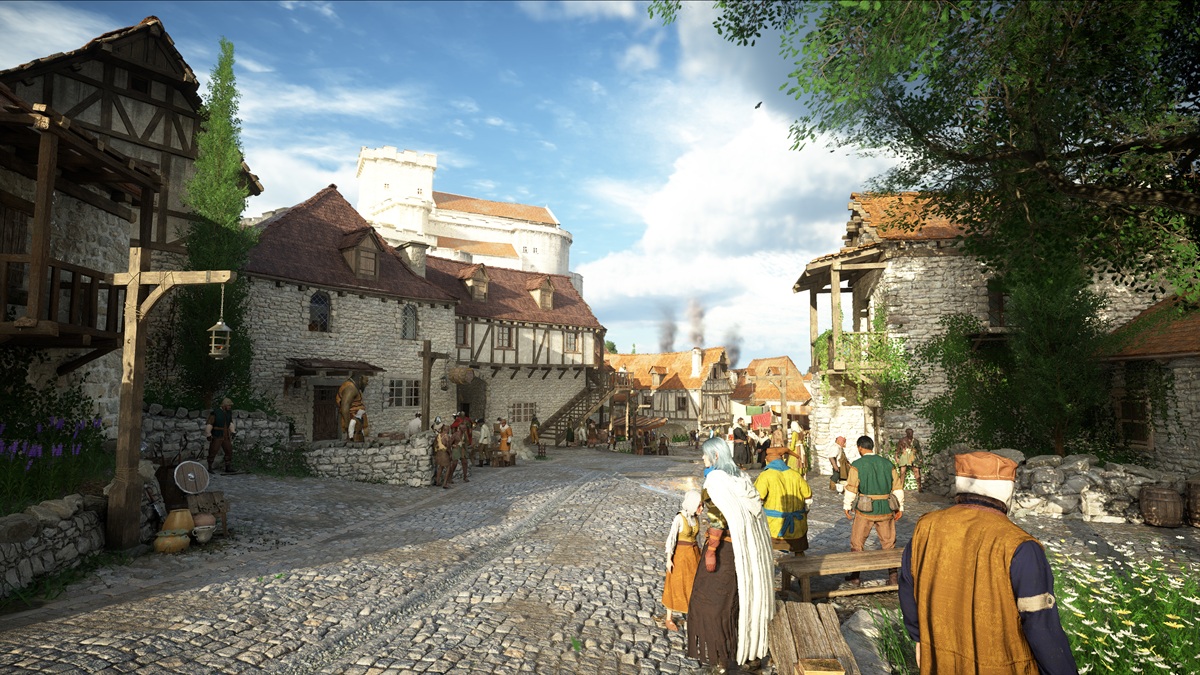
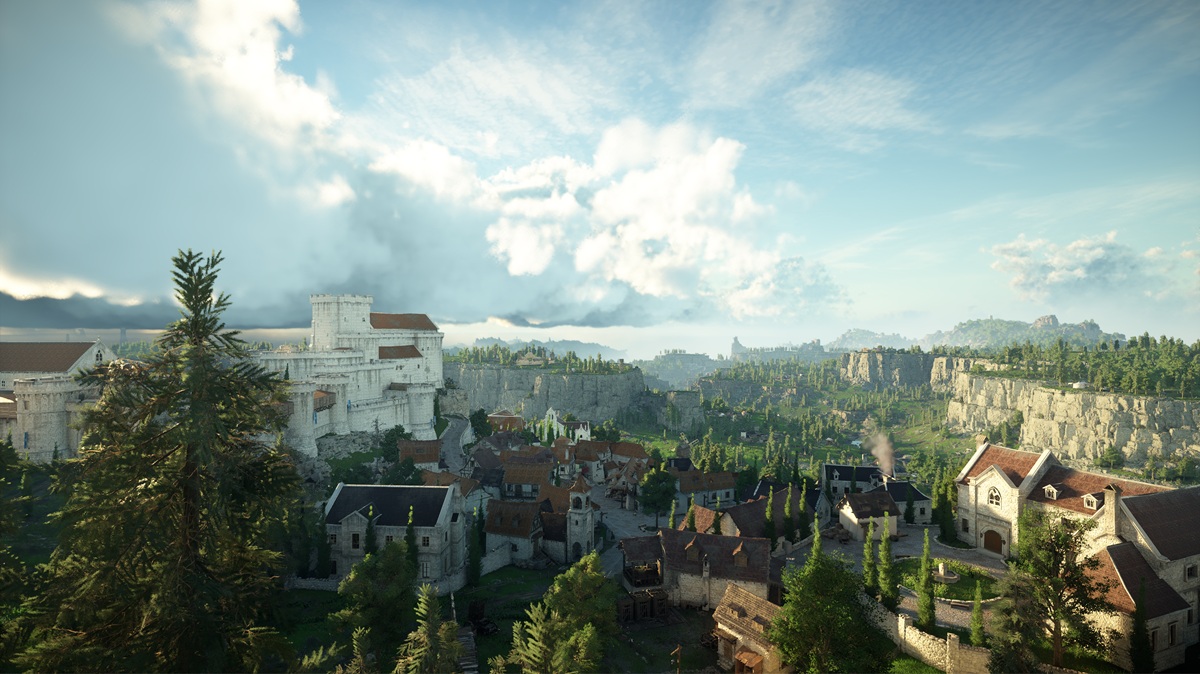
Hernand
On-screen Hernand looks like a hub you’ll return to often — market streets, farmland, and city walls. I felt it: Hernand’s fields are a green cathedral.
This is the intro ground where quests, commerce, and faction lines are visible. Expect medieval-European aesthetics; if you’ve played Bethesda titles, Hernand will feel familiarly populated, but with the promise of multiple characters offering different angles on the same events.

Pailune
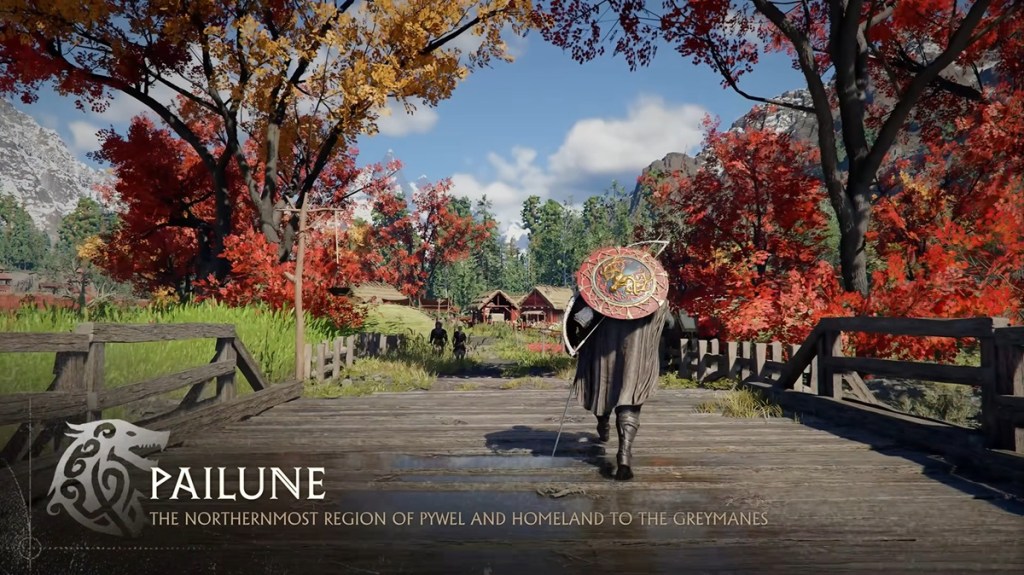
Pailune sits north and hits you with cold and jagged terrain in trailers. Expect snow-capped peaks, treacherous passes, and boss encounters such as the Staglord and Whitehorn that are hinted at in cinematic sequences.
Demeniss
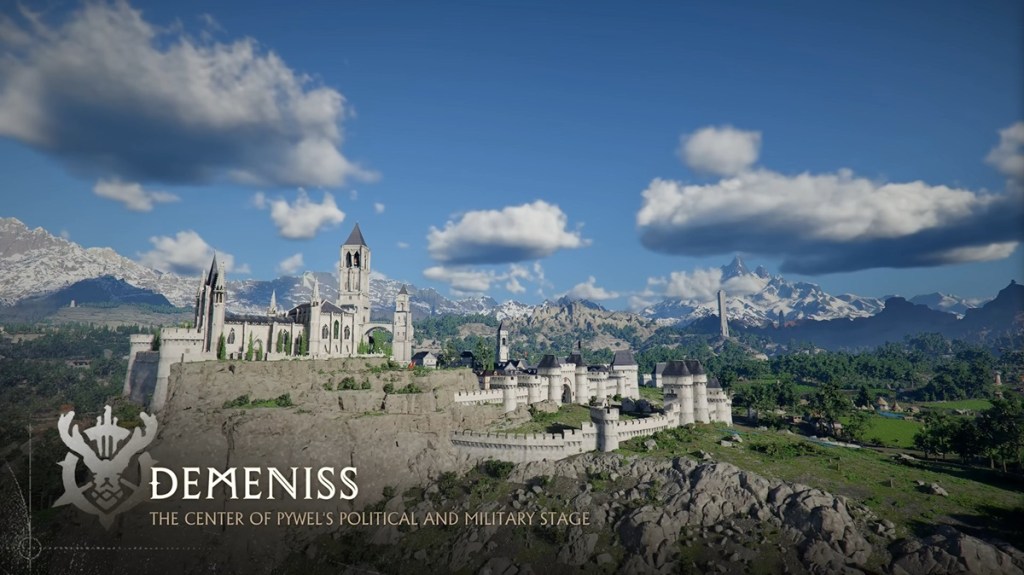
Demeniss reads on-screen as a capital with military scale — walls, encampments, and siege vistas. Trailers show it as Pywell’s center of power and the most likely place for large-scale battles and faction conflict.
Delesyia
Delesyia shows heavy machinery and strange constructs when you pause the trailer frames. Delesyia is a clockwork heart.
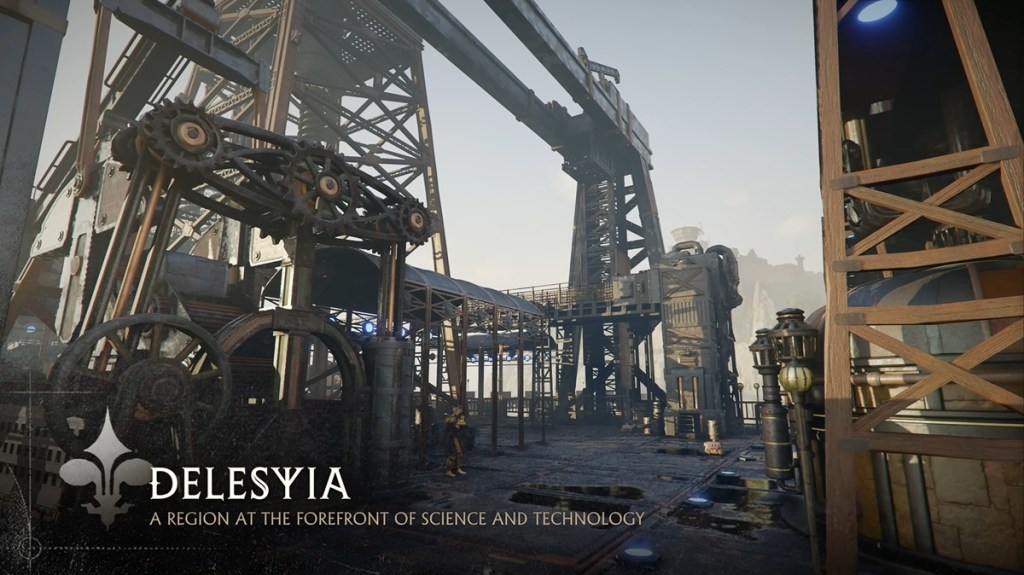
Mechanical beasts and a boss named Golden Star suggest a tech-magic blend that will stand apart from the medieval tones of Hernand. Expect encounters inspired by industry and engineering, a counterpoint to the pastoral and the frozen.
The Crimson Desert
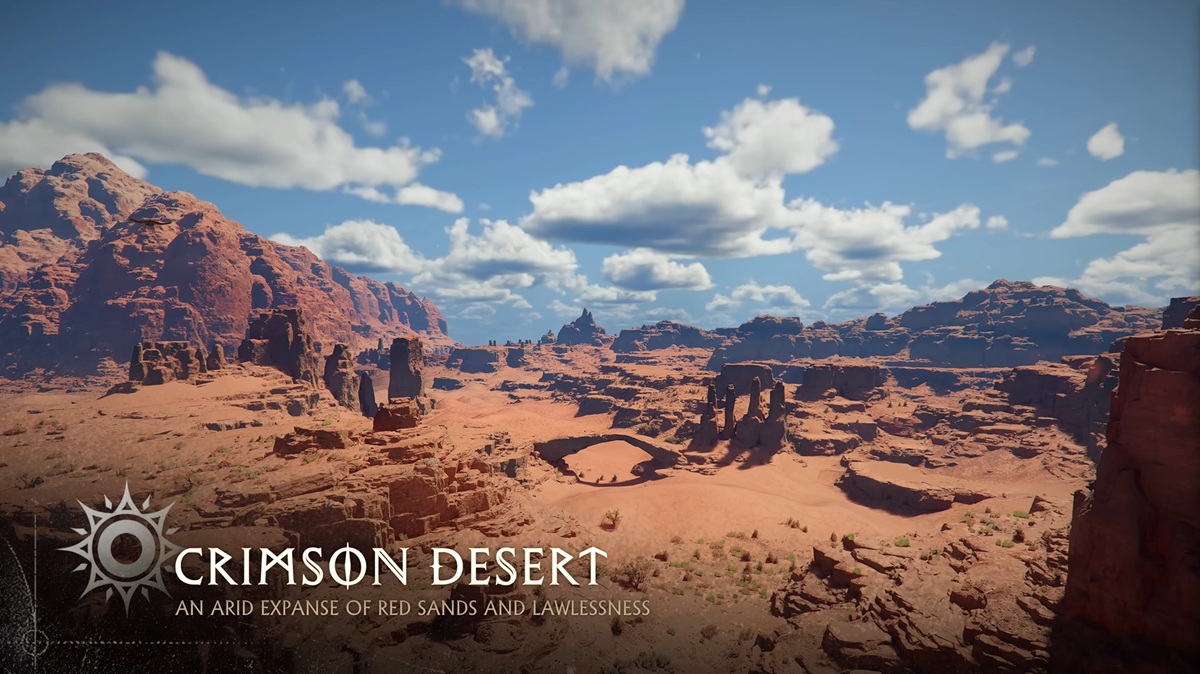
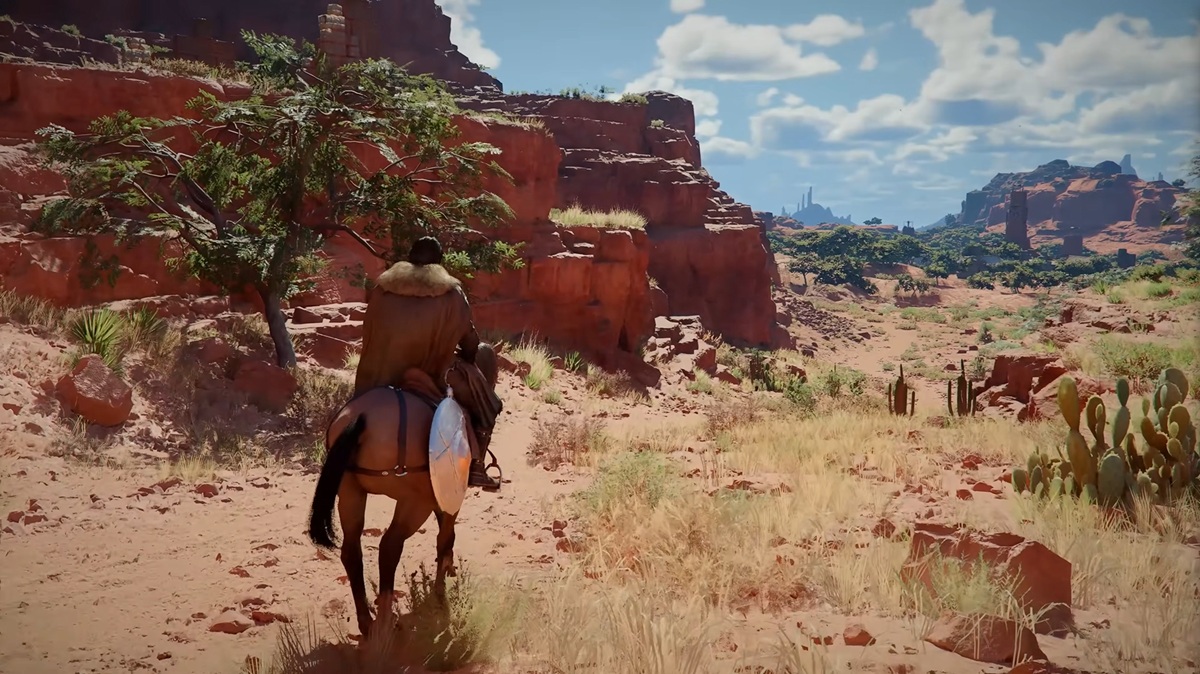
The desert itself is a lawless sweep of red sand you cross at your own risk. Bandits, brigands, and enormous creatures make it the game’s most volatile space — the one where choices about shelter, supplies, and alliances are tested.
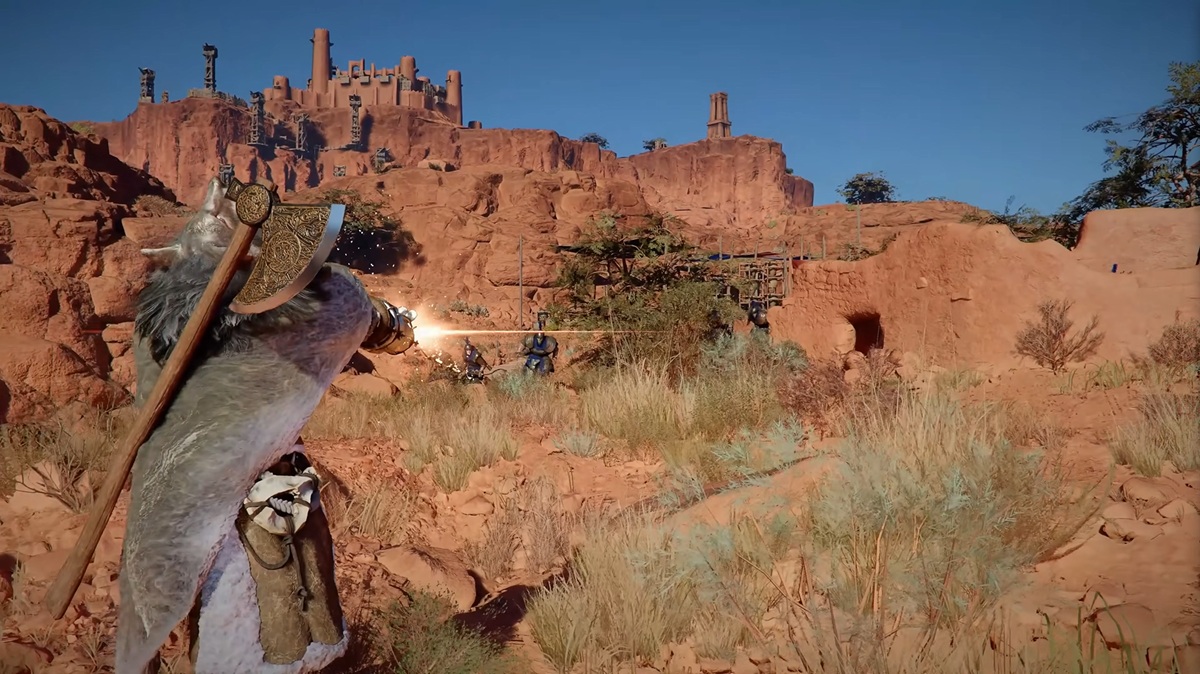
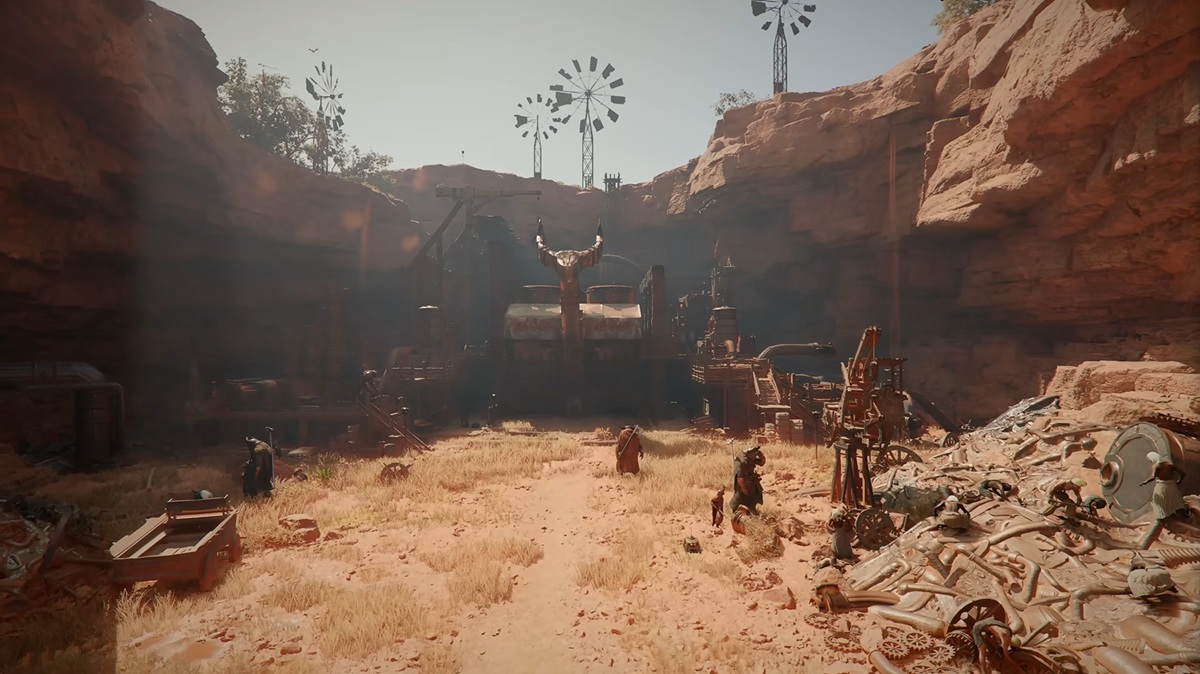
From footage you notice multiple travel methods — How to Fast Travel in Crimson Desert
Given the map size, Crimson Desert supplies several movement systems so you won’t spend all your time crossing empty ground. Here are the main methods you’ll rely on.
- Mounts: Expect a roster beyond horses — bears, lizards, raptors, and dragons are shown in footage and trailers and serve for combat as well as speed.
- Aerial: Gliding and later full flight (including dragon-mounted flight) feature in clips; aerial traversal changes how you approach vertical space.
- Teleport Points: Map pins and teleport anchors will appear once certain locations are cleared — a standard tool for modern open worlds alongside mounts.
- Tools: Climbing and grapple tools are present; movement borrows from titles in the adventure genre to give you vertical options.
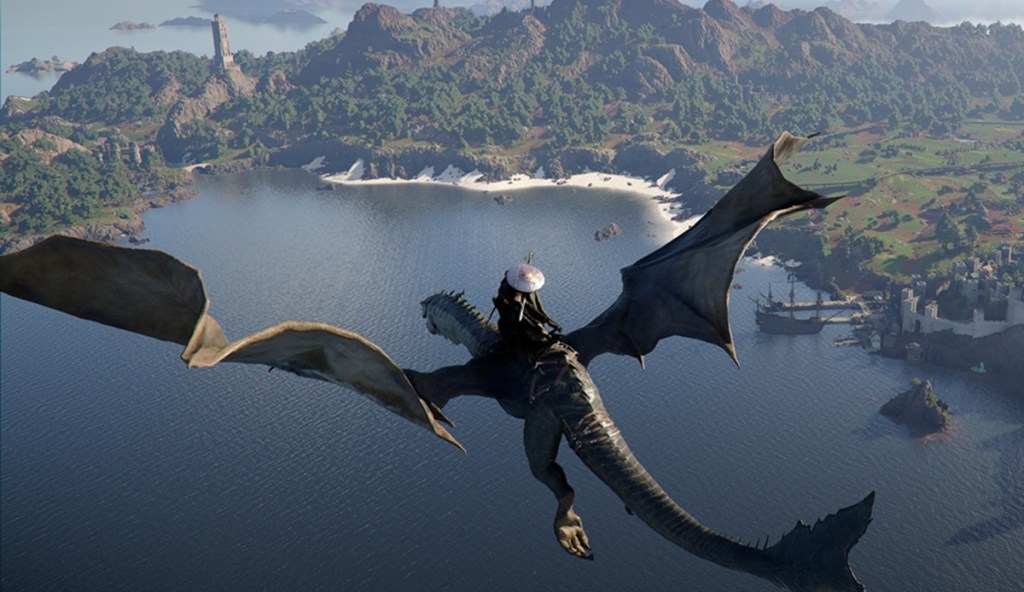
How do you fast travel in Crimson Desert?
Use mounts for tactical movement, take to the air for shortcuts, and activate teleport anchors to skip long transits — a hybrid system similar to what players already expect from major AAA launches on Steam and consoles.
If you want to plan exploration routes, study Hernand for commerce, map the passes in Pailune, and mark Demeniss for conflict hubs; Delesyia will reward mechanical curiosity, and the Crimson Desert will punish bad planning. Will Pearl Abyss match the scale with depth or leave empty miles between its best ideas?