
I logged into Fortnite last week and the lobby felt smaller than it used to. Developers I follow were posting about departures; players were trading timelines for modes that would soon be gone. You could sense a long-running experiment being rewritten mid-act.
I’ll cut through the noise and give you what matters: the layoffs, the mode shutdowns, the reputational damage, and the financial anchors that tell a clearer story. Read this like a postmortem you can still influence—I’ve sifted signals so you don’t have to.
Across social feeds I watched threads explode when Epic announced cuts. Is Fortnite dying? Modes shutdown and layoffs explained
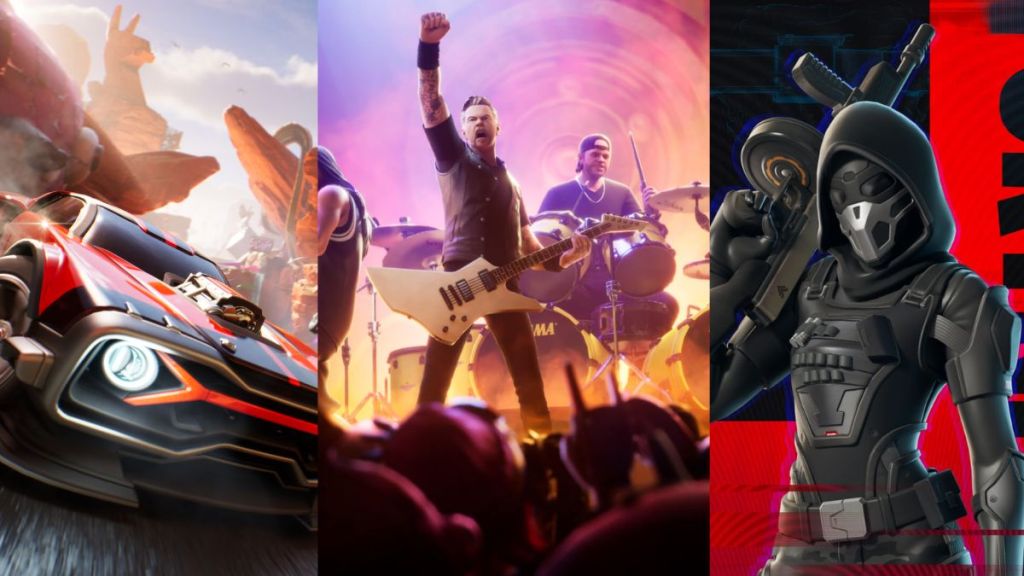
Epic announced layoffs affecting over 1,000 people—roughly 20% of the company. CEO Tim Sweeney pointed to a downturn in engagement that began in 2025 and said costs had outpaced revenue. That’s the blunt fact.
Alongside staffing cuts, Epic will retire several Fortnite modes that failed to hold players. The shutdowns are practical triage: reduce live-ops surface area and concentrate teams on fewer pillars.
- Ballistic: 5v5 tactical first-person mode — going offline on April 16, 2026.
- Festival Battle Stage: Competitive PvP part of Fortnite Festival — removed on April 16, 2026.
- Rocket Racing: Arcade racer — longer sunset, final shutdown in October 2026.
Is Fortnite dying?
Quick answer: no—not yet. Fortnite still draws roughly 1.3 million daily players, but peak engagement has slipped. The game’s reach is smaller, the economy needs maintenance, and Epic is trimming excess. Think of the moment like a carnival losing its lights—still standing, but a different feel.
In Discord servers and X threads I saw veteran creators post that the game “was changing.” Why do players think Fortnite is finally over?
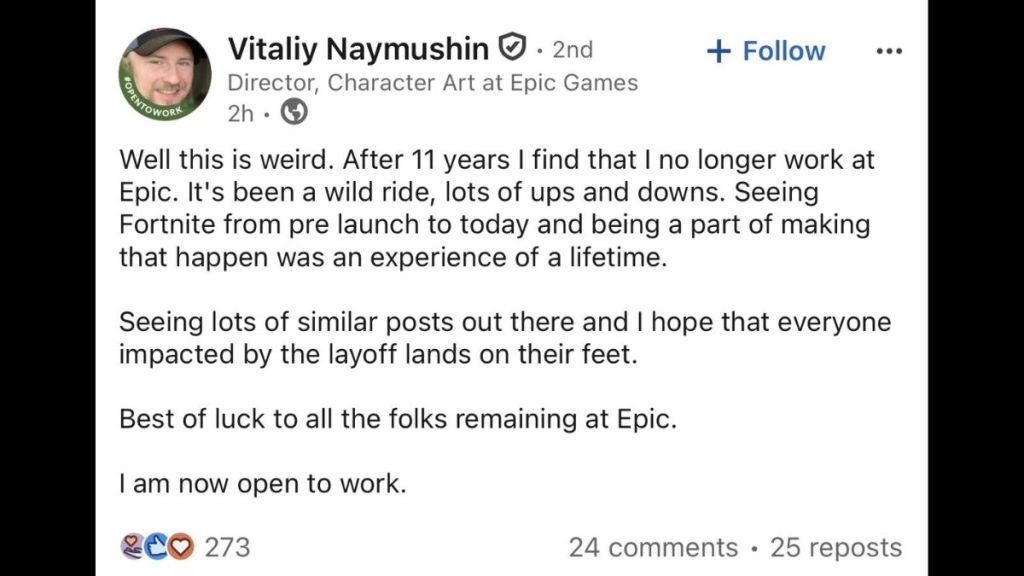
High-profile departures cut deeper than charts. Vitaliy Naymushin, the character art director behind Jonesy, left after 11 years—his exit looked and felt like losing part of Fortnite’s face. When creators and lead designers go, players notice because these people shape the emotional fabric of a live game.
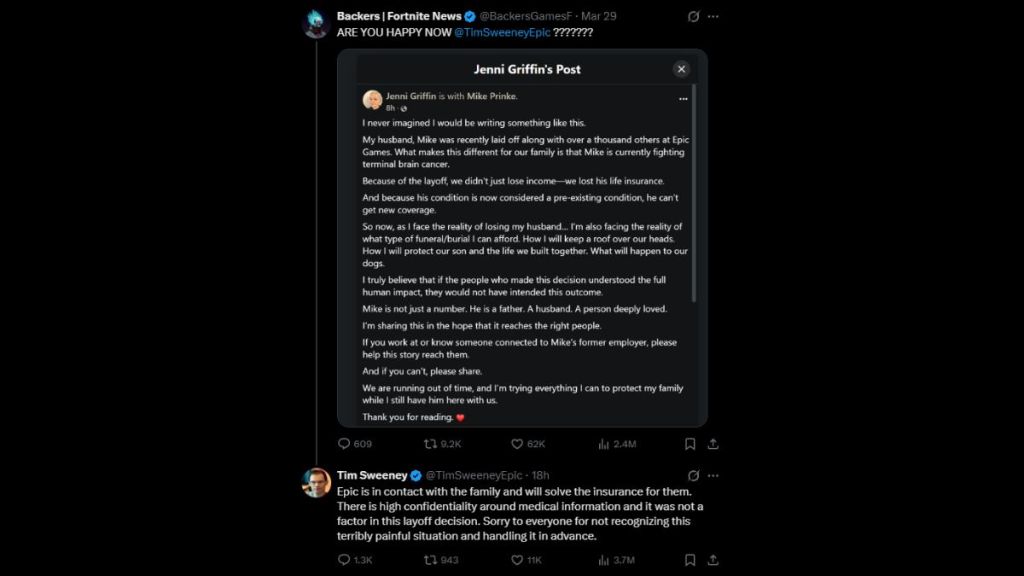
The most damaging flashpoint was the Mike Prinke case. Prinke, a seven-year Epic technical writer, was included in the layoffs while undergoing treatment for terminal brain cancer. His termination reportedly canceled his life insurance, and social outrage followed. Tim Sweeney posted on X that medical data was not used in layoff decisions and that Epic was speaking with Prinke’s family—an admission that did little to calm many players.
Why did Epic lay off employees?
Epic says a post-2025 drop in engagement forced a reset: expenses were outstripping revenue. The company is reducing headcount and retiring low-retention game modes to tighten focus and lower ongoing costs. From a business perspective, that’s the mechanics—emotionally, it’s brutal for teams and the community.
Players also point to broader causes: rising V-Bucks prices, constant fragmentation into mini-modes, and fatigue after years of live events. That combination pulls at player attention like a tide pulling at the shore; retention becomes a harder metric to hold.
At investor threads and Epic’s storefront I saw analysts rerun past recoveries. What happens next?
Fortnite is not a single-mode shooter—it’s a platform with an ecosystem: the Epic Games Store, Unreal Engine, cross-platform play on Xbox and PlayStation, and partnerships that still matter. Epic has significant financial backing: a reported $1.5 billion investment from Disney (€1.4 billion) and an $800 million partnership with Google (€740 million). Those are not trivial lifelines.
Will Fortnite shut down entirely?
Short answer: highly unlikely. The more useful question is what shape the game will take. Expect Epic to shrink some ambitions, reassign teams to Chapter 7 Season 2 staples, and lean on IP, live events, and monetization refinements. You should watch three levers: mode portfolio, in-game economy (V-Bucks pricing), and cross-media deals with partners like Disney and Google.
If you’re a creator or a player, this is a moment to weigh where you invest time and energy. If you’re an investor or competitor, it’s a chance to map openings in live services, storefronts, and engine licensing.
I won’t pretend this is a tidy story: it’s messy, personal, and corporate. Fortnite can still be a dominant platform, but it must pick fights it can win and stop trying to be every toy in the arcade. What side are you on—staying for the long haul, or watching the servers to see what goes next?