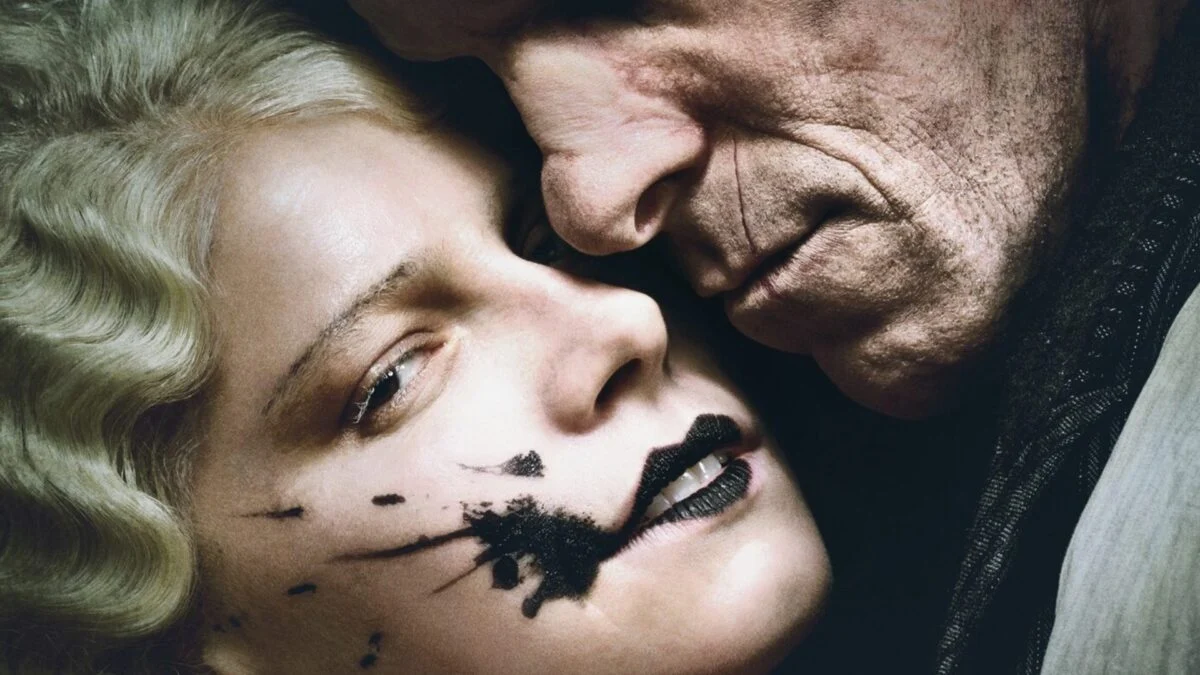
The set was freezing, even for March. Jessie Buckley shivered, not entirely acting, as Maggie Gyllenhaal called “Action!” For Buckley, becoming the Bride wasn’t just about makeup and costume; it was about finding the raw nerve of a woman denied a voice, now screaming to be heard. This isn’t your grandmother’s monster movie.
A Bride Reborn: Maggie Gyllenhaal’s Vision
Every so often, a familiar story gets twisted into something new. Last year, Guillermo del Toro gave us a dark, beautiful *Frankenstein*. This year, Gyllenhaal offers a punky, electric *The Bride!*—note the exclamation point and the firm rejection of being called “Bride of Frankenstein.”
Jessie Buckley, fresh off acclaim for *Hamnet*, steps into the role, breathing life into a horror heroine ready to shatter expectations. Gyllenhaal recognized Buckley’s spark long before the awards piled up.
“I had worked with Jessie in *The Lost Daughter*, my first film,” Gyllenhaal shared at a press conference attended by io9. “She is really brilliant in that movie. I loved her, and I think we both knew when we worked together that we were kindred spirits. One of my favorite things about being a director is figuring out what language you have to speak to each actor in. And yet with Jessie, I just talk to her like I talk to myself. It’s just completely pure. So I had to keep myself from writing this part for her because I thought if I write it for her, maybe I’ll limit what it could be.”
That didn’t pan out, Gyllenhaal admitted. “Then I wrote it, and I was like, ‘Okay, it’s only Jessie.’ And I really still don’t know who else could have played this part. I think it’s to do with her wisdom in knowing that every human being holds the whole spectrum of feelings. So fierce and powerful, and right next to that is the deepest vulnerability. So smart, also totally irrational; sexy, and also sometimes ugly. All of it put together makes a person. And I think that what’s so extraordinary about her as an actress is that she really allows all of those things to be a part of the work, and so because of that, I think it means that many, many people then can relate to what she’s doing. And the Bride, the part that I was asking her to play, needs all of that in order to work.”
What is Maggie Gyllenhaal’s vision for The Bride?
Imagine a coiled spring, finally released. Gyllenhaal sees the Bride as exactly that: a being previously silenced, now finding her voice in the most dramatic way possible. As Gyllenhaal puts it, Buckley “plays somebody who in her life was not able to get herself expressed before she dies … and so she comes back as someone with a lot to say.”
“This is hinted at a little bit in the trailer: the Bride comes back to life not knowing who she is. And without any point of reference, without any compass to figure out who she is. So what does she need? What is her agenda? Part of it is just to figure out who she is. There’s been so, so many movies, so much literature—so much written, made, thought about—with men in that position. Like, ‘Who am I? Who am I really?’ So that’s another real motivation for her: ‘Who am I?’”
From Bonnie and Clyde to Sid Vicious: Influences and Inspirations
Think about your favorite work of art; chances are, it’s a mosaic of influences. Gyllenhaal name-checks *Bonnie and Clyde*, *Badlands*, *Metropolis*, and *Wild at Heart* as stylistic touchstones, aiming to subvert familiar cinematic tropes.
That said, “To be honest, I just kind of let my mind open up and roam. So of course there are inspirations, major inspirations, but I think I just let it go anywhere at all,” Gyllenhaal admitted. “And so what’s nice about that, what’s also very vulnerable about that, and about putting the movie into the world, is that it comes from me in a very kind of open way.”
Why is The Bride set in the 1930s but with a twist?
Setting can be more than just backdrop; it can be a character in itself. Gyllenhaal positions *The Bride!* in a 1930s setting, but refracts it through a decidedly unconventional lens. Gyllenhaal explained, “As I was writing, I realized Frankenstein’s so lonely, and we hint at this a little bit in the trailer; he doesn’t have anyone to talk to. And his primary relationship is, before we meet him, with a movie star. Because a movie star is someone you can imagine you have a relationship with, and they don’t know you at all,” she explained. “And also Frankenstein, whose face is so scary and who people run screaming [from] when they see him, he’s safe in the dark. So once I realized I wanted him to have a relationship with a movie star, I thought, ‘Okay, it’s got to be set in a time when there are movies.’ I chose the ’30s because I love it aesthetically, and the movies are so fantasy, and a lot of the movie is about the difference between fantasy versus reality, and what is the real pleasure of a love affair that’s based in reality.” The budget for the Bride! Is estimated at $80 million (€74.52 million).
A Punk Rock Frankenstein?
Consider a shattered mirror reflecting different eras. Gyllenhaal blends the glamour of the 1930s with the rebellious spirit of 1980s New York and the present day.
“It is set in the ’30s, but it’s not exactly set in the ’30s … it’s the ’30s by way of downtown New York, 1981, and now. So it’s a kind of a ’30s that comes out of my imagination.”
Later, she elaborated on that. “I do think the movie is punk, yeah. But is punk just a celebration of something that doesn’t fit easily into a box? Then yeah, the movie’s totally punk … when I first started working with Christian [Bale], he started sending me images and even videos of Sid Vicious … that’s straight-up punk, right? I mean, that’s what you just classically call punk. So there is just an aspect of straight-up punk in the movie.”
When can I see The Bride!?
*The Bride!* arrives in theaters March 6. Mark your calendars.
Want more io9 news? Check out when to expect the latest Marvel, Star Wars, and Star Trek releases, what’s next for the DC Universe on film and TV, and everything you need to know about the future of Doctor Who.
With a star like Buckley and a director like Gyllenhaal at the helm, could *The Bride!* redefine what it means to be a monster, or is it just another riff on a classic?