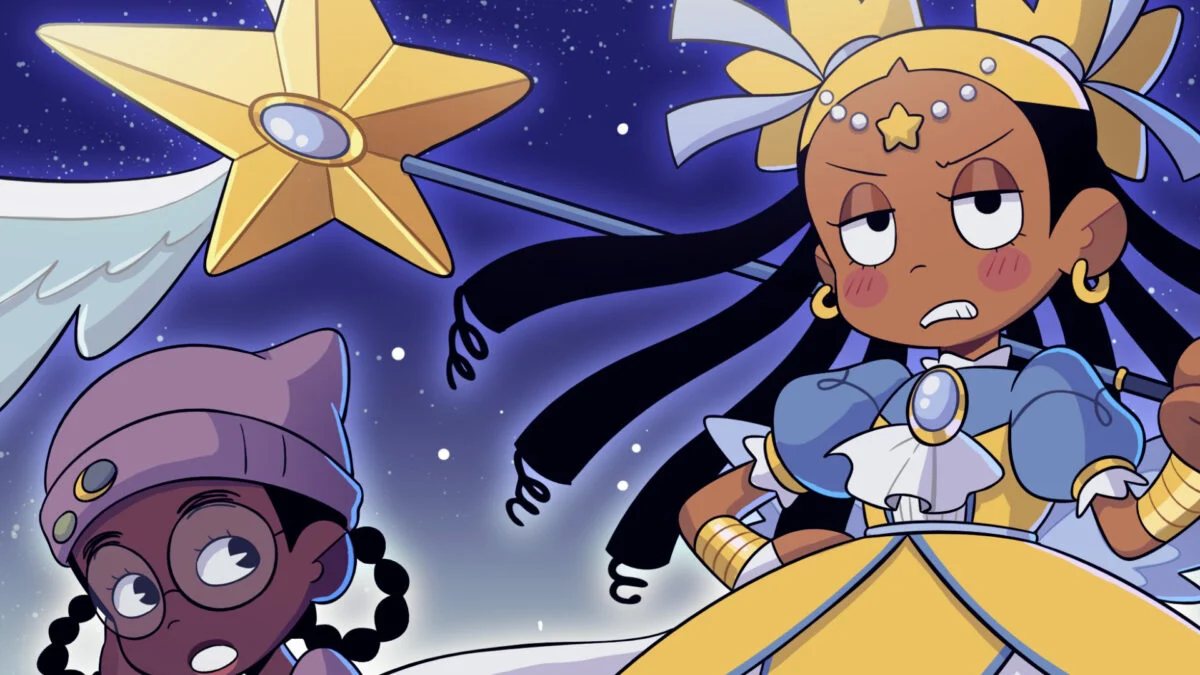
The email notification chimed: “Mercury Filmworks to Fully Animate ‘Pretty Please’ Pilot.” My coffee went cold as I reread it, a grin spreading across my face. Finally, recognition for a series that felt like a secret handshake among animation aficionados. Indie animation has been quietly building momentum, and one project from 2025, Pretty Please, I Don’t Want to Be a Magical Girl, is proving it’s ready for the big leagues; its second episode recently premiered.
From Kiana Khansmith, the series introduces us to 15-year-old Aika. She’s attempting a “normal” teenage life after giving up her magical girl duties. Fate, it seems, has other plans.
Her star-shaped guardian, Hoshi, resurfaces, pushing her to return. And to complicate things, her old nemesis Eclipse is back, eager for a rematch. Aika’s resolve is tested, and what happens next is both hilarious and heartfelt.
Aika’s geeky friend Zira adds fuel to the fire, captivated by the magical world Aika tries to escape. Aika, through Zira, is reluctantly pulled back in—even when danger lurks around the corner. This is the core of the show’s charm.
Is Pretty Please a Parody? Not Really.
Think of that feeling when you discover a hidden gem; it’s unique, but it delivers the same satisfaction as a familiar classic. Despite the title, Pretty Please, I Don’t Want to Be a Magical Girl doesn’t deconstruct the genre. It plays it straight.
The series focuses on Aika’s sincere desire for everyday teenage experiences. From surviving tests to enduring bad cafeteria food, these moments have as much weight as battling monsters. It’s this earnestness that separates it from other shows.
We learn that Aika’s past as a magical hero led to burnout, not one specific event. She craves ordinariness, which flips the script on similar narratives. She’s running towards something, not away.
What Makes Aika a Compelling Protagonist?
Aika isn’t alone. Zira and Hoshi provide support, creating a dynamic trio. The voice acting enhances the humor. The show is accessible without becoming overtly adult, even when it throws in a well-placed swear word (the pilot’s usage of “fuck” is *chef’s kiss*).
Khansmith also works on Disney’s Big City Greens, and the influence shows. She trusts the audience to understand familiar tropes about young characters, allowing her to pack each episode with rapid-fire jokes that fit the world perfectly.
Animatics: A Unique Style That Works
Ever get the feeling you’re in on a secret that everyone else is missing? That’s how watching Pretty Please feels. Unlike fully animated indie projects, the episodes use storyboards.
Typically, storyboards previsualize animation and camera angles. Khansmith admits this approach saves time and money. However, it also requires more audience engagement. The clean boards, well-defined actions, and superb voice acting create a unique charm. And the brief, fully animated sequence in the pilot is timed perfectly, hinting at the show’s full potential.
How Does Khansmith Engage With Her Audience?
Online audiences adore Pretty Please, I Don’t Want to Be a Magical Girl. Khansmith connects with her community by releasing doodles of the characters hanging out and expanding on the mythology. By meeting her audience where they are, she has earned their praise and support.
Mercury Filmworks (Centaurworld, The Ghost & Molly McGee) is now fully animating the pilot. This could be a prelude to a full series or a standalone project.
Pretty Please possesses the potential to become a mainstream hit. It shines a light on Khansmith’s talent and deserves every bit of recognition it gets. Now that the industry’s eyes are on Khansmith, what creative choices will she make?