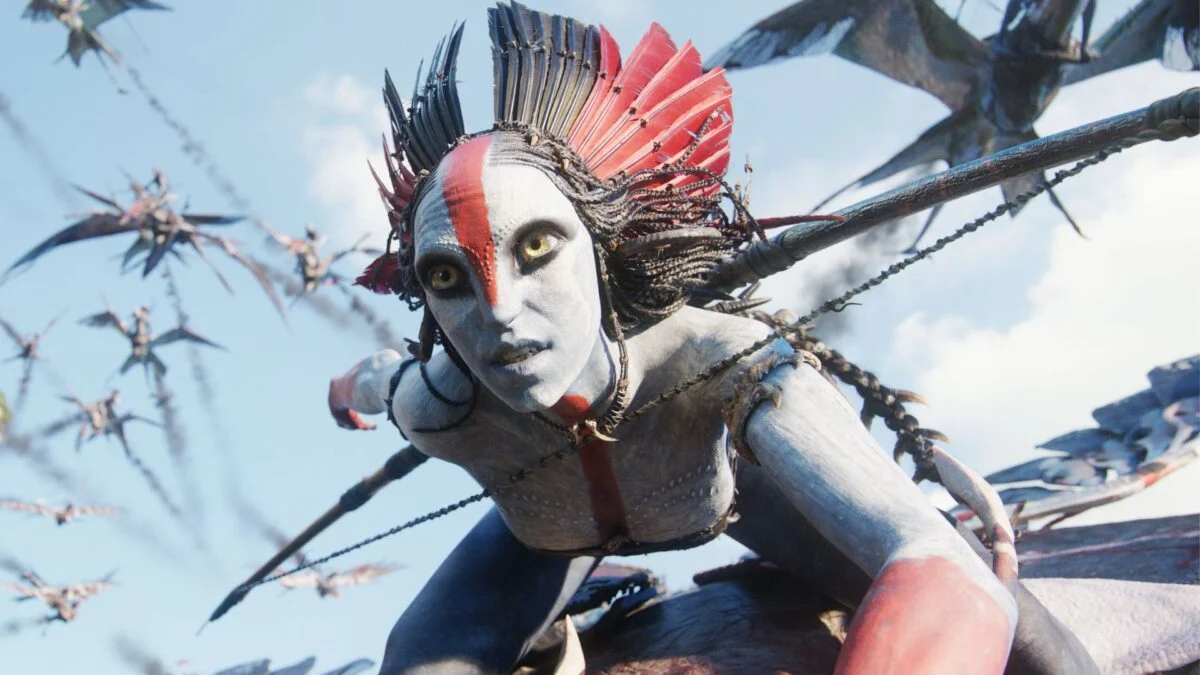
The envelope arrived crinkled, bearing the Academy seal. Inside, a single line: “Avatar: Fire and Ash—Best Costume Design nomination.” My jaw dropped. How could a film so reliant on digital artistry be recognized for something seemingly so…tangible?
When the Oscar nominations were announced, buried below the headlines (Sinners scored 16 nods!) and snubs (sorry, Wicked: For Good) was sort of a head-scratcher involving Avatar: Fire and Ash. Recognition for Best Visual Effects was a given; Avatar: The Way of Water won the category back in 2022, as did the original Avatar in 2009.
But while the third Avatar failed to find itself in the Best Picture race, a first for the franchise, James Cameron’s latest series entry did enter brand-new Academy Awards turf: Best Costume Design.
Na’vi Couture: It’s More Than Meets the Eye
Think about the last time you saw a truly impressive movie costume. Maybe it was the regal attire in Queen Elizabeth. Or perhaps the tattered garb of a post-apocalyptic survivor. But when you watched Avatar, did you consider those CGI-enhanced loincloths and necklaces as “costumes”?
You’d be forgiven for wondering exactly how that’s possible. Isn’t Avatar: Fire and Ash, created using cutting-edge motion-capture technology, very almost an animated film? Aren’t the costumes more in the realm of production design than actual crafting of garments, as seen in the other films nominated in the category (Frankenstein, Hamnet, Marty Supreme, Sinners)? In a new interview with the Hollywood Reporter, Avatar: Fire and Ash‘s costume designer said that her team does, in fact, make physical outfits for all those nine-foot tall blue people. Sort of.
Deborah L. Scott, who already has an Oscar for her work on Cameron’s Titanic, explained that despite the assumption that her work on the film was entirely virtual, that’s not the case. “This is real costume design work. So it’s like a door opening to a new era to have that nominated and recognized as an alternate way of designing costumes.”
Every CG-animated outfit you see on screen is based on an actual physical creation, Scott said.
“We build each piece, from a loin cloth to a necklace, to human scale and deliver it to Wētā FX. They scan it and their artists start to model it. Then we virtually fit samples to a nine-foot-tall blue body, making the costume a second time in a virtual fitting room. Then you can manipulate it. Maybe my human sample needs to be a little longer on my blue person. Then they’re on to modeling and texturing, based on the road map of the sample,” she explained.
“If you just hand over a design on paper to a VFX company, which is usually what happens in normal animation, they take it from there and determine the materials without knowing the nuances,” she added. “A leather chest plate moves a different way on your body than a necklace. Some animated projects have designers, but they’re not involved in building. You can’t compare it to animation, as our focus is on realism.”
And just because the Avatar movies take place in fanciful settings—with characters that can be underwater or flying, depending on the scene—that doesn’t mean VFX magic does all the heavy lifting. “We film tests of every piece involved in dancing or swimming or flying and turn them over to the animators and simulators, so they understand how the costumes move in water or wind, because that’s the caliber and demands that Jim has,” she clarified.
How do you film costumes for underwater scenes?
Consider the physics involved. Fabric behaves differently when submerged. It clings, it flows, it distorts. For the underwater sequences in Avatar: Fire and Ash, Scott’s team didn’t just imagine how the Na’vi garments would move; they meticulously tested them. These tests, filmed and analyzed, provided the animators with reference points to simulate the realistic drag and ripple of the costumes in water.
This commitment is a rising tide, lifting the entire film above conventional animation.
Crafting Costumes for a Digital Canvas: The Devil’s in the Details
Think of a painter standing before a blank canvas. They don’t just slap colors on; they consider texture, light, and shadow. Similarly, Scott and her team treated the digital canvas of Avatar with the same level of artistry and attention to detail.
It’s easy to assume that, in a world of motion capture and CGI, costumes are an afterthought. However, Scott’s process reveals something quite different. She explained that if they just hand over a design on paper to Wētā FX (Wellington, New Zealand), they take it from there and determine the materials without knowing the nuances.
What programs do costume designers use?
While Scott doesn’t name specific programs, we can infer the types of software her team likely utilizes. Industry-standard tools such as Adobe Photoshop and Illustrator are commonly used for initial designs and sketches. 3D modeling software, like Clo3D or Marvelous Designer, might be used to visualize the garments on a digital avatar before physical creation. These programs allow designers to experiment with different fabrics, patterns, and silhouettes, bridging the gap between imagination and tangible creation.
Beyond Pixels: The Human Touch in Digital Design
In our rush toward technological innovation, it’s easy to forget the artistry that anchors even the most futuristic creations. Scott’s nomination serves as a reminder: technology is simply a tool, and artistic expression is the hand that guides it.
Scott sees the nomination as more than personal recognition; it’s validation of an evolving art form.
“This is real costume design work,” Scott told The Hollywood Reporter. “So it’s like a door opening to a new era to have that nominated and recognized as an alternate way of designing costumes.”
How much does a costume designer make in Hollywood?
The earnings of a costume designer in Hollywood can vary widely, hinging on factors like experience, reputation, and the scale of the production. Entry-level positions might start around $60,000 (€55,000), while seasoned designers working on blockbuster films can command salaries well into the six figures (equivalent to €92,000+). The Costume Designers Guild (Local 892) negotiates minimum rates for its members, aiming to safeguard fair wages and working conditions in the industry.
The Oscars take place March 15. Given the blend of physical craftsmanship and digital innovation, will Avatar: Fire and Ash redefine the very definition of costume design and claim Oscar gold?