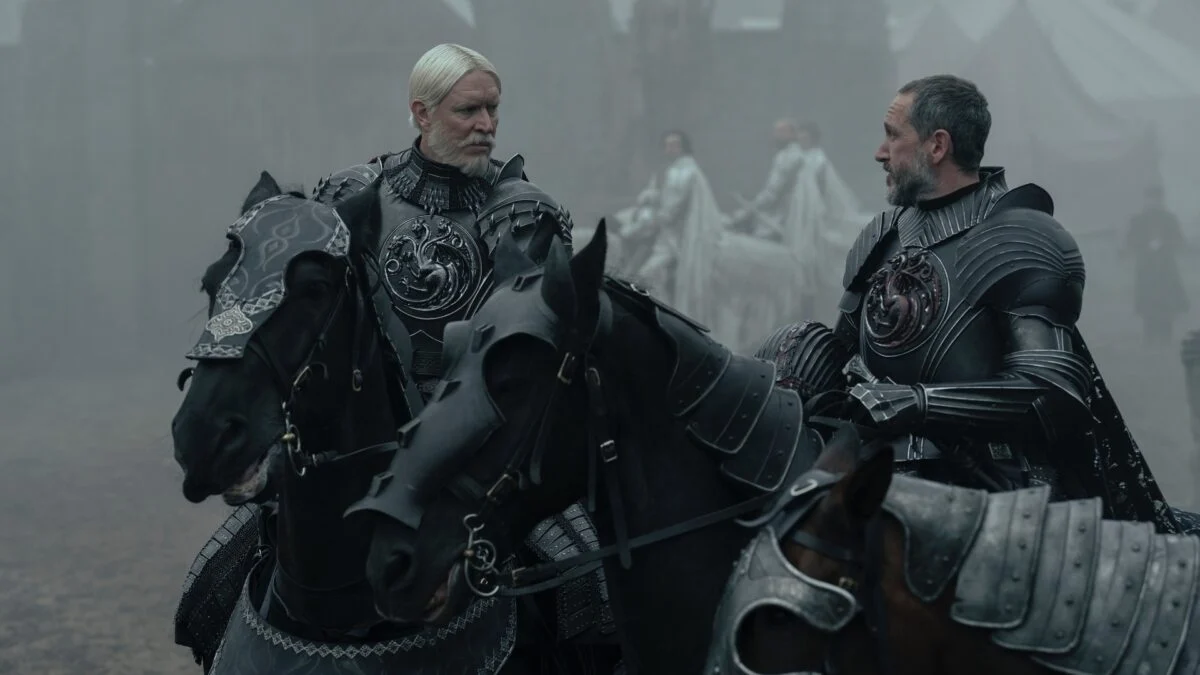
With the air thick with tension, Dunk stood in a crowd that momentarily held its breath. This was his moment—his chance to face the formidable Aerion Targaryen. But just as the strings filled the air with promise, a fart cut through the atmosphere, shattering the hero’s moment with a laugh that echoed louder than any heartstring.
Expectations vs. Reality: The Power of Subverting Tropes
When Knight of the Seven Kingdoms began, the whispers of the original Game of Thrones theme were omnipresent. Ramin Djawadi’s haunting melody is forever etched in our collective memory, setting an almost impossible benchmark. So, when the spinoff reused his iconic score, the real question lingered: How do you improve on a masterpiece?
This is where humor dives in, and you’ll find Knight of the Seven Kingdoms doesn’t shy away from levity. The show has established a rhythm that contrasts the sultry orchestral grandeur with the unexpected; a poop joke highlights the shift from the epic to the everyday, making it unmistakably clear: this is a different story.
How does ‘Knight of the Seven Kingdoms’ fit into the ‘Game of Thrones’ legacy?
The striking return of Djawadi’s score might come as a breath of fresh air, but the shifts in music create a landscape all their own. Composed by Dan Romer, the soundtrack now strikes a cheerful, folksy tone—think of a gentle river instead of a sprawling ocean. Romantic guitar plucks and whimsical whistles invite you in, turning serious ballads into boisterous tavern songs.
Meanwhile, Dunk’s adventures take him through trials both comedic and dire. He’s battled not only foes but expectations. Each note and shift in tonality draws a line between his comedic exploits and the heavy weight of his knightly aspirations. What beautifully captures this shift is when Dunk’s call to arms is interrupted by that aforementioned fart; humor seeps into the narrative like a fine wine permeating a festivity.
Creating Tension: The Culmination of Scores
As Dunk faces an ancient trial for valor, the stakes rise. His desperate plea for support is met with laughter, signaling a deeply rooted community around him that thrives on joy and sarcasm. It’s in this moment the Game of Thrones theme returns, but this time it pulsates with life, evolving into a triumphant orchestral mix layered with Romer’s playful motifs.
Why does the music matter in storytelling?
This thematic resurgence enriches the narrative, reflecting how personal and societal conflicts intertwine. For a brief flash, the heroic legacy of knights that once inspired awe is felt in its full force. Here, we can truly feel the intertwined destinies of our beloved characters. It’s a reminder that sometimes, nobility emerges not from the grandiose but from the small, simple acts of bravery, even if they’re set against a backdrop of laughter.
The Magic of Musical Storytelling
At the climax of “Seven,” when a noble Targaryen enters the fray, the score transforms, elevating Dunk’s personal journey to epic proportions. The Game of Thrones motif becomes a catalyst, not just a nod to legacy. It wraps around Dunk’s story, giving his quest a weight that reflects the gravity of knightly honor.
It could be said that blending humor with heartfelt moments shows a deeper understanding of the fabric that weaves these tales together. In the spectrum of storytelling, Dunk’s legacy now flirts with grandeur without losing its human touch, playing with our emotions in ways that transcend traditional narrative boundaries.
As the episode draws to a close, leaving us captivated, I can’t help but wonder: can humor and heroism coexist in ways we’ve yet to explore in this universe? What other surprises lie ahead in this unlikely saga?