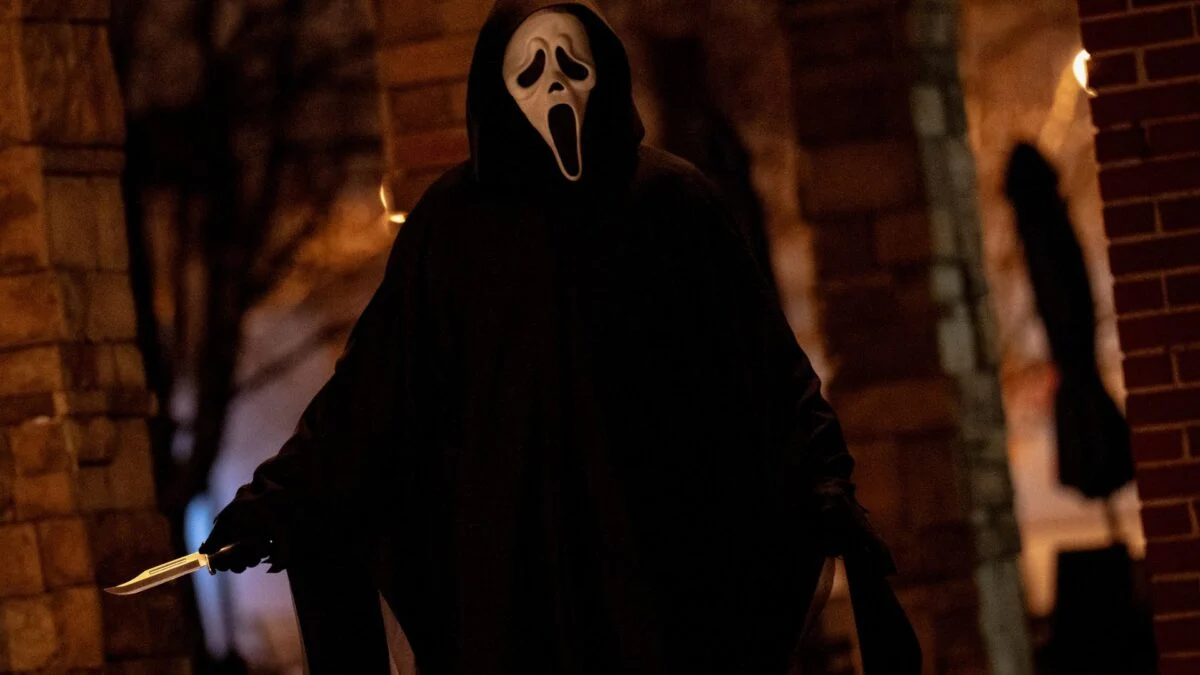
I first heard the call on a late-night rerun and felt myself lean forward. You know the sound—the whisper through the receiver that turns suburbs into crime scenes. That single breath of menace changed how I watch a phone ring.
I’m going to walk you through every theatrical Ghostface and show you why each reveal worked or faltered. You already know the hooks: a mask, a voice, and the satisfying sting when a suspect becomes the killer. What I want you to leave with is sharper instincts for motive and misdirection—so when the credits roll you’ll still be guessing.
Who is Ghostface in each Scream movie?
Ghostface began as a pair and soon became a technique directors and writers used to reset the rules. From the original Blood & revenge duo to a trio of family members in recent years, the mask has been worn by students, lovers, producers, and one very hurt sibling.
Late-night diners empty out after the sequel’s screenings — 6. Wayne, Ethan, and Quinn in Scream 6
I’ll be frank: this one asks you to accept a larger conspiracy than earlier entries. Three people (Dermot Mulroney’s Wayne, Jack Champion’s Ethan, and Liana Liberato’s Quinn) team up to avenge Richie’s death. You can admire the ambition—assembling an entire family vendetta—but you’ll feel the payoff thin. The motive (revenge for a dead brother) is serviceable, yet it lacks the sharper emotional twist that made earlier reveals land harder.

Conversations end when a new relationship begins to sour — 5. Richie and Amber in Scream 5
Here I give credit where it’s due: Richie (Jack Quaid) as the obsessed fan who resents the franchise’s stagnation is a clever cultural jab. His accomplice Amber (Mikey Madison) amplifies the betrayal—dating the protagonist only to be the knife in the back. If you track fandom, social media echo chambers, and how obsession curdles into violence, this reveal will read as timely. Still, placing it fifth reflects the familiarity of the formula; the mechanic of the duplicitous lover had already been done better earlier.

Which Ghostface had the best motive?
If you ask me, motive is the spine of a good reveal. Some killers want fame; others want retribution. I read motives the same way I read credits on IMDb or a Rotten Tomatoes consensus: they tell you whose story the film wanted to punish or celebrate.
Parents at a memorial clutch programs tighter — 4. Mickey and Nancy in Scream 2
Here’s the real-world observation: grief rewrites loyalties. Nancy (Laurie Metcalf) has reason—she’s Billy’s mother and she’s enraged. Mickey (Timothy Olyphant), the film-student accomplice, is an obvious echo of Billy’s cinematic appetite. The two-piece setup works narratively, but it feels like a retread of the original’s energy. Nancy’s drive is credible; Mickey’s presence softens the danger into imitation.

Acting classes buzz after rewrites— 3. Charlie and Jill in Scream 4
High school politics are a pressure cooker, and Jill (Emma Roberts) and Charlie (Rory Culkin) weaponize popularity. Each has an ego; each masks insecurity. Jill’s cold ambivalence toward fame—she plans to be both the killer and the survivor—is one of the franchise’s meanest coups. I’ll say it plainly: the twist that Jill wanted notoriety in the hall-of-fame sense is devilish in the best possible way, and the breakdown of their partnership makes the movie hum.

Old girlfriends keep yearbooks in drawers — 2. Billy and Stu in Scream
Here’s an observation you already sense: originals shape every imitation. Billy (Skeet Ulrich) and Stu (Matthew Lillard) set the franchise’s rules. Their motivations—Billy’s vendetta against Sidney and Stu’s sociopathy—are simple and savage. They invented the mask’s aesthetic and the performative cruelty that defines Ghostface. If you want the blueprint for everything that followed, study them. Their partnership had chemistry, menace, and a clinical cruelty that still reads as terrifying.

Studio lots whisper about old gossip columns — 1. Roman in Scream 3
Fact: Hollywood keeps secrets. Roman Bridger (Scott Foley) weaponizes that fact. He’s the rare Ghostface whose motive rewires the whole narrative: jealousy and professional betrayal. He engineered the original crimes from the shadows and then staged himself as a director of a film that mimicked reality. That meta-level cruelty—killing while directing a story about himself—elevates Roman above the rest. It’s the wound that started many of the others, and his single-handed orchestration reads as the most narratively satisfying payoff.

I’ve used the films, interviews with creators like Kevin Williamson and Wes Craven, and platform signals from IMDb and Rotten Tomatoes to weigh which Ghostfaces forced us to rethink every suspect. The strongest killers bend motive and method into a single cruel idea; the weaker ones scatter motive across too many players. When the mask drops, you should feel both betrayed and impressed.
The mask is like a mirror—what you fear in others is usually your own reflection. The final reveal should hit you like a betrayal you almost suspected but didn’t want to admit. Who in the list made your skin crawl more: the jealous director, the original duo, or the new wave of copycats?