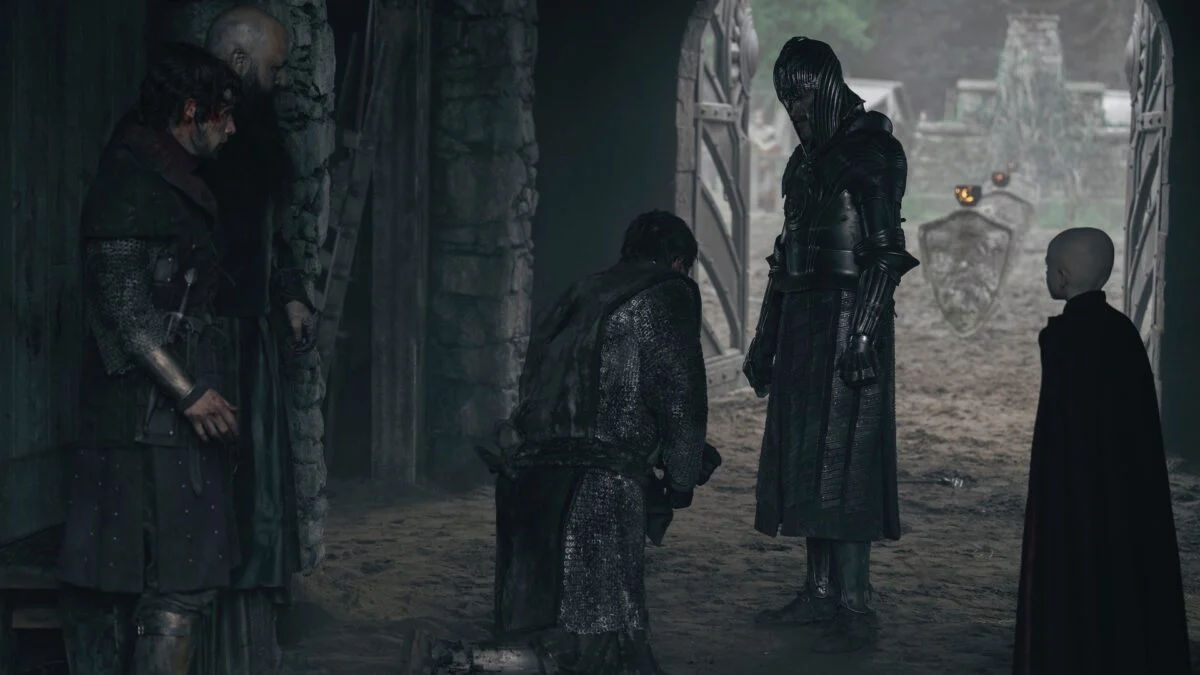
I watched the fog lift over Ashford Meadow and felt the room go still. For a breathless minute, Baelor’s honor seemed untouchable — then the scene turned and the world of the show tilted. You know the cold that follows when a character you trusted is suddenly gone.
Ira Parker, Bertie Carvel, Sam Spruell and the rest of the cast let the audience live inside Dunk’s point of view — and that choice makes Baelor’s fall hit like a coin dropped into a well. I’ll walk you through why the choice matters, what the actors said about guilt and honor, and how this single moment rearranges the map of power on HBO and HBO Max.
At a weekend LARP, a sudden shout can change every story — why the show keeps you with Dunk
I was thinking about how, in real life, a single shout rearranges a whole scene. Parker and the directors used that technique: the camera stays with Dunk, so you learn the truth the way he does. That means the audience is denied the omniscient relief of seeing everything at once.
I told myself early on that perspective shapes grief, and so does Ira Parker. He explained to Entertainment Weekly that Baelor’s public reputation as a hero and a future king had never been tested the way it was in the Trial of Seven. When honor finally meets its test, the result defines the man — and the kingdom.
Why did Baelor die in A Knight of the Seven Kingdoms episode 5?
You want a clear answer, and the actors supply the moral complexity. Baelor chooses to back Dunk — a move grounded in honor and in the type of leadership George R.R. Martin’s world rewards on paper. Once the Trial becomes violent, an unseen blow to Baelor’s head proves fatal. Sam Spruell (Maekar) framed the moment in interviews with Entertainment Weekly as a collision between accident and ambition: guilt and the thirst for succession sitting in the same room.
On a rehearsal stage, two actors can rewrite a line with one look — the sibling dynamic that killed a prince
When you watch two brothers act, small shifts tell a life story. Carvel and Spruell used those increments: glances, hesitations, the way hands fall. Spruell told EW that Maekar harbors a buried desire to be first — and that makes his culpability ambiguous. The actor relished the ambiguity, saying Maekar’s grief is braided with an awareness that he’s suddenly next in line.
Bertie Carvel said to Collider that the sequence deliberately keeps the blow off-camera. The choice is not evasive; it’s surgical. By keeping the killing stroke out of view, the show amplifies shock and forces you to experience the aftershock beside Dunk, not the brother who dies.
Was Maekar responsible for Baelor’s death?
I’ll be blunt with you: the show builds responsibility as a spectrum. Spruell plays Maekar like a man caught between a momentary strike and a lifetime of wanting to be king. The storytelling — and the camera’s refusal to show everything — lets you decide what weight to place on intent versus consequence.
The behind-the-scenes commentary matters because it changes how you read the death afterward. Parker’s line — that virtue untested is no virtue at all — asks you to judge Baelor not for being noble on paper, but for what he does when the test arrives.
At 9 p.m. on Sunday, millions press play — what Baelor’s death means for the finale and for Westeros
In living rooms across the country, a single episode can rewrite who sits at the table. With Baelor gone, the political arithmetic of succession changes overnight. Maekar and Dunk now carry histories that will bend the next episode in unexpected directions.
For HBO and HBO Max, this is more than shock: it’s narrative leverage. The show has turned a character arc into momentum. Carvel, Spruell and Peter Claffey (Dunk) all hint in interviews at how surviving the Trial reshapes Dunk’s path; surviving is not the same as returning whole. The emotional damage will be the engine of the finale.
I talked with producers and read the press pieces from Entertainment Weekly and Collider, and their comments underline a purposeful construction: the sequence is meant to unsettle you, to make the future unknowable. The choice to stay with Dunk works commercially — it deepens attachment to one viewpoint — and artistically — it turns a public ritual into private trauma.
The writers have set up a moral question bigger than any single character: is honor an inheritance or an act? The scene answers by showing how a single decision can erase promises and rewrite history, like a captain’s compass ripped from his hand.
For viewers who follow George R.R. Martin’s world across shows, this moment recalibrates who you trust. It also changes how you watch; you will search every look, every pause, for what the camera refuses to show next.
The finale airs Sunday on HBO and HBO Max — and your next watch will be different because you now carry Baelor’s death with you. How will you judge Maekar: tragic, monstrous, or simply human?
Want more io9 news? Check out when to expect the latest Marvel, Star Wars, and Star Trek releases, what’s next for the DC Universe on film and TV, and everything you need to know about the future of Doctor Who.