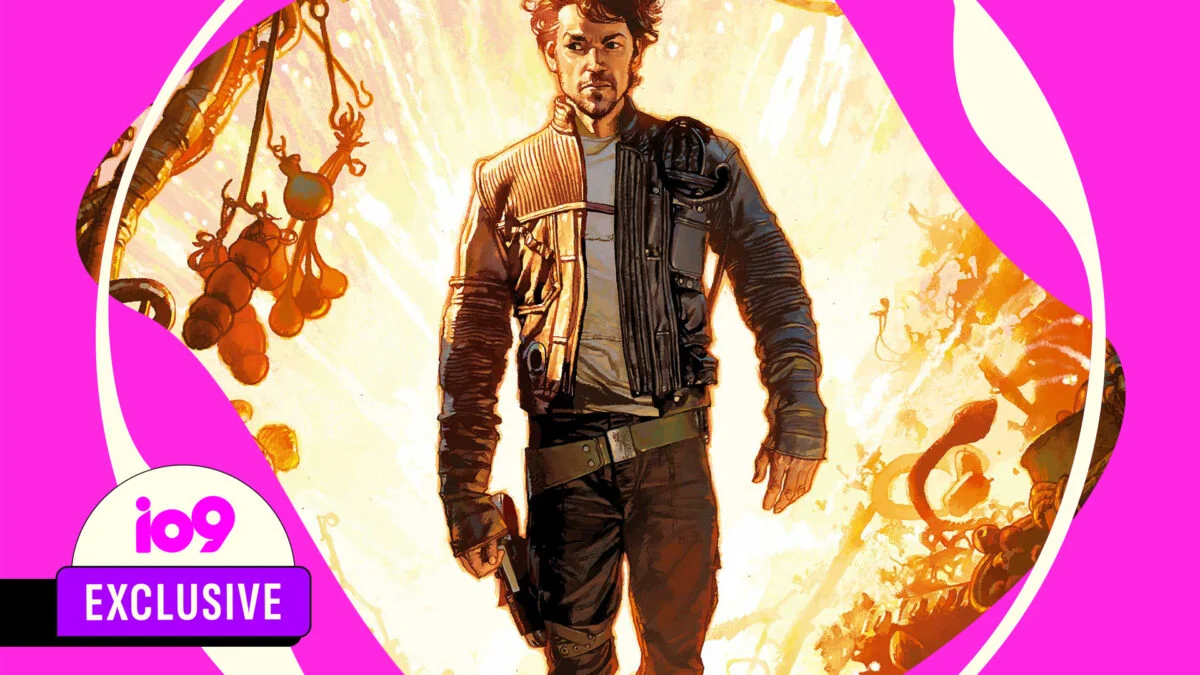
The bell over the shop door rang and a rack of glossy covers shoved itself into your hands. You realized, in a slow, stubborn way, that the question you’ve had since Rogue One—what happened before the heist—was about to be answered. For a few seconds the room felt smaller: history was about to be crowded with new faces and older choices.
I’ve followed these kinds of tie-ins for years, and I’ll tell you what matters: the details that fill the cracks. You read fast when a story promises to explain why a character did what they did. That’s why Marvel’s five one-shots—each centered on a key player from Rogue One—feel more like careful excavation than noise. The announcement landed with authority: Lucasfilm, Marvel, and creators you recognize are steering these pages.
The plan is simple: five stand-alone issues, each set moments before the team collapses into the single mission that changed everything. I’m talking Jyn, Cassian, Saw, Chirrut and Baze, and yes—Vader too. The move reads like a careful repair to the movie’s margins, bringing faces forward and giving them breathing room.


At a press-release table: the lineup that rewrites the margins
The announcement—shared with Movies & TV and Lucasfilm—names five one-shots that land across late spring and summer 2026. Each pairs a writer and artist with a character whose last acts we only saw in fragments. I trust creators like Benjamin Percy and Ethan Sacks to bring gravity; artists like Luke Ross and Ramon Rosanas give those moments weight and texture.
When do the Rogue One one-shots come out?
The schedule is clear: Cassian Andor arrives May 6, 2026; Jyn Erso follows June 3, 2026; Saw Gerrera is slated for July 2026; Chirrut & Baze for August 2026; and Darth Vader lands in September 2026. That pacing keeps attention moving across months instead of squeezing everything into a single drop.
At the counter of your local comic shop: what these stories promise
These issues aim to fill small, fierce blanks. Percy told Movies & TV he wanted to answer the moment when Cassian kills Tivik—a turning point that rewired the character. The Cassian issue is an espionage thriller on Kafrene, with bounty hunters, Krennic, and the K2 unit in the margins; it’s not fan service, it’s context.
Who’s writing and drawing the new one-shots?
Writers include Benjamin Percy, Ethan Sacks, Marc Bernardin, Stephanie Phillips, and Chris Condon; artists include Luke Ross, Ramon Rosanas, Gabriel Guzman, Kieran McKeown, and David Marquez on main covers. There are also notable variant contributions—Walt Simonson returns to Darth Vader, and Josemaria Casanovas supplies striking alternatives.
At a screening room: why this matters to the larger saga
These are not throwaway tie-ins. Lucasfilm senior editor Robert Simpson framed them as glimpses into the crew’s pasts; I read that as a promise of character-driven stakes. The movie gave us a mission; these comics offer the reasons the team answered the call—small, human causes that make a suicide run feel inevitable.
The announcement functions like a blade cutting open the silence around those choices. The stories themselves are a weathered map, inked with routes the film never traced.
Are these comics canon with Andor and the films?
Marvel’s comics have been integrated into official Star Wars continuity before, and Lucasfilm’s editorial involvement suggests these one-shots will sit comfortably alongside Andor and the film timeline. Expect connective tissue, not contradictions: Percy’s Cassian tale plugs into the narrow gap between Andor season two and the Cassian we meet in Rogue One.
If you collect single-issue comics, budget for current comic pricing—standard issues often retail for $4.99 (€5). You’ll see a mix of David Marquez main covers and several striking variants that will matter to collectors and casual readers in different ways.
I want to be clear about the emotional architecture at play: Rogue One traded lightsabers for moral fracture and sacrifice, and these creative teams are revisiting that tone without softening it. The result reads like an expansion of the film’s original gamble—stories that reward patience and attention, not just spectacle.
So what matters to you? If you want story that explains motive, watch the May-to-September roll-out; if you collect, follow the Marquez mains and the Simonson Vader variant. If you care about narrative consequence, these issues are designed to change how you read the final act of Rogue One.
Do these one-shots rewrite the movie’s ending or enrich it—does context change the meaning of sacrifice, or does it make the sacrifice sharper?