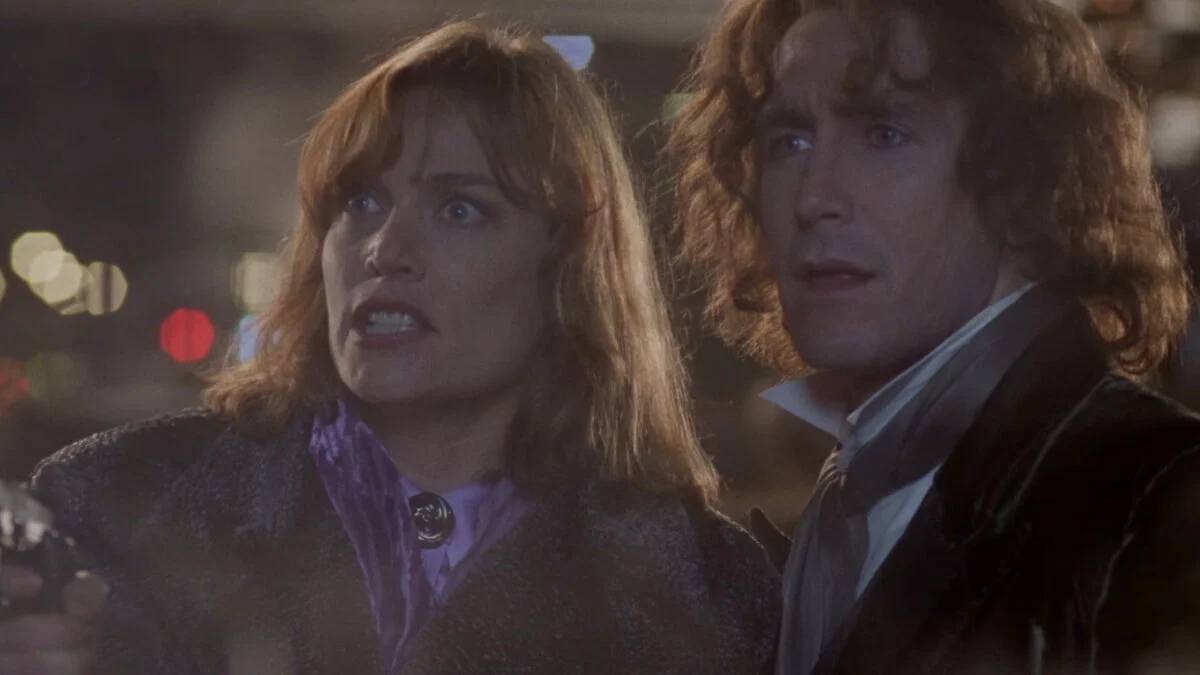
The TV goes black for a beat, and you realize the regenerator didn’t land where you remembered. I sat up, tea gone cold, watching Paul McGann appear and feeling something unfinished snap into place. That small jolt — a mix of loss and possibility — is exactly what the new release promises to address.
I’ve followed this movie longer than most fans have been alive, and I’m telling you: the BBC’s remaster isn’t a marketing afterthought. It’s a careful restoration from the original film negatives to 4K, with a newly reconstructed surround-sound mix that treats the audio like a story, not wallpaper. You’ll see the film with fresh clarity and hear it in a way the broadcast never permitted.
On a dim sofa I rewound the VHS and felt the peculiar pause between eras.
That pause is where this film lives: it tried to bridge classic British science fiction and a wider, American TV sensibility. You remember the cast as much as the plot — Sylvester McCoy’s last gasp as the Seventh Doctor, Paul McGann’s first, Daphne Ashbrook’s doctor with an MD rather than a sonic screwdriver, Eric Roberts chewing scenery with delicious glee as the Master, and Yee Jee Tso stuck as an unwitting cog. Off-screen the movie did more than survive; it seeded comics, novels, and especially the Big Finish audio dramas where McGann’s Eighth Doctor gained a life of his own.
At the rental counter a clerk shrugged: people mentioned the film, but rarely watched it.
That lack of attention turned the movie into a collector’s curiosity rather than a mainstream revival. What the BBC announced changes that: a 4K scan from the original negatives means details that looked soft on TV will be sharp, grain will behave like film again, and the reconstructed surround mix will let the Master’s menace move through a home theatre the way it was intended. Think of the new transfer as a scratched vinyl finally sent to a mastering engineer — it breathes back a groove you didn’t know you missed.
In a forum thread, a fan typed the obvious question and waited for answers.
When will the remastered Doctor Who TV movie be released?
The BBC says the film will arrive on UHD and standard Blu-ray this year, with pre-orders opening soon and a UK release scheduled for May 2026. A US release date has not been confirmed yet; keep an eye on official BBC Shop updates and major retailers like Amazon and specialist retailers that handle Criterion-style editions.
Will the remaster include a 4K transfer and new surround sound?
Yes — the package is being remastered in 4K from scans of the original film negatives and includes a newly reconstructed surround soundtrack. If you run the disc through a Blu-ray player and a modern AVR with Dolby support, you’ll notice spatial cues and clean dialogue that the original broadcast compressed away.
Is Paul McGann returning in new footage?
No new scenes with McGann have been announced; his most recent notable on-screen return was the 2013 mini-episode “Night of the Doctor.” What you get here is the fullest, cleanest presentation of his debut performance, plus any extras the BBC chooses to add for context — interviews, commentaries, and archival materials that give the movie its proper place in the franchise’s timeline.
On a shelf of tie-in novels and CDs, the movie quietly kept working through other formats.
Where the broadcast failed to relaunch a series in 1996, the Eighth Doctor found his audience elsewhere. Big Finish made McGann a central figure for audio dramas, proving a performance can grow stronger in other hands. This release isn’t just nostalgia; it’s continuity-minded curation for collectors and newcomers alike. For home cinema fans who use Plex, Blu-ray players, or disc changers, this edition is engineered to slot into modern setups.
Outside the studio, the debate will be loud and the stakes personal.
For some viewers the film is an oddity. For others it’s the missing link between classic and revived television. The remaster gives both camps a concrete object to judge: sharper visuals, reconstructed sound, and the chance to hear the Doctor’s lines without broadcast-era compression. A time capsule pried open with a jeweler’s loupe will feel less like archaeology and more like a rediscovery.
So what matters most? For me, it’s that the film is being treated like a piece of the franchise’s living history rather than a footnote. You can debate casting choices, tonal missteps, and the long gap before the 2005 television revival — and you should — but the new release forces the argument back onto the work itself. Will this polished edition change how future fans reckon with that awkward, thrilling stop on the Doctor’s timeline?