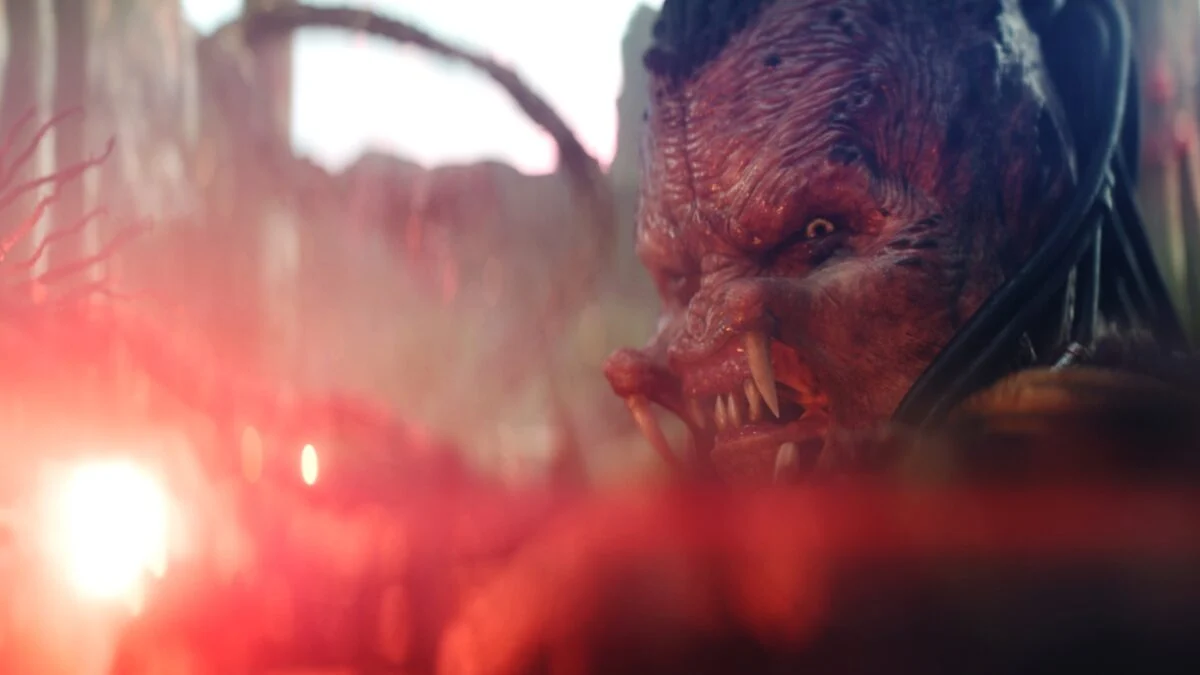
On day five the tracker blinked: nine million views and the number didn’t slow. You feel the room shift when a franchise that once hunted in the margins suddenly becomes the thing everyone is talking about. I watched the pause between projects evaporate and knew this wasn’t accidental.
Streaming dashboards lit up: Hulu logged nine million views of Predator: Badlands in its first five days.
This is the clearest signal yet that the Trachtenberg-era Predator films have momentum.
I’ve followed streaming rollouts for years; this kind of immediate traction means an audience moved faster than marketing alone can explain. Nine million views in five days isn’t a blip — it’s a wash of attention that pulls cultural conversations toward the franchise.
Disney’s press notes add context: more than 300 million hours of Predator franchise viewing across Disney+ and Hulu globally, a stat that treats the series like an active IP, not a nostalgic curiosity. That number covers live-action hits like Prey (2022) and recent additions such as the straight-to-Hulu animation Predator: Killer of Killers (2025).
Theaters were full during the November 2025 run.
Predator: Badlands also arrived with a strong box-office story before it went streaming.
You don’t get both a robust theatrical lift and a streaming surge without something cinematic happening on screen. Badlands opened in theaters in November 2025 and climbed to become the highest-grossing film in the franchise to that point, then carried that energy into its Hulu debut.
That cross-platform success is rare: think of it as a movie that landed as both a lightning strike and a steady pull — immediate impact plus ongoing curiosity. For you, that means the film entered public conversation on multiple fronts: ticket lines, social clips, and then household streams.
Trachtenberg’s name now functions like a brand.
His work on Prey (2022) rewrote expectations; his comments after the Hulu launch reinforced that pull.
I spoke to colleagues who track directors the way labels track artists; a director who can move audiences from theaters to subscriptions is rare. Trachtenberg’s recent Paramount deal doesn’t read as a farewell. He told io9 he’s excited about returning to the Yautja when the time is right — and that he’s already circling fresh ideas.
That matters because studios watch talent that reliably drives both box office and streaming. When a filmmaker creates appointment viewing, you get both a marketplace and permission to fund sequels, animated spinoffs, or more ambitious crossovers.
How many people watched Predator: Badlands on Hulu?
Hulu reported nine million views in the first five days after release. That kind of short-window number signals mass sampling and conversation — the engine studios use to justify further investment in the property.
Will Dan Trachtenberg return to direct another Predator film?
He hasn’t signed on to a specific next film, but he has said publicly that he’s thinking about more Predator stories and would welcome returning. His new agreement with Paramount might delay a reunion with Disney, yet the franchise’s renewed health gives both studios incentive to negotiate.
Why did Badlands do so well on streaming after theaters?
Timing, creative framing, and franchise goodwill. Audiences who discovered Prey in 2022 were primed; theatrical success in November 2025 amplified that base; and Hulu’s platform mechanics — featured placement, algorithmic pushes, and social sharing — made it easy for casual viewers to join the conversation.
Industry watchers noticed real money and attention shifting.
This is a moment where studios decide whether to expand or conserve IP.
If you’re tracking what matters for future Predator projects, watch three levers: director interest (Trachtenberg), studio deals (Paramount vs. Disney), and audience engagement metrics (the kind Hulu just delivered). Those three form the levers that will tilt decision-making about sequels, animated arcs, and crossovers.
For creators and executives, that calculus is now public. For you — the fan, the critic, the casual scroller — it means more content choices and a real chance that Trachtenberg returns to the hunt.
Platforms and brands in play: Hulu and Disney+ carried the streaming wave, Disney issued the franchise-hour totals, io9 hosted the director’s comments, and Paramount holds Trachtenberg’s current deal. All those names will be part of how this story unfolds.
What will they do next: expand the timeline, build animated arcs, or let the franchise breathe until the next director’s voice arrives — which path would you bet on?