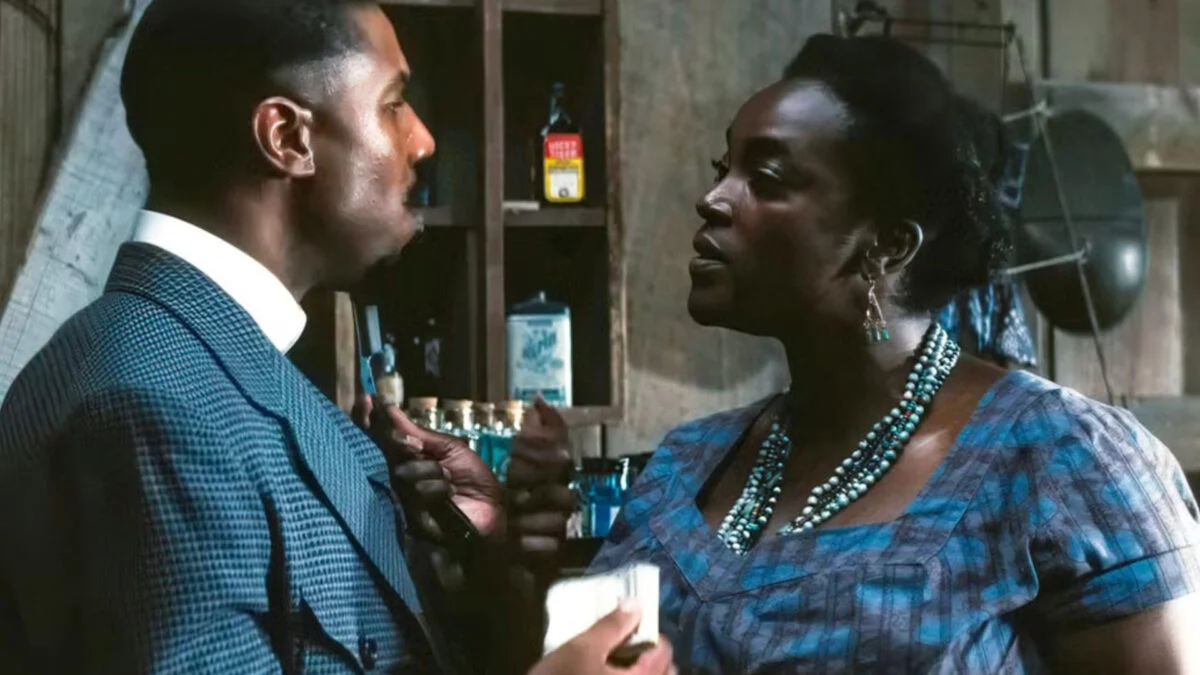
The set went silent when a single name hit the air. I felt the room tilt—actors, camera, and the script itself all answering. You remember the moment long after the credits roll.
I’m writing from the corner of admiration and curiosity: Wunmi Mosaku is an Oscar nominee for Best Supporting Actress for her layered turn as Annie in Sinners, and she calls Ryan Coogler’s screenplay “perfect.” Read her full comments in Deadline, where she joined Coogler, Michael B. Jordan and Delroy Lindo in conversation about the film’s surprising edges.
What role is Wunmi Mosaku nominated for in Sinners?
You can pin it down fast: Mosaku is nominated for Best Supporting Actress for Annie, the estranged wife of Michael B. Jordan’s Smoke. She’s not a background cipher—Annie is a Hoodoo practitioner who reads the film’s supernatural undercurrent and, as Mosaku says, makes you care about the people on the page.
On set, a single name stopped the scene cold.
That isn’t a flourish—Coogler changed a line in a quiet shop scene, swapping “Why are you here, Smoke?” for “Elijah, why are you here?” The adjustment cracked the scene open. I watched Mosaku describe how a single syllable shifted power, and you can sense what she means: names carry histories, and when spoken they can rewire a relationship in real time.
Did Wunmi Mosaku improvise in Sinners?
Short answer: not exactly—but improvisation is threaded through the work. Mosaku rehearsed with the script in hand, calling it perfect, yet several moments felt freshly born on camera. The chain-gang sequence, she says, contained stops where actors improvised and blues seeped into speech; those improvisations weren’t a lapse in craft but a strategic looseness that Coogler allowed to flourish.
During the chain-gang shoot, the actors gave something unplanned to the scene.
They were improvising lines and rhythms in a way that surprised even the cast. The performance didn’t feel raw in a reckless way—rather, the actors’ openness created truth. That chain-gang moment turned into a small cathedral of blues; it elevated texture, mood, and character without undermining the script’s structure.
On paper, the script sits perfectly in an actor’s palm.
Mosaku’s one-word verdict—“perfect”—isn’t celebrity hyperbole. I’ll tell you what I think: Coogler’s script was a blueprint that fit into the actors’ hands, giving them room to build. When Ryan didn’t call “cut” after a monologue, it wasn’t a mistake. It was trust in a design that already worked but was open to moments of genius.
There’s a small, funny aside you won’t want to miss: during a vampire-adjacent scene the crew used a sweet