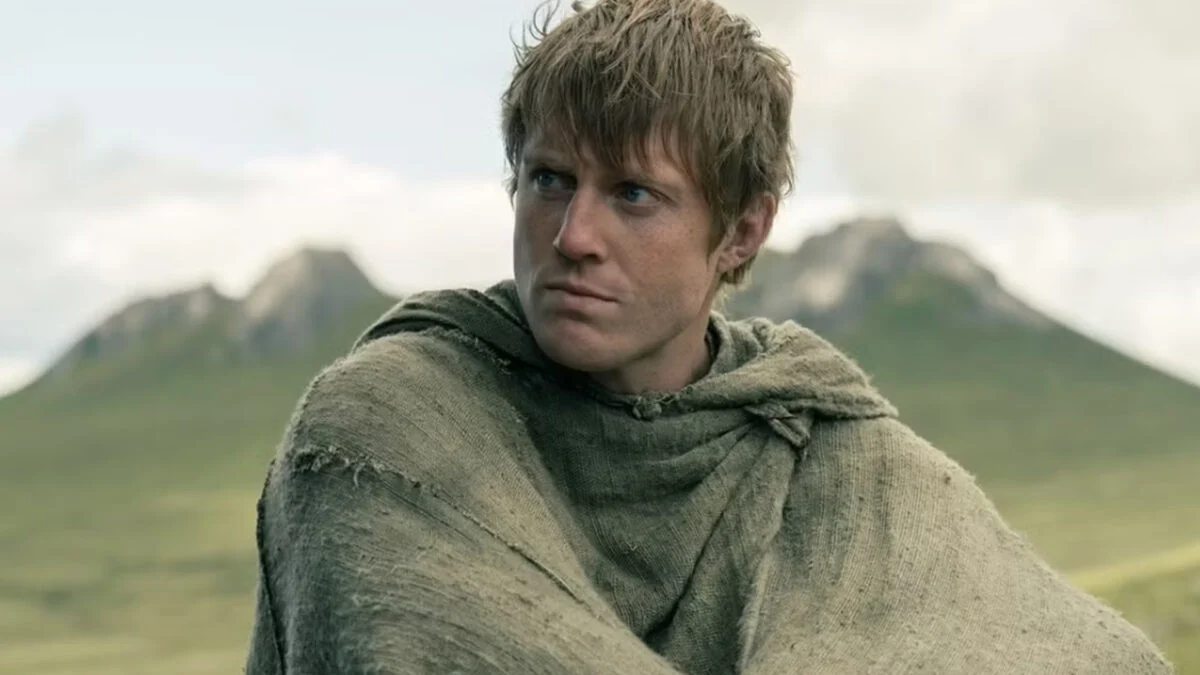
I watched the finale twice before I realized the question was still being handed back to the audience. You felt it too—the small whisper of doubt that the show never quite answers. The scene closes like a door left unlocked, and you step away wondering whether you should call someone back.
I’m going to be blunt: you don’t need a final pronouncement to feel the show’s point. I’ll walk you through the clues the season left, why the makers wanted that haze, and how Martin’s own short stories set the tone. If you want certainty, prepare to be comfortable with not having it.
After the finale trended on Twitter, the fandom split over one small moment
People seized on the flashback—Dunk asking Ser Arlan why he was never knighted—as if it were a smoking gun. You watched the same breathless close-up I did: Arlan falters, Dunk assumes death, then Arlan flickers back and the scene cuts. That montage is designed to leave you guessing, and it succeeds because the show trusts your imagination more than a label.
Was Dunk actually knighted by Ser Arlan?
Short answer: the show won’t tell you. The sequence you saw can be read two ways: Arlan dies before the act, or Arlan recovers long enough to perform the knighting off-camera. I’ve seen viewers map prop continuity, camera coverage, and even the placement of a sword as if forensic proof would force a single answer—but the creators left the decisive beat off-screen on purpose.
At a Collider interview, Ira Parker said ambiguity was intentional
Collider’s conversation with showrunner Ira Parker moved the debate from theory to design. Parker asked viewers to notice that the scene stops before a clear confirmation, and then reminded us that George R.R. Martin requested that ambiguity remain. That is an authority cue: the person running the show and the author whose work birthed it agreed not to tie the knot with a label.
Did George R.R. Martin ask for that ambiguity?
Yes—Parker confirmed Martin’s request. I trust the source here: Collider published Parker’s remarks, and io9 and other outlets picked them up. When the showrunner and the author both favor a question over an answer, you know the choice is deliberate and thematic rather than accidental.
Dunk’s title, in the way the season treats it, is a coin tossed into fog.
On the page, Martin’s novellas set the same tone at conventions and in bookstores
Readers of the Dunk & Egg novellas have long noticed the same hesitation in The Hedge Knight. I’ve taught sections of that story in workshops; you can see how Martin sprinkles doubt without breaking the drama. The books suggest possible moments of knighting and then step away, keeping the moral question in the foreground: what makes a true knight—ceremony or conduct?
Will future seasons answer the question?
Neither Parker nor Martin has promised to resolve this. The show has room to return to the mystery as a tension the characters live with: does a name change your behavior, or does behavior earn the name? HBO and the production team are clearly interested in that moral test because it drives character arcs more than a simple reveal would.
If you’re tracking the debate as SEO fodder or as pure fandom, note how brands and outlets shaped the conversation: HBO produced the series, Collider ran the clarifying interview, and io9 circulated the wider cultural reaction. That media chain turned an ambiguous creative choice into a headline and then into a community argument.
I’m not asking you to accept ambiguity as laziness—you should judge the writing on whether the uncertainty enriches the story. If the question about Dunk’s knighthood becomes a recurring mirror for his choices, then the absence of a formal answer is artful; if it’s left as a tease, it will feel cheap. Which do you think it will be?