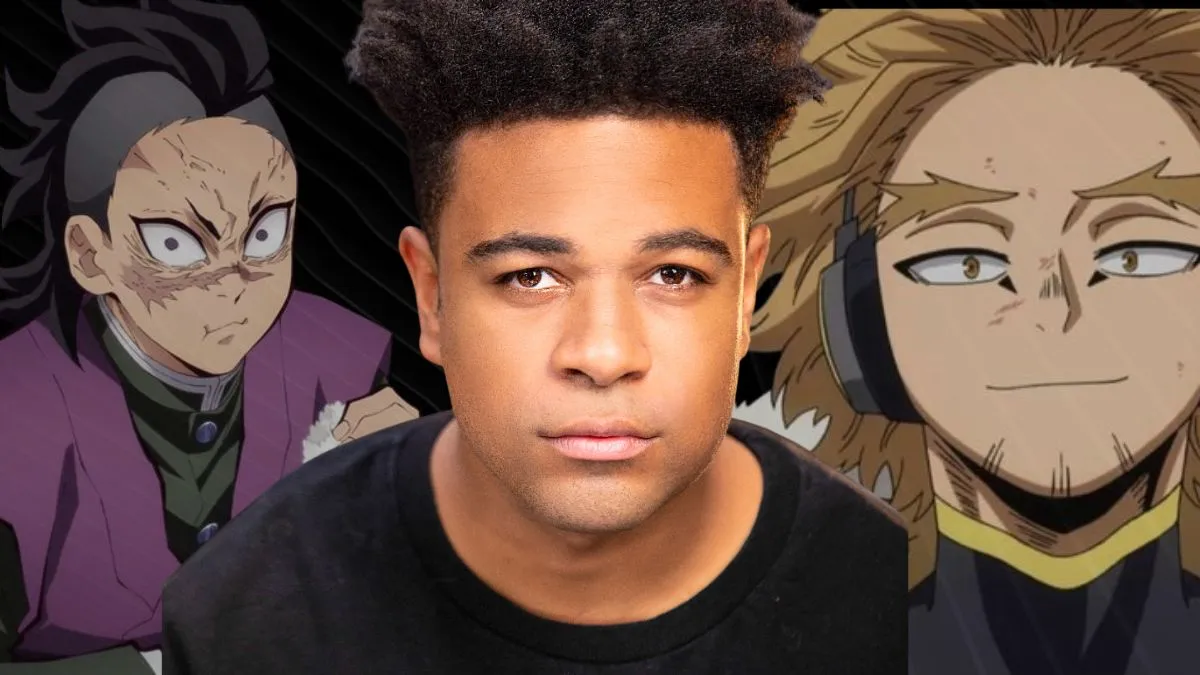
I pressed record and the room shrank to the size of a breath. Zeno Robinson folded anger into a single line and the air tightened. You felt that something necessary had been revealed.
I interviewed Zeno because his work flips expectations — from Demon Slayer’s Genya to Hawks in My Hero Academia and roles in Jujutsu Kaisen, Zom 100, and more. I’ll tell you what he actually does in the booth, how he shapes damage into hope, and the small decisions that make a character believable. Read slowly; the choices he describes are where the performance lives.
You can tell when an actor has read the source material: the nuance arrives before the first take.
Zeno told me he’d been reading the Demon Slayer manga up to the Swordsmith Village arc before he even saw the script. That early familiarity let him treat Genya as a living person rather than a list of lines. He wanted Genya to be actively unlikable at first — abrasive, aggressive, intentionally off-putting — so audiences could warm to him later. It’s a stunt that only works if the actor understands the slow burn beneath the anger.
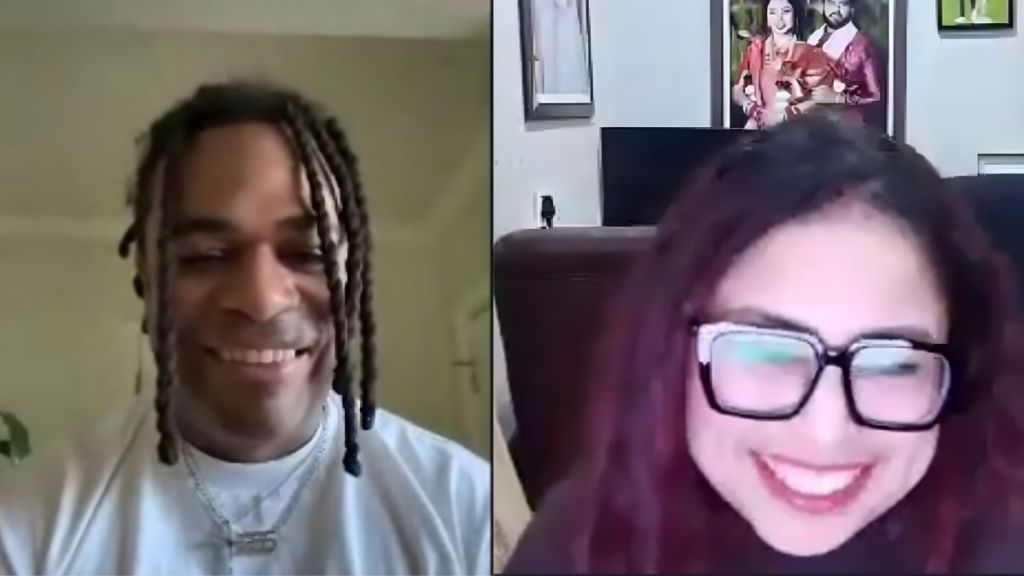
Who voices Genya in English?
Zeno Robinson is the English voice of Genya Shinazugawa. He told me he studied Nobuhiko Okamoto’s original portrayal for texture and intensity, then layered his own choices on top. That kind of cross-language study is a professional shortcut: you honor the original while making a role speak to a different audience.
I noticed how the team shapes an actor’s idea into a final performance: direction refines intuition into repeatable choices.
Zeno emphasized that Genya’s voice didn’t arrive fully formed. Sessions with the directors and the Aniplex of America team sculpted the performance. If you’ve ever watched an actor adjust a line, you’ve seen the process — small direction, one nudge, a whole character shifts. The aim was to keep Genya raw but coherent across arcs.
How did Zeno Robinson develop Genya’s voice?
He approached the role as a layered trade-off. Genya lacks traditional breathing techniques — the heart of a Demon Slayer — so Zeno leaned into what makes the character unique: an ability to absorb demonic attributes and an emotional isolation that follows trauma. He framed Genya’s voice as a protective shell around hurt. The performance had to sell both the exterior anger and the quieter, wounded person beneath it.
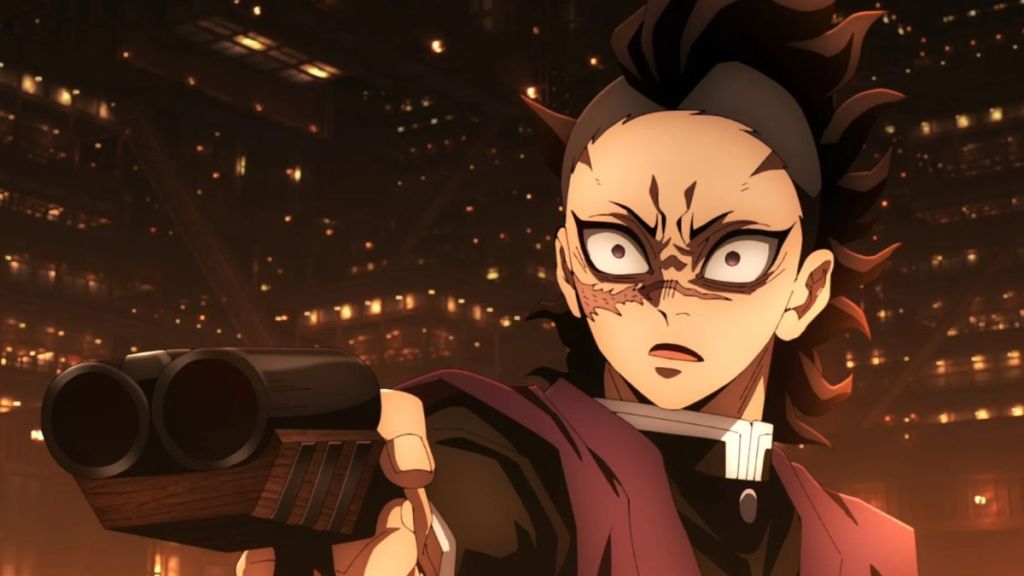
The booth can surprise you: a line meant to be angry becomes a moment of grief.
Recording the Hashira Training arc tested Zeno. Early episodes demanded high-intensity yelling and abrasive delivery; later scenes required him to find Genya’s softer, calmer contours. That switch is harder than it reads — you have to know who the character is without anger, not just when he’s furious. The trade-off between volume and truth is where subtle acting lives.
The booth became a pressure cooker during those sessions, and Zeno had to reload his approach to sustained high-intensity while preserving character identity.
Good actors borrow, great actors translate: Zeno studies other portrayals and then remakes them for an English audience.
He credits childhood anime and JRPGs with giving him a shorthand for certain archetypes. Studying Nobuhiko Okamoto helped him understand timing, intensity, and texture; then he picked which human choices would carry over. That method shows respect for the source and creates emotional continuity for viewers across languages.
What other roles does Zeno Robinson play?
Beyond Genya, his resume reads like a who’s-who of current anime: Hawks in My Hero Academia (Bones), Junpei in Jujutsu Kaisen (MAPPA), Akira in Zom 100, and more. Hawks, he says, has a calm that’s performance-ready; Junpei demanded digging so deep he left the booth needing a hug from director Valerie after an intense take. Zeno treats each role as a different emotional vocabulary to practice.

I watched him describe Hawks and I could see why the role changed his career: the character is a public-facing mask and a private strategy manual.
Zeno argues that Hawks was recruited young and shaped into an operational asset by the Heroes and Public Safety systems. That upbringing forced maturity and created a tool-like efficiency. Hawks rarely raises his voice, and when he does, the impact must be precise. Zeno said the war arc pushed him to find what Hawks sounds like at full intensity without losing the character’s control.
Hawks is often sincere when he chooses to be. Zeno pointed to Hawks’ moments with Twice as examples of honest connection beneath a performance. That choice — presenting real pieces of himself selectively — is what keeps the character believable.
Actors carry emotion home: I asked which trait lingers with Zeno after a session and he surprised me.
It wasn’t anger or exhaustion. He said hope sticks. He leaves roles with gratitude and a refusal to let the darker beats define him. Whether it’s Junpei’s childlike joy, Akira’s messy optimism, Hawks’ steadiness, or Genya’s hunger for acceptance, Zeno tries to file something useful away after every session.

Zeno also spoke about dream roles. He’d love to voice a character in Jujutsu Kaisen, and his ultimate wish is to play Static from DC’s Static Shock — a childhood favorite. He joked about Kingdom Hearts and Disney casting, mentioning that the franchise often uses Disney-affiliated talent and that when he becomes a “Disney star” they should call him.
If you ever see him at a convention — which can pay $500 (≈€460) for appearances depending on event scale — he’s likely the same actor you hear on-screen: generous, sharp, and precise. He prefers loud roles and says calm parts are the hardest to play. Quick answers: Hawks is his favorite, one word for Genya is “Complex,” and for Hawks it’s “Freedom.”
If you want to hear what he’s built from script to sound, pay attention to small moments: the held breath before an apology, the cut-off laugh that isn’t really a joke, the syllable that lands heavier than the rest. Those are the edits that make a performance live. Do you hear the difference when a character is performed by someone who has read the pages and carried the story home?