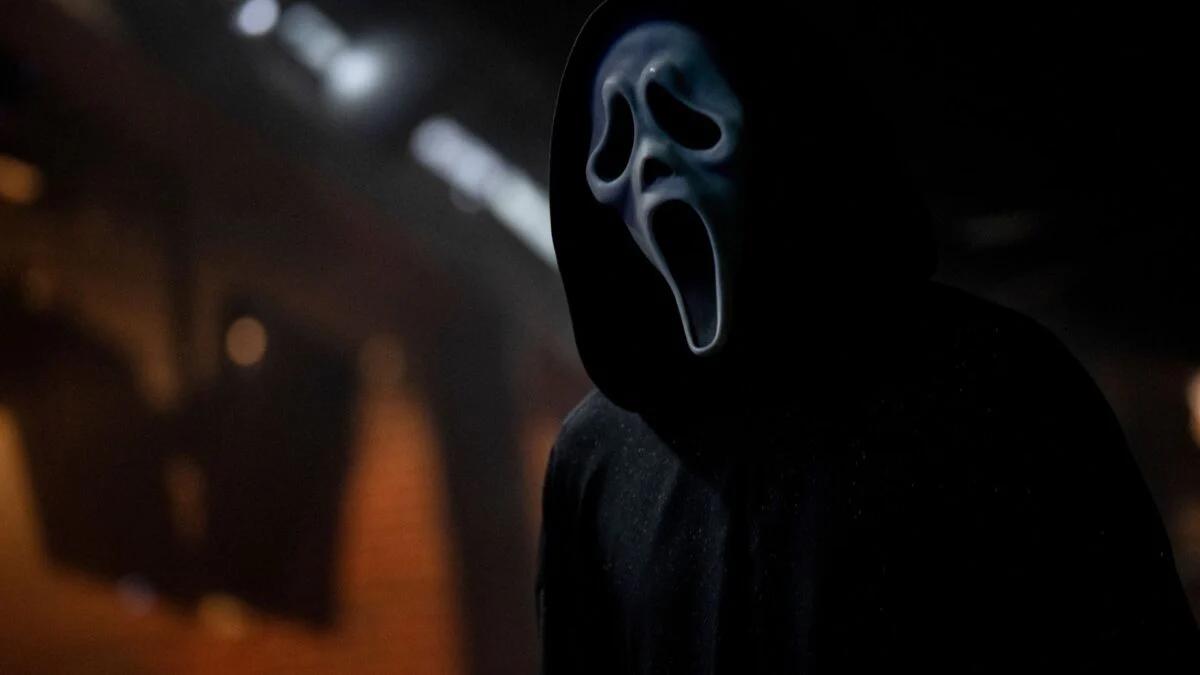
I sat in the theater as the credits began and felt the logic of the whole movie unspool like an old cassette tape. You can feel the deliberate misdirection — and then the film folds inward on itself. I’m going to walk you through what worked, what didn’t, and why the ending feels both obvious and oddly threadbare.
One thing up front: I speak from one viewing and a long history with the franchise, and I’ll point out where the film’s choices trigger drama and where they fall flat. You already know the basic beats: Stu Macher teases, FaceTime calls, a mental institution, and then three people behind the mask. Let’s examine how those beats behave when you pry them open.

Stu’s comeback tease — a barista sees a man who looks familiar
At the coffee shop, a familiar face is noticed and everyone leans toward nostalgia — it’s a public, ordinary place that the movie uses to prod your memory.
You remember Stu Macher from the original: Matthew Lillard’s manic energy is a franchise touchstone. Scream 7 weaponizes that memory by feeding you FaceTime calls showing a scarred version of Stu and by having Tatum find a laptop running deepfake software in her boyfriend’s car. That sequence is designed to close the curiosity loop: Stu alive? It’s an attention hook that works at first.
But the scene also commits a basic storytelling sin: it hands the audience a smoking gun — an open, powered-on laptop with incriminating software — and expects us not to notice how lazy that clue is. If you’re trying to sell AI-driven fakery as sophisticated, you don’t leave the controls on the passenger seat. The film asks you to accept both the clever and the stupid at the same time.
Halfway unmask — an EMT recognizes a patient in the waiting room
In the hospital corridor, staff exchange a quick, offhand line about an escapee, and the movie uses that throwaway beat to flip the reveal card.
Who is Ghostface?
The first reveal is almost generous: a random escaped patient is unmasked, and for a moment the film lets you believe that the Stu mystery has been solved. But it’s a misdirection — the patient is a pawn. The real job of that unmasking is to give the audience a sense of progress while the screenplay keeps the real puppeteers offstage.
When the credits finally name the trio, you get three archetypes: the escaped patient (the hands-on killer), the orderly with tech know-how, and the friendly neighbor who has been pretending to be part of Sidney’s life. Anna Camp’s neighbor and Ethan Embry’s orderly feel chosen for star power as much as motive — their fame registers louder than any emotional logic they provide.

AI and the Google line — a barista overhears someone mention their old tech job
Someone at a café mentions they used to work at Google, and the script treats that as an instant credential.
What was the motive?
The film leans on contemporary fear: deepfakes, AI, and identity theft. Ethan Embry’s character gets a throwaway line — “I worked at Google” — and that’s supposed to explain how the team made convincing fakes of Stu, Roman, Nancy, and Dewey. In practice, it’s shorthand for competence without any real demonstration of it on screen.
That’s a problem because the laptop left in a car undercuts the whole technological threat. If deepfaking Stu is trivial enough for a teenager to stumble upon, then the movie’s attempt to be timely rings hollow. The AI beats feel pasted on; FaceTime and deepfakes are used as surface-level gimmicks rather than explored ideas.
Motive mechanics — a neighbor mentions reading Sidney’s book at a book club
At a neighborhood gathering, someone confesses to being inspired by Sidney’s life — the film uses that confession as emotional shorthand.
Did it all make sense?
The stated motive is: obsessive admiration twisted into murder — the neighbor loved Sidney so much she thought killing would end the cycle. That position is weak and uneven. Every previous Ghostface had a crisp grievance: revenge, fame-seeking, or imitation. Here, the emotional engine is a sentimental obsession without adequate fuel. The other two conspirators’ buy-in — an escaped patient and an orderly who apparently moonlighted with Google-level skills — never feels earned.
The climax asks you to accept a conspiracy built on small, personal angsts rather than a believable plan. If you’re hanging on character logic, the scaffolding doesn’t hold.

Franchise freight — a fan in an Airbnb remembers the first movie’s kitchen scene
Two influencers tour the old Macher house and treat the place like a shrine to franchise lore, which the film then promptly destroys.
I liked that the movie started meta: reruns of the past, a museumized home, and the idea of legacy terror. But Ghostface torching the house felt theatrical rather than thematic — it’s a stunt dressed as meaning. That leather jacket cameo and the constant, vague references to the events of Scream 6 (“New York” repeated like a bookmark) are meant to bind continuity, yet they read as placeholders for real emotional continuity with characters like Sam and Tara.
Where the script earned my attention — and where it lost it
I applaud some structural risks: unmasking early, multiple killers, and tying modern tech into the plot. Those are hooks that could work.
But the payoff is a cheap magician’s flourish. The emotional stakes never land because the film favors star seconds and set pieces over believable motive work. The film’s choices read as if the writers treated AI and nostalgia as props to justify shocks rather than as themes to interrogate.
I can’t stop thinking about a single image from the film — Sidney on a FaceTime call with a scarred version of Stu — and how it promised a psychological chess match that the script never finished playing. The neighbors, the tech worker, the escaped patient: they form a conspiracy that looks good on paper but feels contrived on the screen.
So where does that leave us? If you came for scares and a tidy explanation, the movie gives you surface thrills. If you wanted a coherent thematic statement about fame, trauma, or technology, it hands you fragments and asks you to assemble meaning on your own.
I’ll leave you with this: which part of the ending bothered you more — the lazy digital clues, the weak motive, or the celebrity casting that outweighs character logic?