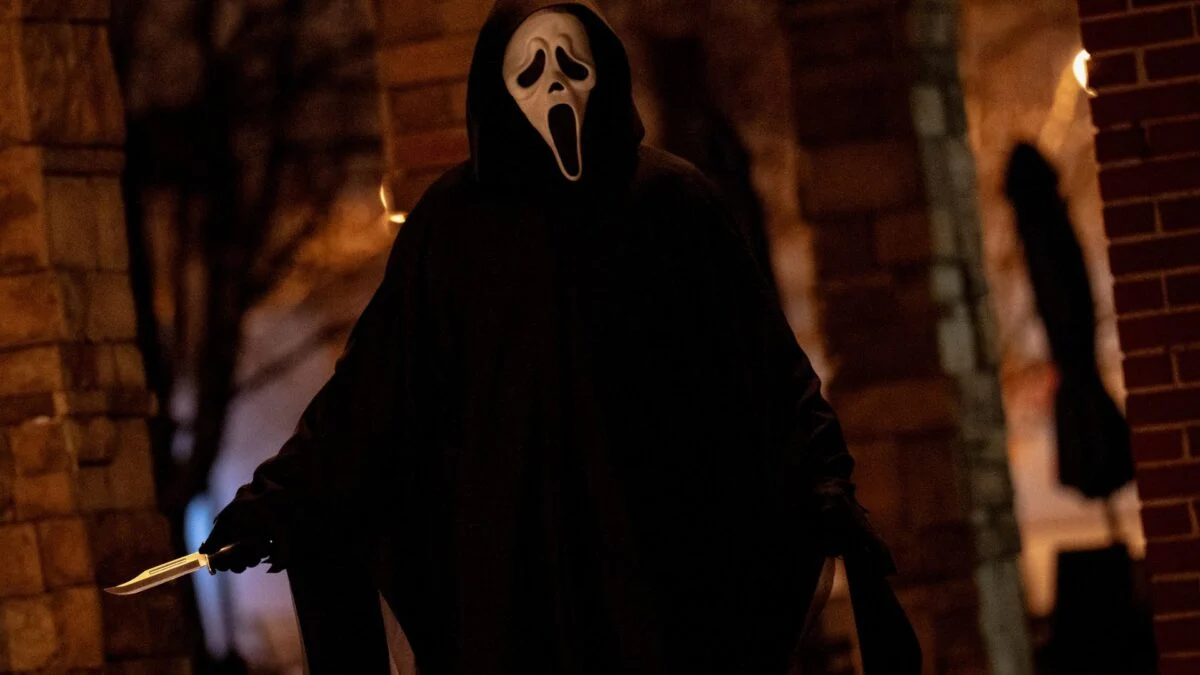
The lights snap up and someone near the aisle laughs like they need permission. I sit there and realize Radio Silence wanted to make you flinch in ways this franchise mostly skips. You can almost hear their version clicking into place behind the polite applause.
I’ll be direct: I want you to understand what those two directors—Matt Bettinelli-Olpin and Tyler Gillett—were scheming before schedules and Paramount’s plans pulled them away. You’ve seen the headlines on Entertainment Weekly and io9; now I’ll stitch the clues together so you can judge whether the franchise lost something meaner, smarter, and more claustrophobic.
At a late-night screening someone muttered, “That felt safe” — why Radio Silence thought safety was the problem
You remember how Scream VI jogged into New York and felt almost perversely upbeat. Bettinelli-Olpin and Gillett admitted they liked that reversal, but they asked: how far can you push the audience away from comfort? Their answer was not more skyline and more jokes. It was to shrink the map and heighten the pressure.
They never touched a Scream 7 script, yet their idea circulated: flip the Final Girl archetype and tighten the clock. Skeet Ulrich later said Melissa Barrera’s Sam Carpenter was a planned turn toward Ghostface after surviving the chaos of 5 and 6. That move would have made every ally a suspect and every safe space a potential trap.
I think of that approach like a watch spring wound too tight — every tick becomes a threat.
Why did Radio Silence leave Scream 7?
Short answer: scheduling conflicts. Radio Silence signed onto a vampire project called Abigail, which staked out the same production window as Wes Craven alum Kevin Williamson’s evolving franchise timetable. Bettinelli-Olpin and Gillett told Entertainment Weekly they had to bow out rather than reshuffle their new commitments with Paramount Pictures.
On the subway someone scrolled past a spoiler and hissed — the idea was to make the film feel continuous
You can imagine their pitch: go small, make it feel like one long, suffocating night. Gillett said they had the “stupid idea” of an almost continuous minute-to-minute structure. That reads like a technical challenge for the writer and editor, and a tonal threat for the audience.
Such compression would have amplified every whisper, every breathing pause, turning the film into an interrogation of the characters’ nerves. Radio Silence’s recent work shows they can marry jolting scares with a sly sense of design, and here they’d steer that toward brutality instead of buoyancy.
What was Radio Silence’s idea for Scream 7?
Their shorthand: if Scream VI is a secret feel-good movie, Scream 7 was supposed to “fuck you up,” as Bettinelli-Olpin put it. That meant Sam Carpenter as Ghostface, shifting the Final Girl into the hunter role and compacting the film into a claustrophobic saga where the body count feels inevitable and personal. Think fewer set pieces, more sustained dread—one apartment, one motel corridor, one long night.
In the lobby someone compared it to the franchise’s earlier scares — how that comparison matters
You’ve watched the franchise mutate before; Kevin Williamson, New Line, and later Paramount have all steered the ship. Radio Silence’s departure left a gap between what fans hoped for and what the new team delivered. Their concept promised to play with expectations and to weaponize them against the audience.
They were aiming for a tone that bends mirrors: the same face, but twisted so you don’t trust your own reflection.
You can debate whether the franchise needed one more vicious tack or another fresh reset. I’ll ask you this as someone who reads the trades on Deadline and cross-checks quotes on IMDb and Box Office Mojo: would a smaller, meaner Scream 7 have improved the series’ momentum or just made it nastier for the wrong reasons?