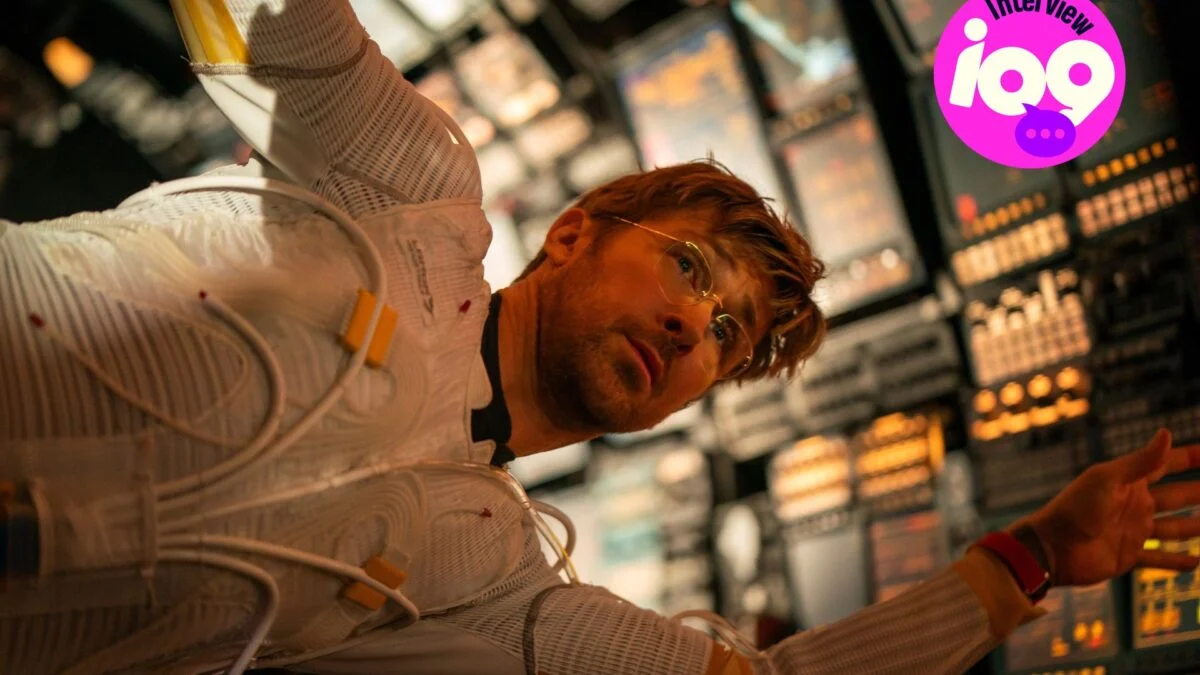
I was on a soundstage when someone whispered that a moon heist might be easier to imagine than to stage. You can hear the worry in that whisper—how do you make one-sixth gravity feel real? I felt that small panic myself, and it explains a lot about why Project Hail Mary moved first.
If you liked The Martian for its mix of science, humor, and survival, you weren’t alone—film people and producers read Andy Weir the same way: cinematic. Phil Lord and Chris Miller were already circling Weir’s next ideas long before Project Hail Mary became a film, and their early attachment to Artemis explains why the movie chessboard looked the way it did. But what looked straightforward on paper hid two production problems: a tiny-gravity performance challenge and the marketing logic of a star-backed sci-fi tentpole.
On a writer’s call sheet, producers circle the easiest market winner.
Lord and Miller had a relationship with Andy Weir and with producer Aditya Sood—the man who shepherded The Martian from e-book to feature. That existing trust is the plumbing of Hollywood: it moves rights, meetings, and offers faster than talent searches. When Ryan Gosling read Project Hail Mary early and committed, the film suddenly had a practical path from page to production. Gosling’s name functions like a key; it gets doors open with studios, financiers, and VFX teams.
Why did Lord and Miller adapt Project Hail Mary before Artemis?
It comes down to risk and deliverability. You and I can imagine a lunar smuggler—Jazz—in a tight caper. But Lord and Miller told io9 that recreating the moon’s one-sixth gravity in a way that reads as natural on camera is mechanically complicated. Project Hail Mary presented a clearer technical roadmap: a human lead (Ryan Gosling), a convincing alien-rock character named Rocky, and effects that could be solved with established VFX and animation workflows. Drew Goddard praised Lord and Miller for bringing Rocky to life, arguing no one else would have done as well. That confidence matters when a studio like MGM is placing bets.
On a rehearsal floor, actors test how they move with imposed rules.
Lord and Miller’s team didn’t just file an option and wait. They wrestled with staging: how do actors “feel” lunar gravity without wire fakery that reads fake? Chris Miller called the problem trickier than making Rocky, the talking rock creature. They had to imagine movement and then invent methods to make it believable on set—practical choreography that would sell the world to an audience. I’ve seen directors treat performance constraints like design problems: you solve the constraint, and the performance breathes.
Will Lord and Miller actually make Artemis?
They’re still developing it, but they haven’t dropped it. Andy Weir confirmed to io9 that Artemis is on their list of priorities and that they’ve offered interesting ideas. The hold-up is chiefly executional: filming a lunar heist without resorting to obvious wirework or excessive CGI. Lord said, “we think we figured it out.” That line reads like a VFX supervisor finishing a late-night render; it signals progress yet carries the weight of tests still to run.
On-set stories reveal who can translate a book’s particular voice to screen.
Ryan Gosling stayed with Project Hail Mary for nearly six years, insisting the film match the private thrill he felt when he read the manuscript. That kind of devotion changes the tenor of a production: it attracts cinematographers, effects supervisors, and producers who want to honor a singular voice. Lord and Miller’s background in animation and character-driven comedy—think Spider-Man: Into the Spider-Verse in spirit—gave them the vocabulary to make Rocky believable and to manage the film’s tonal tightrope.
Drew Goddard said plainly that nobody else could have delivered Rocky the way they did. That’s an authority cue you can’t fake; it matters to studios and audiences. And Gosling’s praise—calling the team a “dream team” from cinematography to effects—reads like a pipeline approval that gets budgets to the right vendors and the right teams on board.

On a writer’s page, the right adapter can change everything.
Andy Weir told io9 he’d like to see Lord and Miller try Artemis, since they have “really, really interesting” ideas. I believe him: their background in character animation and comedy gave them a toolkit to animate Rocky and to keep Gosling’s solitary arc emotionally rich. If you think about it, adapting Weir is less about matching every science note and more about preserving the emotional engine—the humor, the isolation, the clever fixes—that makes readers care.
Lord and Miller faced a choice: take the story that was easiest to map onto existing effects workflows or solve a new kind of stagecraft for a lunar caper. They chose the former first, then turned their inventive energy toward the trickier problem. The second move reads like two craftsmen building different parts of the same machine; one made the engine run, the other is still tuning the suspension. That kind of split focus is ordinary in Hollywood, and it explains the order of operations.

Think of it like this: making Project Hail Mary was teaching actors to waltz in boots, then letting the camera catch the grace; planning Artemis is a locksmith’s puzzle where every tumblers’ position must be tested before the door opens. Those are the two metaphors I keep returning to because they capture both the craft and the patience involved.
Project Hail Mary hits theaters on March 20. If Lord and Miller crack the lunar choreography, will they have kept their best trick for themselves or saved it for the moon—where the real audience waits?