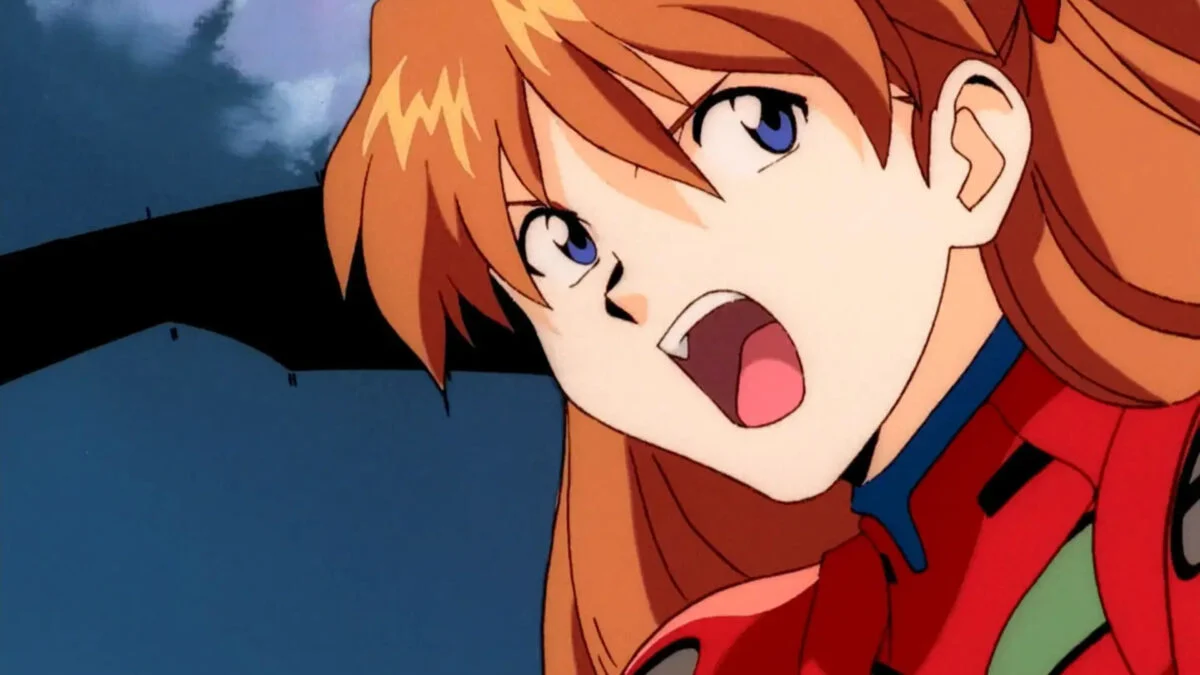
She stands under a single spotlight and laughs at the endings that defined her. You feel the room tilt—half nostalgia, half grievance—because Asuka is asking for more than a rewrite. I watched the short the moment it slipped out and felt the same mix of apology and defiance that follows any great character apology tour.
I’ll walk you through what Khara accidentally released, why it matters to Asuka’s story, and what it hints about the creative voices circling Neon Genesis Evangelion—Hideaki Anno, studio Khara, and new interest from Yoko Taro. This is not a press release; it’s my take as someone who follows anime like a legal brief: track the leaks, read the edits, and listen to the soundtrack.
At a convention panel you overhear heated takes — what the short actually is
People were hustling clips and screengrabs before Khara had a plan. The company tried to silence spoilers, then the short itself leaked, and a decision had to be made: prosecute or publish. They chose to publish, officially releasing the clip to mark five years since Evangelion 3.0+1.0 Thrice Upon a Time.
What happens in the Evangelion 30th anniversary short?
Two versions of Asuka—classic Gainax Asuka Langley Soryu and the Rebuild Asuka Shikinami Langley—share a stage and a conversation. They riff on their different arcs, run through a gallery of “what if” scenarios, and stage scenes that range from comic to brutal: accidental violence toward Shinji, a swarm of Asukas, a single towering mech-sized Asuka. Many sequences borrow the original series’ rough, hand-drawn aesthetic; one sequence adopts the slick Rebuild palette.
On social feeds you see the legal memos and meme screenshots — how Khara handled the leak
Khara’s first impulse was to clamp down: copyright threats and takedown notices trailed the leak. Then the studio flipped the script. They released the short formally as an anniversary piece and framed the leak as a launchpad for a playful, affectionate montage.
Is the short canon to the series?
I’ll be blunt: it behaves like a tribute more than a continuity bomb. The short is a character study, a flash of regret and wishful rewriting for Asuka. That said, fans can read the “Next Episode” motif in the background—paired with an instrumental take on “Komm, süsser Tod”—as a wink toward future projects, maybe even the Yoko Taro angle many are watching for.
In a quiet living room you hear the soundtrack and remember a scene — why this is a love letter to Asuka
The short centers on Asuka’s dissatisfaction: she hates dying in End of Evangelion, she hates being saved into a scene where Shinji strangles her, and she wants alternatives. The two Asukas try on different endings. One fantasy becomes domestic bliss; another returns her to the original pain. In the end she chooses the version closest to her established arc, not because she accepts it, but because she claims it.
The montage behind them becomes a mirror of the franchise—a collage of scenes that show how a single character has been reshaped by different creators: Gainax’s rawness, Khara’s revisionism, Anno’s philosophy, and now the public curiosity around Yoko Taro. The short feels, for a few minutes, like a cracked mirror reflecting a thousand Asukas.
At a screening you’d notice the crowd reaction — what this means for fans and creators
Fans reacted the way you’d expect: joy, irritation, speculation. Some wanted a definitive answer for Asuka’s fate; others treated the short as catharsis. I think Khara gave them both: a gag-filled clip show that still lands emotionally. It’s a reminder that endings can be renegotiated in public, but also that characters keep a private life in viewers’ minds.
I’ve followed Evangelion coverage for years, and this short reads as both apology and rehearsal: an attempt to reframe a character who has been written and rewritten by studios and directors. If you’re tracking the industry, this tug-of-war involves the usual players—Hideaki Anno, Studio Khara, Gainax’s legacy, and new authors like Yoko Taro—each bringing a different pencil stroke to the same drawing.
There are two images that stick: the short’s humor, which loosens the knot of grief, and its earnestness, which tightens it again. The whole thing plays like a haunted jukebox; it spins familiar tunes until they sound new.
So where does that leave Asuka—and you, as a fan who refuses to accept a tidy end? Who gets to decide a character’s final word when studios, creators, and audiences are all pulling the pen?