
The execution square freezes on screen; a blade hovers over a laughing pirate and the crowd holds its breath. You sense the scene will mean more than a stunt. I felt that shift the second the lightning ripped the sky.
Spoiler Alert:
This article contains spoilers for Netflix’s One Piece live-action Season 2 — proceed if you want the full picture.
The scarred stranger’s identity: a newsroom-sized revelation
On social feeds, a single cameo can trigger hours of speculation and fan edits. The scarred man who steps into Loguetown in Season 2 Episode 1 is Monkey D. Dragon — Luffy’s father and the leader of the Revolutionary Army.
You don’t need to have read every chapter to feel the weight of the reveal: Dragon is presented as a figure who operates from the margins, pulling strings without making speeches. I’ll walk you through what the live-action scene keeps faithful to Eiichiro Oda’s source material and where Netflix’s adaptation gives new texture.
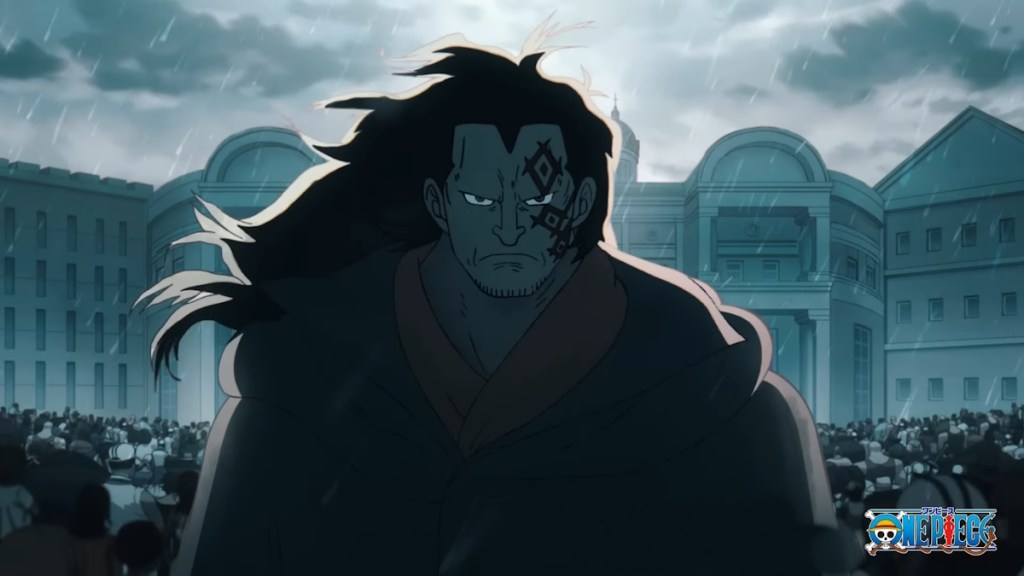
Who is the scarred man in One Piece Season 2 Episode 1?
He’s introduced without fanfare: a scarred, composed man who halts Smoker’s attempt to execute Luffy and then vanishes. That quiet insertion signals two things to you as a viewer — he’s powerful enough to ignore Marines, and he cares enough about Luffy to intervene.
Why he intervenes: a street-level observation of motive
At conventions and on Reddit threads, fans treat family ties as plot currency; they trade theories like rarities. Dragon’s intervention in Loguetown is not a random rescue. He is both father and revolutionary leader; his presence hints at a protective instinct and a broader political agenda against the World Government.
On-screen, the moment is compact: Buggy and Alvida press the attack, Smoker prepares the arrest, and a lightning strike alters the course of a public execution. In manga and anime lore, Dragon is associated with weather-affecting powers — he likely consumed a devil fruit that gives him that ability — but Oda has been intentionally ambiguous about specifics. You should watch the scene as both a personal save and a statement of intent from a man who opposes the world order.
Is Dragon Luffy’s father?
Yes. The live-action series preserves that lineage. Dragon is the son of Monkey D. Garp, which makes Luffy part of a family tangled with the Marines and the world’s rebels. That contradiction is where much of the series’ tension comes from.
What the cameo means for the story: a newsroom note on stakes
When a franchise moves from manga pages to Netflix servers, a cameo becomes a promise to subscribers and critics alike — it signals future returns and merch spikes that can nudge subscriptions from $9.99 (€9) plans upward.
For the narrative, Dragon’s appearance reframes Luffy’s journey. He is a leader who has built an organization powerful enough to threaten governments; the Revolutionary Army is a shuttered library of rumors, each volume capable of toppling thrones. Dragon himself is a buried fault line—silent, then violent.
That means you should expect more than occasional cameos: the live-action adaptation has planted seeds for later arcs and for political conflict that will contrast with Luffy’s simpler dream of finding One Piece.
Where this leaves the adaptation: a reporter’s quick read
On Twitter and in critics’ columns, the comparison to Toei’s anime comes fast. Netflix’s One Piece preserves core beats — Loguetown’s execution site, Smoker’s arrival, and the reveal of Dragon — while compressing other moments for pacing. If you follow industry pages like IMDb, Crunchyroll, or Viz Media announcements, you’ll see how casting choices and episode structure shape fan expectations.
I watch these adaptations for the choices they make: what they keep, what they trim, and what they amplify. Dragon’s limited screen time doesn’t reduce his importance; it expands the show’s political shadow and gives you a reason to keep watching.
If Dragon moves in secret and leaves questions unanswered, which thread are you going to pull next?