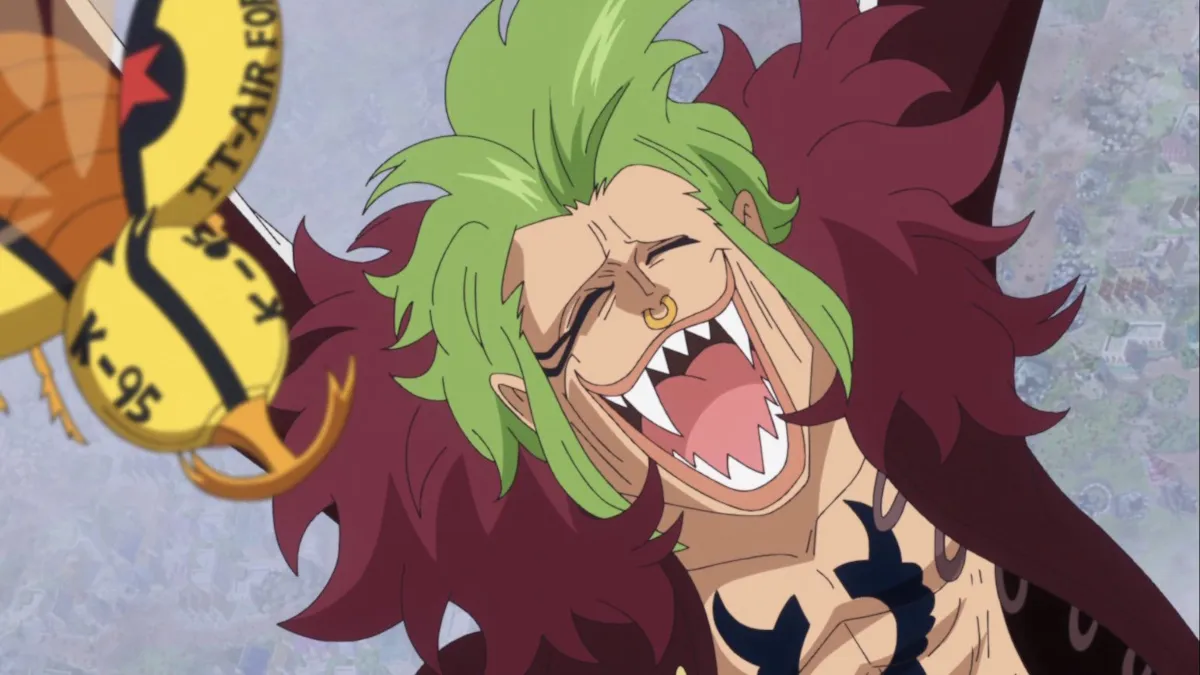
I was watching the Loguetown sequence again, waiting for that quiet snap of recognition. You hold your breath when a minor face suddenly becomes a weather vane for the whole story. I felt the moment flatten when Bartolomeo walked onstage sooner than I expected.
Spoiler Alert:
This post contains spoilers for One Piece Live Action Season 2, so read at your own descretion.
Bartolomeo’s introduction felt premature
On screen, a crowd in Loguetown watches an execution and you expect a ripple of future consequences — a single quiet face, later amplified into obsession. I know Bartolomeo’s origin in the manga: the Loguetown moment is the seed that later blooms into his devotion for Luffy. Seeing him placed explicitly in Season 2 removes the slow-building ache that made his reveal in the anime so effective.
Bartolomeo is a mirror that reflects the reach of Luffy’s myth. In the source material that mirror arrives later, when the series pauses to show how one small incident can ripple across years and oceans. The live-action preserves the facts — Loguetown happened, Bartolomeo was there — but it robs the reveal of its narrative weight by delivering the seed and the flower in the same breath.

Fans chewed on the reveal in real time
On social feeds, people paused, reacted, and rewound the same beat — that’s a real-world test of how a moment lands. You and I both know that fan-service moments can please, but they can also hollow out future payoffs.
When I first saw Bartolomeo in the anime, he felt obnoxious: loud, crude, and impossible to like. Then the flashback to Loguetown hit, and the character flipped. That pivot is what made him memorable: the show taught me that Luffy’s actions reach farther than his crew. In the live-action, that flip barely has room to turn. The early reveal is a curtain already raised on a scene that should have surprised us.
Why was Bartolomeo introduced so early in the live-action?
The short answer: adaptation choices and compact pacing. Matt Owens and the Netflix team had to compress arcs while preserving core beats, and several characters (Garp, Smoker, even early Marines) appear sooner than manga readers expect. That approach trades slow-burn emotional accumulation for immediate clarity and crowd-pleasing recognition.
From a production standpoint, staking a claim on known faces helps Netflix and Tomorrow Studios sell the show to a broader audience. It’s a tactic that works with catalog-driven platforms like Netflix — people search for familiar names and share clips on X and Reddit — but it reshapes how the story scaffolds meaning.
The emotional cost of revealing the seed so soon
In everyday storytelling, withholding a small detail can convert curiosity into long-term investment. I felt that withholding Bartolomeo’s origin kept the manga’s foreshadowing intact; the live-action released the detail and the payoff together.
The original sequence revealed Luffy’s influence slowly. That was an act of character-world building: one laugh, one saved life, one inspired dream. When the show shows everything at once, the later moment in Dressrosa (where Bartolomeo’s devotion pays off) risks feeling less earned. You still get the spectacle, but the ache that makes you care in the anime is blunted.
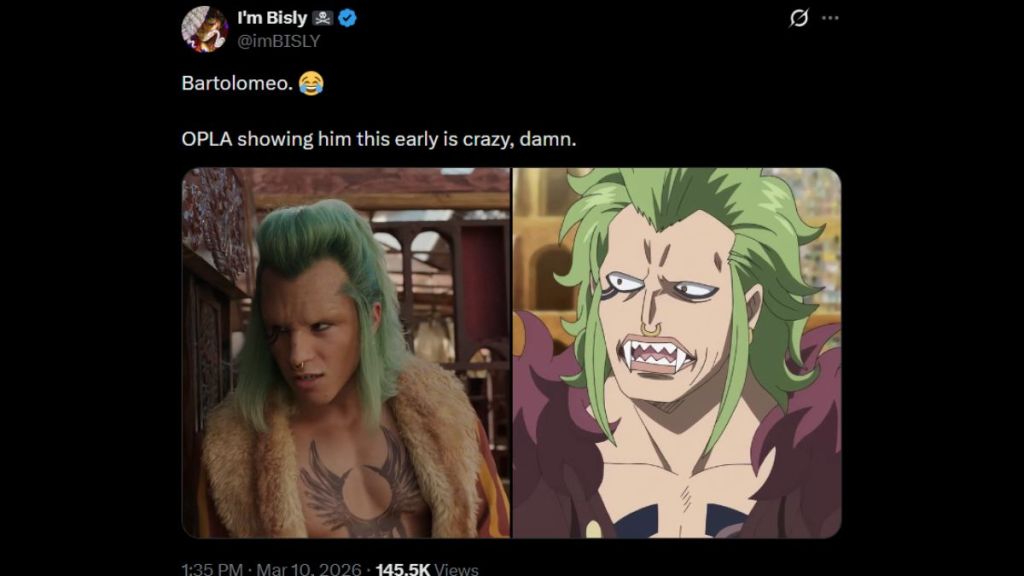
Does introducing Bartolomeo early change his impact?
Yes and no. The factual arc remains: Bartolomeo is inspired by Luffy. But impact is shaped by timing. In the anime, his obsession becomes a lens showing Luffy’s cultural gravity; it’s proof that one man’s choices are contagious. In live-action, the lens is presented earlier, making the later proof feel repetitive rather than revelatory.
That doesn’t mean the show fails. Netflix’s adaptation scores in production design, casting, and in honoring Eiichiro Oda’s beats. It simply chooses a different emotional architecture. If you watch with fresh eyes, the early reveal reads as extra fan-service; if you came with fandom history, the moment can feel like a shortcut.
How this shapes the series going forward
I see a pattern on the set and on screen: the adaptation favours immediacy over slow emotional accrual. That is a real-world production constraint — eight episodes can’t carry a decade of manga pacing.
For future seasons, this choice has trade-offs. Faster introductions let the show cram more iconic names into a tight slate, which helps discoverability on platforms like Netflix and visibility in entertainment press. But it also forces the writers to invent new beats that recreate the missing slow-burn moments. If they can do that, Bartolomeo’s charm can still land; if they can’t, they risk turning poignant reveals into tidy cameos.
I wanted to love that Loguetown moment again. You probably did, too. Does the live-action give us a different kind of reward, or did it quietly take away one of the original’s small miracles?