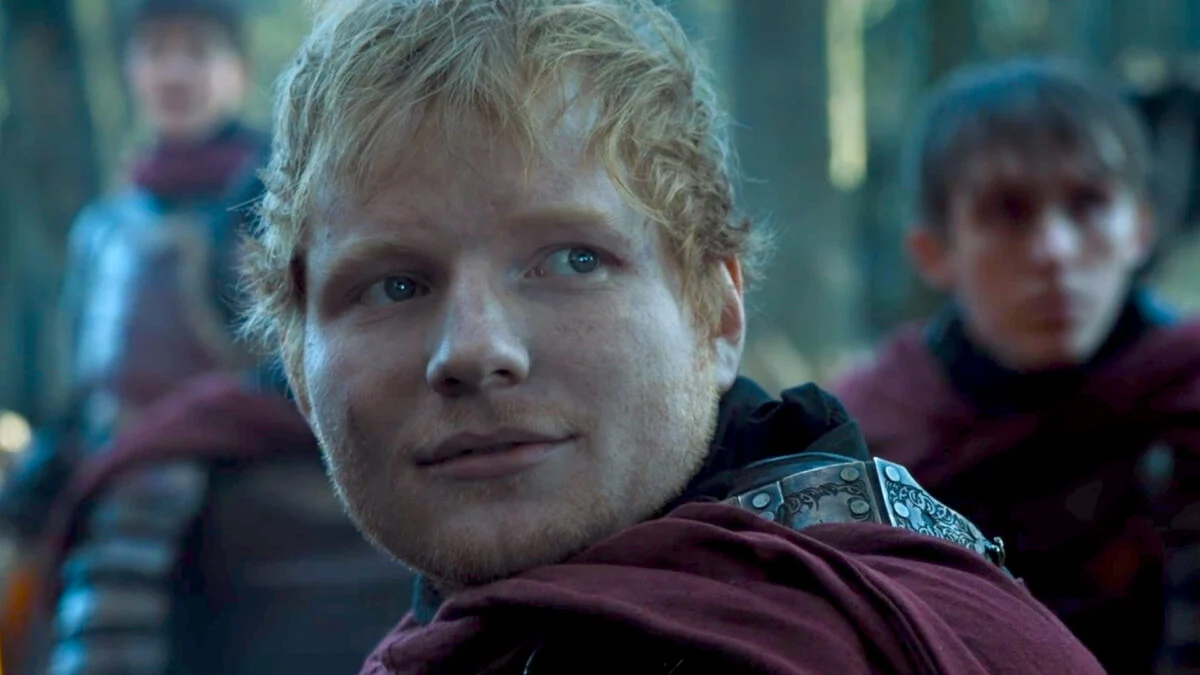
I was mid-scene, remote in my hand, when Ed Sheeran walked out of the Red Keep and into a global argument. Recognition hit the room like a slow drumbeat. You could feel the show shift from fiction to a headline.
Ed Sheeran Looks Back on Everyone Hating His Game of Thrones Cameo
On set, musicians popping up in background roles felt normal to the crew and producers. I remember reading about Coldplay members at the Red Wedding and Chris Stapleton cast as a White Walker; those names landed as Easter eggs for attentive viewers. But when Sheeran — credited as Eddie, a Lannister soldier with a song — stepped forward, the response stopped being about craft and became about presence.
What actually happened on screen
The scene opens with Arya arriving after the Freys’ defeat — a small, private moment turned public. I watched it and noticed the shot choices kept his face unobscured, which made recognition immediate. You could argue that was a production choice that rewarded viewers who knew the singer, but it also broke immersion for many.
Why was Ed Sheeran’s Game of Thrones cameo controversial?
People reacted because his celebrity presence punctured the show’s internal logic. Fans had trained themselves to accept cameos when disguised, but Sheeran arrived without helmet or heavy makeup, and that visibility flattened the scene for some. On platforms like Twitter and Reddit the chorus of complaints crescendoed faster than any soundtrack cue, and the conversation became as much about celebrity culture as casting.
Why the reaction felt so personal
Viewers lived with these characters for years; the show was part of people’s weekly rituals. When I interviewed friends about the moment, they described a weird betrayal — a beloved story interrupted by a real-world face. His presence was a neon sign in a cathedral.
Sheeran himself has admitted the cameo was jarring. On Benny Blanco’s Friends Keep Secrets podcast (posted to YouTube), he said he was “very omnipresent” at the time and that the blowback “[happened] quite a lot” in his career. He also noted that other musicians had small parts, but his fame made him impossible to ignore. That distinction mattered to audiences.
Did Ed Sheeran regret his Game of Thrones cameo?
He doesn’t regret saying yes. I heard him speak plainly: he loved the show and took the offer because of that. At the same time, he admitted the reaction stung. “I just get shit on for things,” he said, a frank line that stripped away public relations polish. The publicity was a mixed bag — exposure on HBO and conversation on Spotify playlists, but also strands of public annoyance on Twitter and commentary on blogs like io9.
What it taught us about fame and storytelling
Audiences now interpret every appearance through the lens of celebrity economy and algorithmic attention. You can see it in how clips trend on YouTube and how GIFs spread across social feeds; a single face can redirect months of narrative investment. The backlash became a hive of angry bees.
I’m with you when I say context matters: a cameo can land if it serves the story, not the other way around. HBO and the Game of Thrones producers had reasons for the choice; Sheeran had reasons for saying yes. The real question is whether we, as an audience hungry for authenticity and spectacle at once, forgive a star for reminding us he’s a star — or whether we treat that reminder as a personal affront?