
The stage fell into a different kind of silence when Kieran Culkin accepted the statuette. You noticed the empty seat in the front row before the cameras even cut to the winner’s face. I replayed the moment and felt the gap ask a question louder than any acceptance speech.
I’ll walk you through what happened, why Sean Penn wasn’t at the Oscars, and what his absence says about the choices some actors make when a headline night collides with a cause. You’ll get named sources, a clear timeline, and the practical context behind the headlines.
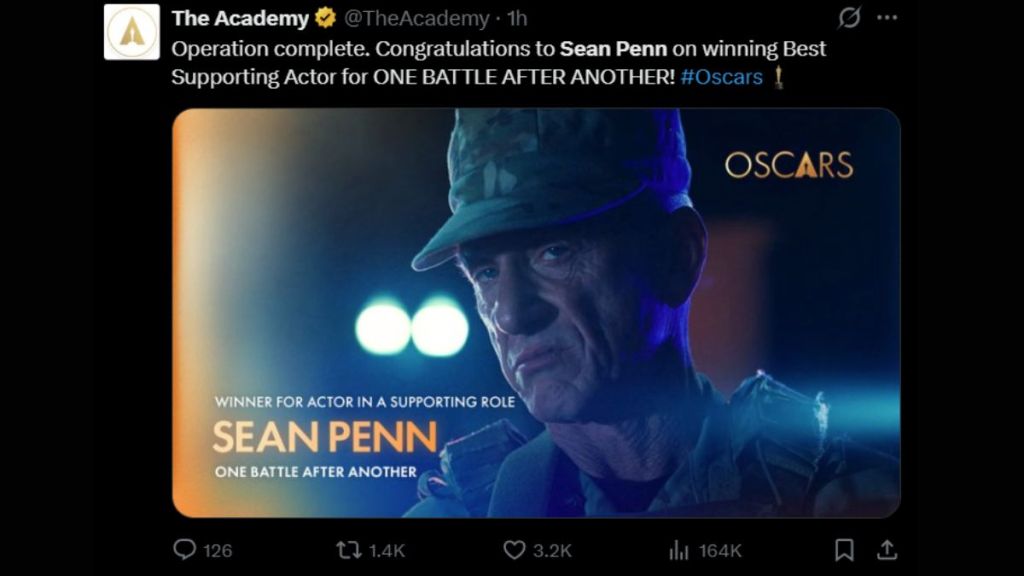
At the Dolby Theatre, a visible empty chair cut through the celebratory noise — and the acceptance line made it obvious why.
Sean Penn won Best Supporting Actor for One Battle After Another, but he did not take the stage. Kieran Culkin stepped forward, accepted the award, and joked: “Sean Penn couldn’t be here this evening, or didn’t want to. So, I’ll be accepting the award on his behalf.” That line landed because the absence was already its own statement.
Why wasn’t Sean Penn at the Oscars 2026?
Short answer: he was reported to be in Ukraine. Several outlets, including The Hollywood Reporter and coverage on X (formerly Twitter), noted Penn’s presence in the country during awards week. You should know this wasn’t a last-minute whim — Penn has been publicly involved with Ukraine since Russia’s full-scale invasion in 2022.
Did Sean Penn win an Oscar at the 2026 ceremony?
Yes. His role as Col. Steven J. Lockjaw in One Battle After Another netted him Best Supporting Actor. This marks his third Academy Award after wins in 2004 and 2009 for Mystic River and Milk. The film’s heavyweight billing — Leonardo DiCaprio among its cast — and Penn’s performance also collected BAFTA recognition and other actor awards.
Where was Sean Penn during the Oscars 2026?
Reports place him in a war-torn area of Ukraine; the precise purpose of this trip hasn’t been fully detailed by his camp. What we do know: Penn has repeatedly traveled to Ukraine, met President Volodymyr Zelenskyy, and even presented one of his Oscars to the Ukrainian leadership as a symbolic gesture. Those actions have been covered by outlets like Variety, The New York Times, and on social platforms where Penn’s visits are documented.
Outside the red carpet, the record of Penn’s activism reads like a pattern — and that context explains the choice better than rumor ever could.
You can regard his absence as theatrical dissidence or as a deliberate allocation of presence. I see it as the latter: Penn has repeatedly reallocated his public attention away from ceremony toward on-the-ground engagement. His gestures — handing an Oscar to Ukrainian officials, repeated field visits — land like a lighthouse in a storm: they’re meant to guide attention, not to comfort the crowd.
That doesn’t mean the Oscars lost their relevance. From an industry angle, awards still amplify careers and streaming interest, and appearances feed late-night conversation and trade headlines on platforms like IMDb and Rotten Tomatoes. But Penn has chosen to trade red-carpet optics for something more personal and immediate. To some viewers it’s principled; to others it’s provocative.
The split reaction matters because the film business runs on perception as much as on craft — campaigns, press stops, and industry parties can shift a film’s trajectory in box-office terms or awards season durability. Penn’s choice shifted some of that trajectory away from the Dolby Theatre and back into real-world conflict zones, where publicity is not the point but presence is.
I’m not here to tell you how to feel about it. You can admire the consistency, or you can question the optics. Either way, the absence has kept the conversation alive — and perhaps that was the point all along. Do you think awards nights should compete with on-the-ground activism, or are they asking for different kinds of attention?