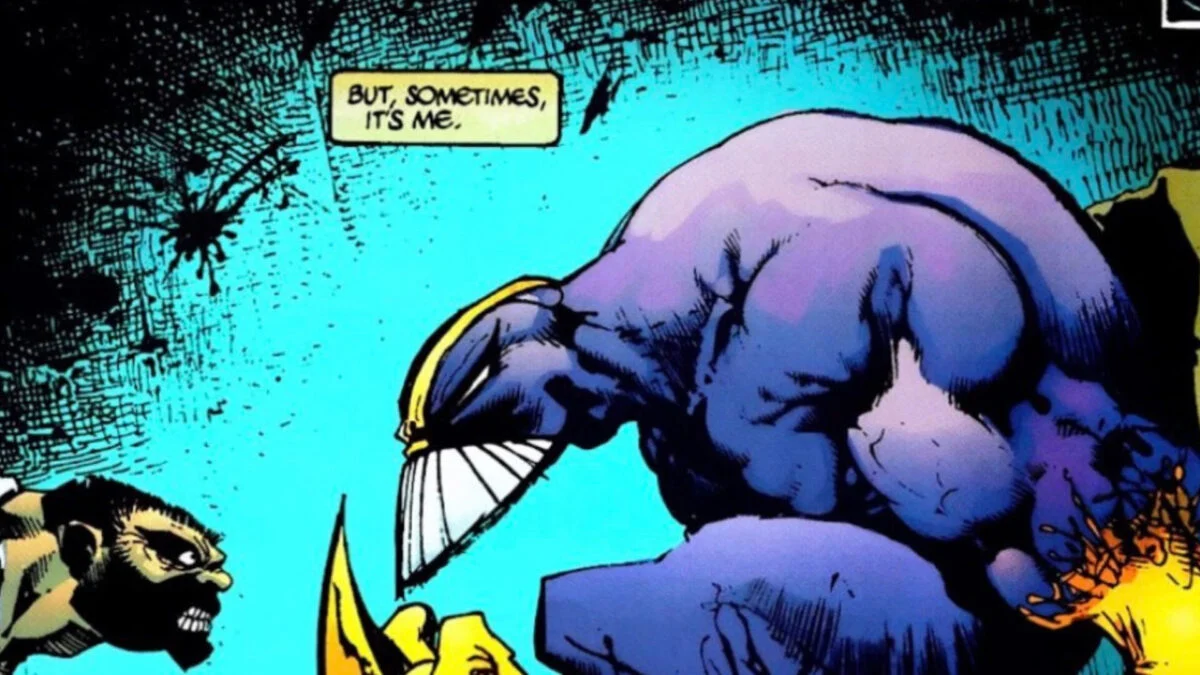
I opened the message with coffee cooling beside me. The subject line read that Sam Kieth had died at 63. I remember the small, stunned hush that followed—like the room had paused to listen.
On a crowded comics-shop floor I first saw Kieth’s jagged lines up close — how that first glance explained everything
I can still point to the issue that hooked me. Sam Kieth arrived in the industry the way many artists do: as an inker on Matt Wagner’s Mage and Steve Moncuse’s Fish Police in the 1980s. You probably know the rest: DC gave him a practical stage in 1989, where he pencilled the opening five issues of The Sandman, helping Neil Gaiman launch a series that changed comics conversation.
He never stopped pushing shape and tone. In the same year he drew a Penguin story with writer Alan Grant, and over the decades his pages took on characters from Batman and Lobo at DC to Wolverine, Hulk, and Spider-Man at Marvel. Those credits are shorthand for one fact: he moved inside other creators’ worlds and re-voiced them with a hand you could spot blindfolded.
Who created The Maxx?
Sam Kieth did. He conceived, plotted, and drew The Maxx for Image Comics starting in 1993. The run reached 35 issues across five years, with guest writers such as Alan Moore and William Messner-Loebs contributing at points. The book later became an MTV Oddities animated series and even attracted industry interest years later—Channing Tatum was linked to a possible adaptation around 2019, though that did not materialize.
On a TV-listings page I once found an episode of MTV Oddities — a reminder that his work crossed screens
Kieth turned his own imagination into property that moved beyond panels. The Maxx became an animated series for MTV, and he co-wrote the pilot to “No Smoking,” while also contributing to the Cartoon Network’s Cow & Chicken—a connection made even more intimate by creator David Feiss being his cousin.
Outside the big two, his fingerprints reached indie houses like Oni Press and Dark Horse. Before he died, Kieth was attached to a revival of the Negative Burn anthology, a project that reached funding on zoop.gg in February. Bleeding Cool first reported his passing and shared that he had been diagnosed with Lewy Body Dementia.
It cannot be overstated how weird & groundbreaking THE MAXX was upon release. It was this crazy culture grenade, bridging the Venn diagram between mainstream comics & Alt (not indie) comics. In an era of anti-heroes, The Maxx satirized that, redefining what mainstream comics could be. RIP Sam Kieth.
— C. Robert Cargill (@crobertcargill.bsky.social) March 21, 2026 at 8:32 PM
What did Sam Kieth do on Sandman?
He drew the launch. Kieth pencilled the first five issues of Neil Gaiman’s The Sandman, a run that helped set the tone for the series. His visual language gave Gaiman’s prose a spine and a particular kind of weird that the comic kept returning to even after other artists rotated through.
At a crowded con panel I watched younger artists whisper his name — proof of how his work lodged inside other creators
You’ll hear strong, personal eulogies: G. Willow Wilson said he “shaped a whole generation of comic book readers and retailers and creators.” Phil Hester wrote that “Comics bent to him,” and Image Comics called his linework “raw and unmistakably his.” Those aren’t warm-ups; they’re evidence of influence.
Kieth’s career threaded mainstream and indie, the corporate and the experimental. He returned repeatedly to the odd and the intimate—stories that left space for readers to feel unsettled. That oddity made him a touchstone for anyone trying to stretch what comics might look like on the page.
We’re deeply saddened to hear of the passing of Sam Kieth.
From The Maxx to his work across comics, Sam brought a completely unique look and voice to the industry. His art was raw and unmistakably his. Sam’s influence will be felt for generations.
Our thoughts are with his family and friends.
— Image Comics (@imagecomics.com) March 22, 2026 at 1:56 AM
What is Lewy Body Dementia?
Lewy Body Dementia is a progressive neurological disorder that affects cognition, movement, and sleep. Bleeding Cool reported Kieth’s diagnosis; the disease can cause hallucinations, fluctuations in attention, and motor symptoms similar to Parkinson’s. Families and fans often face a long, exhausting road of care and memory loss when LBD is involved.
On my shelf a stack of back issues went from nostalgia to memorial — an ordinary action turned charged
There’s reporting to do and catalogs to correct, but there’s also a private ledger: which of his pages shaped you, and how. For some readers it was The Maxx—a book that felt like nothing else at the time and later became a TV stint at MTV. For others it was those five early Sandman issues, or late runs at Marvel and DC that reimagined famous characters through his angle.
He taught creators how much personality could be packed into line weight, panel rhythm, and a single unsettling face. I want you to hold that when publishers and studios repackage work: you’ll see new covers and reprints, but the thing that matters is the rawness that made readers keep turning pages.
Tributes have flooded social platforms—G. Willow Wilson, C. Robert Cargill, Phil Hester—and outlets like Bleeding Cool, The Hollywood Reporter, and Image Comics relayed the facts and the grief. For those who want to help, keep an eye on the Negative Burn revival, or revisit the work; those are practical ways to honor what he did.
Sam Kieth changed how comics could feel; he taught a generation to accept the strange and the uncomfortable on the page. If his pages were a map, who will draw the next route that makes you stop and look again?