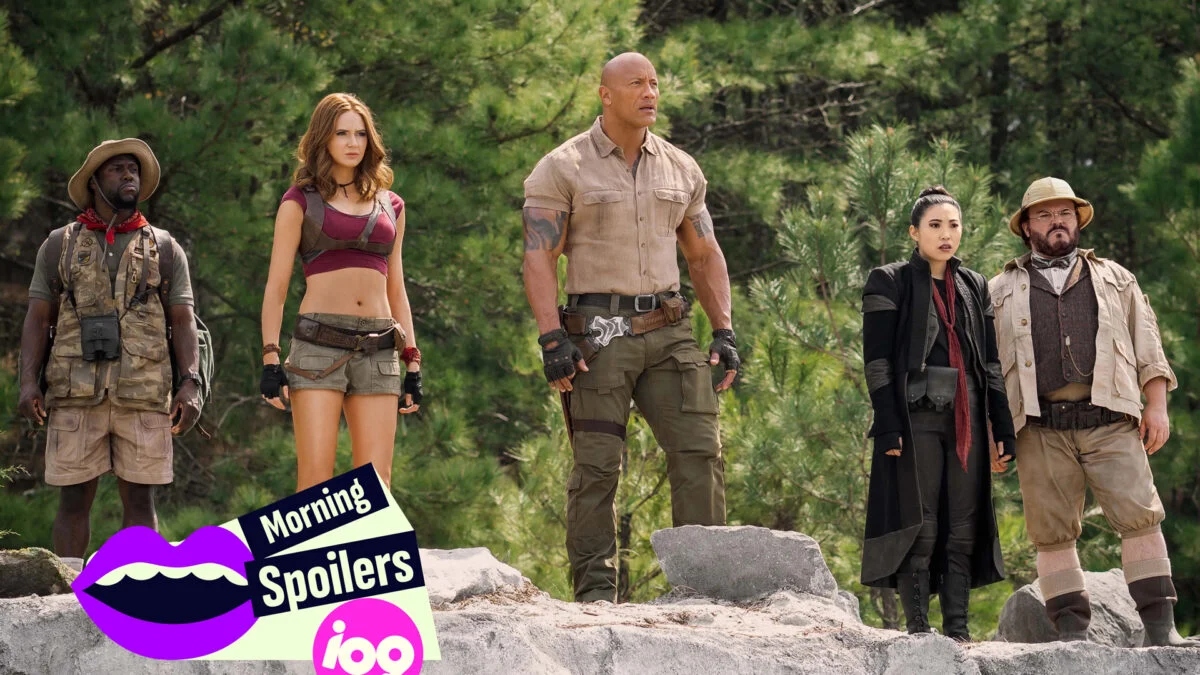
The calendar flips and a studio quietly moves pieces across the board. I watched the Jumanji release date creep away from a gauntlet of tentpoles and thought: smart or cautious? You’re about to get a clear read on why holiday calendars matter more than casting rumors.

Jumanji 3
I woke to the Deadline headline: Jumanji 3 slips to Christmas Day. The move reads like a protective reroute—Sony pushing its family tentpole into the holiday melee to avoid a collision with Avengers: Doomsday and Dune: Part Three.
Studios trade release dates the way boxers pick rounds: timing matters as much as power. You should know this is a pro-level calendar play, not panic. By shifting to December 25, Sony gives Jumanji 3 a clearer family window and a shot at counter-programming against adult-skewing tentpoles from Marvel (Disney) and Legendary/Warner Bros.
The release calendar right now is a crowded buffet; every studio is jockeying for appetites. I’ll walk you through the mechanics, the risks, and what the move signals about confidence in the franchise and Sony’s broader holiday strategy.
Why did Jumanji 3 move its release date?
Deadline broke the news that the film moved to Christmas Day to avoid head-on competition with Marvel’s Avengers: Doomsday (Disney/Marvel) and the prestige sci-fi finale, Dune: Part Three (Warner Bros./Legendary). In practical terms, studios use tools like Box Office Mojo and Comscore to model cannibalization, audience overlap, and seasonal demand. Sony likely read the forecast and decided the holiday plateau offers higher yield for a broad-audience IP.
Will the new date protect Jumanji 3’s box office?
Yes and no. The holidays can inflate ticket sales for films that capture family attention, but they also host stacked releases. If Jumanji 3 secures strong early reviews and a clear marketing angle, it can dominate holiday family screens. If not, it risks being overshadowed by franchise finales with built-in fandoms. That’s why distribution teams lean on tracking data, social sentiment, and pre-sales to refine ad spend and theater counts.
How do studios use competitive release scheduling?
Studios coordinate with exhibitors and rely on platforms such as Comscore, Nielsen’s social tracking, and Google Trends to decide whether to fight or fold. You’ll see a lot of chess here: counter-program, cluster releases for shared audiences, or cede space and claim a different demographic. Sony’s choice here reads as a measured gamble to own the family funnel over the holiday week.
Vincent D’Onofrio and the Punisher’s absence
I scrolled a tweet from Vincent D’Onofrio where he blamed the Punisher’s absence on the character’s other commitments. He wrote that John was “hangin’ with that insect” in Spider-Man: Brand New Day and shooting a Disney+ special—an unusually candid production note from an actor of his profile.
I’ve covered actors who step into roles and treat them like tradecraft; D’Onofrio’s message reads like a wink and a shrug. You should parse it two ways: it’s a cast scheduling explanation and a narrative signal that Marvel’s universe planning is cross-studio and cross-platform. The tweet landed as both explanation and tease.
If John wasn’t busy making his own hour long Punisher film and hangin with that insect we would have wanted him to join us in Season 2 for sure.
Yet he had a wonderful opportunity to do the other projects and i for one can’t wait to see him in those.— Vincent D’Onofrio (@vincentdonofrio) March 23, 2026
D’Onofrio’s tone carries an authority most actors avoid in public comments—he’s both franchise insider and storyteller. That creates trust for you as a viewer: when he says scheduling kept the Punisher off Daredevil: Born Again season 2, he’s speaking from a seat at the table.
Playing a role across platforms—streaming specials, network series, and feature films—turns characters into long-running IP assets. The Punisher’s absence signals inter-studio choreography among Marvel properties and highlights how Disney+ and theatrical windows now intersect in creative ways.
What this means for the holiday box office and fan expectations
I watched social feeds fill with hot takes the moment Deadline posted the change. Fans debated whether Jumanji 3 could still compete with Avengers-level spectacle or whether Sony had surrendered the week to bigger brands.
For you as an audience member, the move will translate into how studios advertise: heavier family hooks for Sony, blockbuster spectacle for Disney and Warner Bros. For analysts and outlets like Deadline and The Hollywood Reporter, the shift becomes a measuring stick of market confidence. Platforms such as Box Office Mojo will be the place to watch opening-week tracking and theater counts.
Studios are adjusting calendars the way athletes pick race lines: small moves can change outcomes. The one thing to watch is pre-sales and opening weekend social sentiment; those metrics will tell whether Sony’s gamble paid off.
Other context and quick notes
I scanned the rest of the studio grapevine and flagged two quick items that matter to this story’s orbit. First: casting and production notes—Michael Mando joined Netflix’s live-action Gundam, and Paul Walter Hauser is attached to Netflix’s live-action Scooby-Doo—that all speak to how talent is spread across franchises. Second: raw audience appetite for franchise saturation is being measured with more precision than ever via social tools and pre-sale platforms.
I’ve been tracking how studios defend holiday real estate for years; this swap is less about panic and more about strategic positioning. If you follow Deadline, The Hollywood Reporter, and Box Office Mojo, you’ll see the same signals I do: studios are playing chess with release dates, and audiences end up deciding who wins.
If studios can outmaneuver one another on the calendar, will audiences reward the safer play or the bolder spectacle?