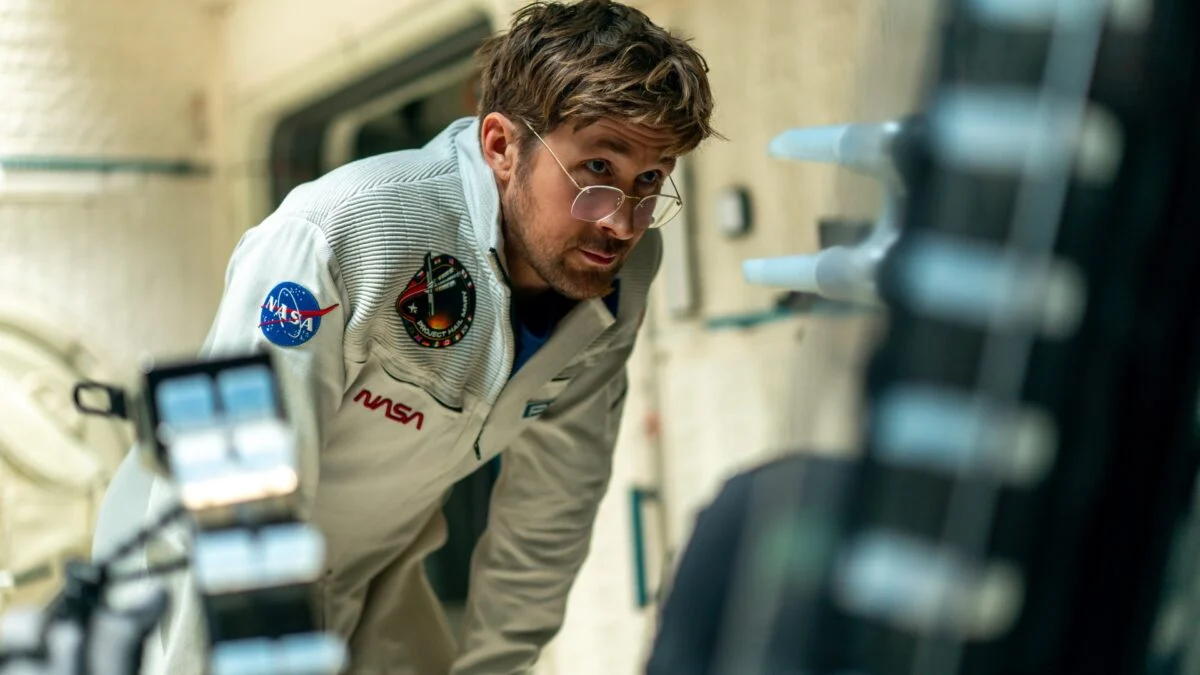
You sit frozen as the credits roll, feeling both satisfied and cheated. I walked into the lobby and overheard a fan whisper, “There has to be more.” The studio heard that whisper too.
At the theater exit, conversations were about Ryan Gosling — and Amazon MGM is listening
You remember the way people debated Gosling’s Ryland Grace as if the credits were just a comma. I watched those debates and filed them away the same way a producer files opening-week returns.
Amazon MGM Studios now holds both the trophy and the calculus: critical credibility plus commercial momentum. Studios rarely ignore a rare pairing of acclaim and box office buzz, and MGM’s posture is patient. The studio wants stories anchored by their creator, not stitched on demand — which pushes the ball back into Andy Weir’s court.
Amazon MGM’s appetite for a franchise is like a satellite locking on a beacon: precise, relentless, and tuned to signals from the source material.
On set and off, the creative team deferred to the author — Phil Lord and Christopher Miller said so
At press junkets, directors Phil Lord and Christopher Miller repeated one line: Weir controls what happens next. I heard them say it; you can watch the Wired interview on YouTube where Lord, Miller and Ryan Gosling answer questions alongside Weir.
The Hollywood Reporter confirmed the public posture: there are no active talks right now, but a sequel isn’t off the table if Weir offers material. That’s an unusual power dynamic — studios often commission continuations, but here the novelist holds the steering wheel.
Will there be a Project Hail Mary sequel?
You want a straight answer; I wish I had one. Sources tell Hollywood Reporter that Weir has never written a sequel before and is busy on a separate novel, but he’s tentatively explored sequel ideas. For Amazon MGM, that means waiting, hedging deals, and keeping talent like Gosling attached without committing to a script.
Fans ask about the gaps in the story — and one of those gaps is now a deliberate tease
Outside screenings, I heard the same question three times: what happened to the other two astronauts? Directors told reporters the film leaves that thread vague. In a Wired video, Weir said he knows the answer but is saving it for potential sequel material.
That kind of withheld detail works like a magnet for curiosity. If Weir chooses to write it, the sequel could explore an astrophage-adjacent illness, changes to Ryland’s psyche, or Rocky’s world — each choice shifts the tone dramatically. Weir’s silence sits like a sealed flight recorder in an otherwise chatty cockpit.
Is Andy Weir writing a sequel to Project Hail Mary?
Short version: he’s considering ideas but has nothing finished. Representatives for Weir and Amazon MGM declined comment to trades. Weir is reportedly working on a different novel, and while he’s “toying” with sequel concepts, nothing is solid enough yet for publication or a green-lit screenplay.
What a sequel would mean for the movie and the market
At industry screenings, conversations shift from story to strategy: Can this be a franchise or should the film remain standalone? I track those debates across Box Office Mojo and Rotten Tomatoes threads; you can see how box office momentum influences sequel calculus.
If Weir writes a follow-up, Amazon MGM gains a creative anchor for any script. If he doesn’t, the studio faces a choice: commission new material that honors the book or risk diluting what made the story special. Both paths carry fan risk and commercial opportunity.
Where the power really sits — between author, studio, and audience
In countless meetings I’ve watched, the person who owns the source often shapes the sequel’s permission structure. Here, that person is Andy Weir. You can call the negotiations legal, financial, or artistic, but the simplest truth is this: no sequel without the author’s blueprint, at least not if Amazon MGM wants the goodwill that turned the original into a hit.
Platforms like YouTube (Wired), trade outlets such as The Hollywood Reporter, and industry data from Box Office Mojo will track every move. You and I will be watching too — because when the author speaks, the story changes.
So, do you want another voyage with Ryland and Rocky, or should the film stand alone as a complete experience that resists franchise pressure?