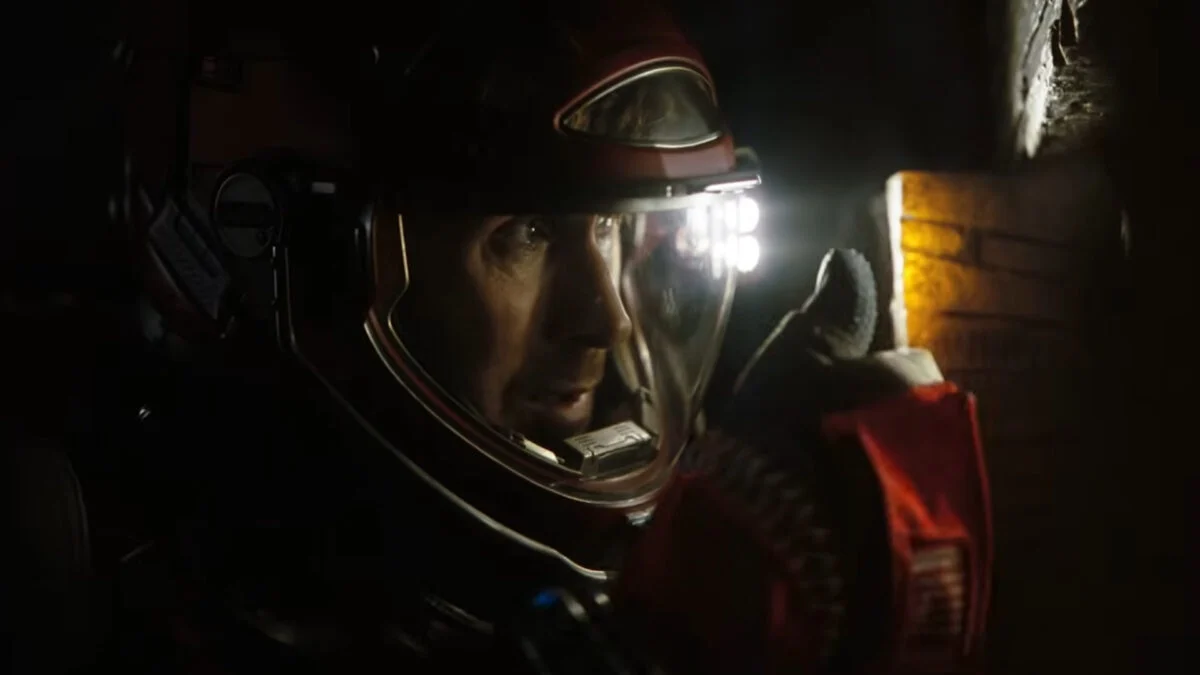
I stood in line, ticket in hand, when someone behind me shouted about the scene with Rocky. You felt the room tilt—what started as a movie screening had become a public conversation. That electricity explains why the story is now sprouting a manga version.
I don’t say that as a headline; I say it as someone watching the ripple. Hayakawa Publishing quietly announced a manga adaptation of Andy Weir’s Project Hail Mary, and their teaser shows Ryland Grace meeting Rocky for the first time. Newcomer mangaka Hajime Go will lead the project, and Weir himself gave the sample art his nod. The announcement dovetails with the Ryan Gosling-led film’s sudden cultural momentum, and the timing feels deliberate.
【『#プロジェクト・ヘイル・メアリー 』コミカライズ、ティザー初公開】
原作映画公開で、その人気ぶりが社会現象を起こしつつある、アンディ・ウィアー『プロジェクト・ヘイル・メアリー』(小野田和子訳/ハヤカワ文庫SF/上下巻)。… pic.twitter.com/mZYrhGATVe
— ハヤコミ(早川書房のコミックサイト) (@hayacomic) March 27, 2026
The announcement arrived like small talk at a premiere
At the theater exit, I overheard readers arguing which scenes would translate best to panels.
That casual debate is exactly the engine publishers want. Hayakawa positioned the manga not as a cash grab but as a medium extension: Hajime Go adapts the story, Andy Weir blesses the art, and Hayacomic handles the rollout. For fans who discover the franchise through the movie, a manga provides a new sensory route back into the narrative without asking them to re-read the novel.
The box office proved the audience already exists
Outside the multiplex, I watched people compare weekend numbers on their phones.
Per The Hollywood Reporter, Project Hail Mary earned $54.5 million (€50M) domestically in its second weekend (down 32%), and $136.2 million (€125M) internationally, bringing the worldwide total to $300.8 million (€277M). That makes it Amazon’s highest-grossing film since Creed 3’s $276 million (€254M) in 2023. The film became a tidal wave across social feeds, and that kind of reach turns ancillary products—manga, collectibles, spin-offs—into low-risk bets for publishers and studios.
A manga is a new gate for fandom to pass through
I spotted a teen reading a panel-by-panel scan on a subway and realized how different the audience looks now.
Manga attracts readers who prefer serialized pacing and visual shorthand: Rocky’s first appearance in frame-by-frame form can reframe Ryland Grace’s interior monologue into striking visual beats. Hayakawa’s announcement, including the teaser art, signals they’re aiming for serialization and fan conversion. For Andy Weir and Hajime Go, the adaptation is a form of storytelling translation—one voice becoming another, with the same core gravity.
Is there a Project Hail Mary manga?
Yes. Hayakawa Publishing confirmed a manga adaptation on Hayacomic, with teaser art and Hajime Go attached; Andy Weir has publicly approved early samples.
When will the Project Hail Mary manga be released?
Hayakawa has not given a release window yet. Publishers often announce teaser art first to measure buzz, then follow with serialization dates; given the film’s current box office of $300.8 million (€277M), you can expect a rollout timed to maintain attention—likely within the next publishing cycle.
Will Project Hail Mary get an anime?
People are already asking that on Twitter and Reddit. The jump from manga to anime is common in Japan; a successful manga run or a strong licensing deal could make an anime the logical next step. The manga acts as another hatch on that rocket, offering a ready-made visual roadmap for animation studios and licensors.
I’ll warn you: when a story hits film, manga, and merch in quick succession, fandom starts to feel like a marketplace as much as a community. You can track signals—publisher sites, Hayacomic posts, Hayakawa social channels, THR box office columns, and studio PR—but the real marker is whether fans keep making art, theories, and conversations after the credits roll.
So will the manga push Project Hail Mary from a hit into a full franchise—and could an anime be the wildcard that turns chatter into a cultural takeover?