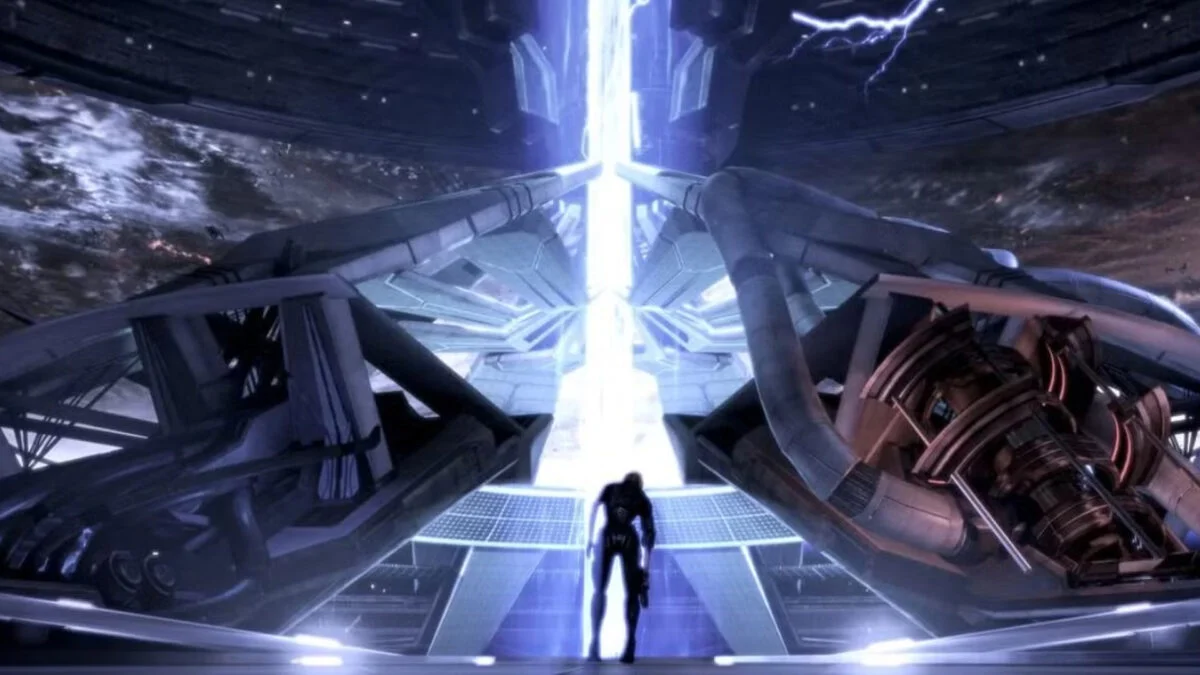
I was on a call when the note arrived: Mass Effect scripts needed rewrites to be “more appealing to non-gamers.” You could hear the room shift—producers, creatives, and corporate all suddenly measuring what the show might become. I sat there thinking about what gets lost when a franchise is folded to fit a new audience.
I’m talking about the rewrite reports first surfaced by Lesley Goldberg at The Ankler and amplified by outlets including Eurogamer. The claim: Amazon TV chief Peter Friedlander asked to see scripts for in-development shows and requested changes so Mass Effect would read better to people who haven’t played the games. That sounds simple until you think about what those scripts actually carry—choices, lore, and tonal shorthand that gamers carry into every scene.
In the writers’ room, someone highlighted “non-gamer” readability
That note is a blunt instrument. I’ve been in rooms where a single line can erase three months of world-building. You can call it commercial sense or creative pruning; I call it a signal of priorities. If Friedlander is reading scripts and asking for rewrites, the level of creative oversight is intense and immediate.
The worry for you and me—if you’re protective of the games’ DNA—is that “more appealing to non-gamers” translates to fewer moral gray areas, less technical jargon, and broader character beats. On the other hand, Prime Video has reason to steer wide: series have to hit global subscribers who haven’t mapped out every Rachni or Reaper reference.
Will the Mass Effect show be faithful to the games?
Short answer: it depends on your definition of faithful. I’ve seen adaptations keep the scaffolding—key events, major characters—and still change the emotional engine. BioWare’s narratives are built around player agency; television needs a fixed arc. That doesn’t mean creators can’t preserve tone, but you should expect compromises.
At a production meeting, executives discuss audience metrics and risk
Executives don’t talk in feelings; they speak in reach and retention. You can almost hear the slide deck: demo charts, engagement windows, churn risk. When a note arrives to make a show “friendlier” to non-players, it’s coming from a playbook that treats mass appeal as risk reduction.
I’ve seen franchises smoothed out so they travel more easily across markets. It’s a strategy—and one that has produced hits. But it’s also the moment where nuance gets sanded. The rewrite ask could trim scene-specific complexity or explain lore beats that games expect players to know, which will change pacing and the audience’s discovery experience.
Why did Amazon ask for rewrites?
Because when a platform like Prime Video, which sits inside Amazon’s subscriber economy, greenlights shows it’s betting on long-term engagement. Peter Friedlander reportedly reading scripts is a gatekeeping move: he’s protecting a large, diverse audience and the streaming product’s health. For BioWare and the showrunners, the challenge is translating interactive stakes into television stakes without hollowing out the emotional heft.
On the public side, leaks and commentary shape expectations
Journalism and rumor become a pressure valve. I watched coverage shift from “greenlit” to “rewrite reports” and then to commentary about gamer purity versus mainstream taste. That public noise affects greenlight momentum and creative decisions—sometimes more than the internal notes themselves.
Here’s what I’d tell you if you care about both quality and reach: watch who’s at the table. BioWare, Prime Video, and Amazon all have different incentives. The Ankler’s Lesley Goldberg and outlets like Eurogamer are doing what journalism does—exposing the levers. You should expect negotiation, not perfection.
I don’t know whether the final series will satisfy veteran players or win new fans. The rewrite request landed like a pocket watch dropped into a galaxy-sized clockwork, and the result could be precise or jarring. It may also be trimmed like a bonsai: small, deliberate cuts that change the silhouette but keep the trunk.
If you want early context, play the four Mass Effect games—each is a primer on the universe’s beats, choices, and tone. If you’d rather wait, watch how Prime and BioWare frame the show in trailers, press statements, and casting announcements. Either way, the question remains: will the series honor the franchise’s moral complexity, or will it flatten it for a broader audience?