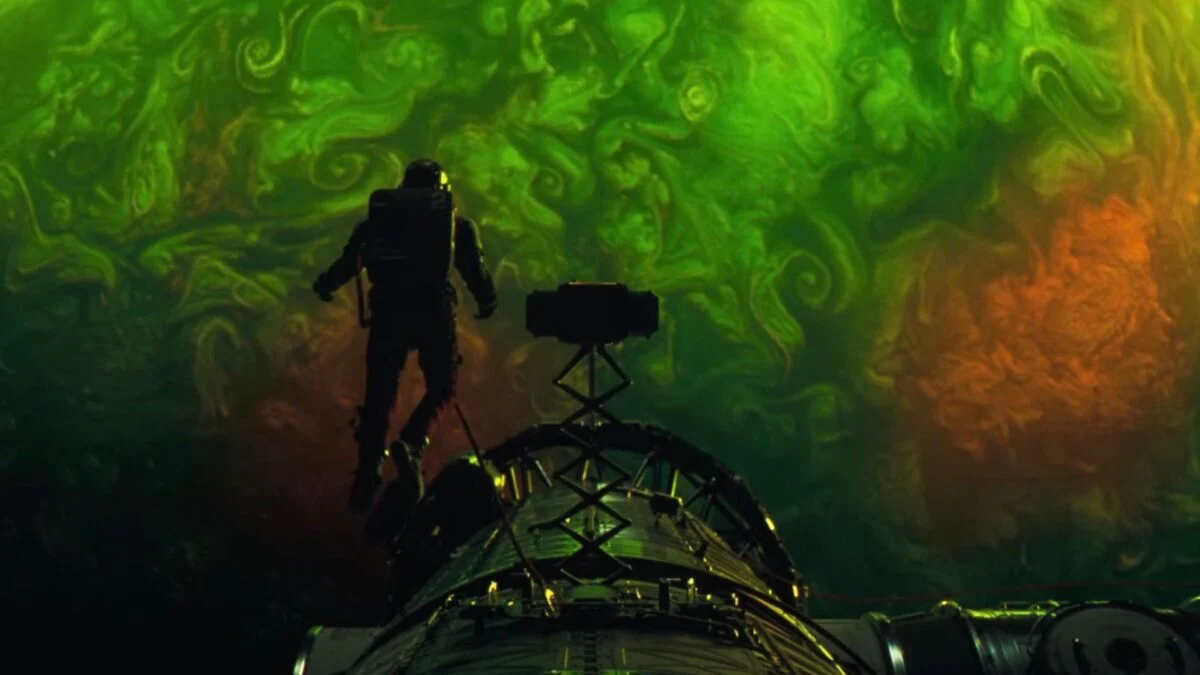
I watched the feed when someone in Mission Control clipped a single line: “Amaze Amaze Amaze.” For a second the clip felt like a private joke sent up the chain of command, then it hit me — culture had suddenly caught up with the spacecraft. You can feel the distance shrinking between orbit and the movie theater.
They watched Project Hail Mary in quarantine, astronaut Jeremy Hansen says.
I heard Hansen’s line in an interview with IGN: the crew got a link to the film during pre-launch quarantine and watched it with their families. You can picture the ritual — snacks and nervous jokes before a mission that will rewrite distance records. That detail does more than humanize the crew: it seeds an intuition that public storytelling and real missions now move in lockstep.
Did the Artemis 2 crew watch Project Hail Mary?
Yes. Hansen told IGN they were “really lucky” to get the screening at home, a nod from Hollywood that crossed into NASA’s corridor. When the Project Hail Mary team includes a personal message and Ryan Gosling sends well wishes, the line between promotion and morale support blurs — and that blurring is newsworthy.
Mission Control’s feed flashed “Amaze Amaze Amaze” after the crew photographed Mars.
The line that showed up on a live telemetry snapshot came straight from the movie’s alien character Rocky and crackled across social timelines. NASASpaceflight posted the screenshot and the Project Hail Mary account gleefully amplified it — the moment became a tiny cultural broadcast from space. That single phrase travelled like a pebble in a pond, rippling through Twitter, Gizmodo, IGN, and outlets tracking Artemis 2.
Why are movie quotes in space making headlines?
Because the quotes do three jobs at once: they humanize astronauts, they serve as organic promotion for a major release, and they create a vivid narrative hook for legacy outlets and social platforms alike. NASA’s public affairs apparatus, fan-run feeds like NASASpaceflight, and studios all profit from that hook in different ways.
Sending the biggest congrats and best wishes to the #ArtemisII crew, from everyone on the #ProjectHailMary team. pic.twitter.com/qnwkOHrpoq
— Project Hail Mary (@projecthailmary) April 1, 2026
Ryan Gosling’s message reached the crew before lift-off, and the cast cheered them on.
That tweet of congratulations is a small public-relations choreography: studios courting authenticity, astronauts accepting cultural invitations, and fans reading it as proof that exploration belongs to the broader public. I see it as a backstage pass between two attention economies — Hollywood and aerospace — trading favors with a wink.
Movie studios and NASA both know how to bend the story arc: a film amplifies interest in a mission and a mission amplifies interest in a film. Platforms like Twitter and outlets such as IGN, Gizmodo, and Io9 act as the amplifiers; fan sites like NASASpaceflight are the crowd-sourced microphones. The exchange colors how we follow a mission — not just as a technical feat, but as a moment of shared cultural drama, as if the craft itself had learned a cult-favorite phrase.
“Amaze Amaze Amaze” – MCC-H. pic.twitter.com/IWqd4RGlaa
— NSF – NASASpaceflight.com (@NASASpaceflight) April 6, 2026
The crew’s public references are already shaping the story people will tell about Artemis 2.
Every quote that leaks from the capsule becomes a data point in the mission’s narrative footprint. I watch how journalists and social editors turn those points into threads that hold attention for hours. When the Project Hail Mary account reposted the Mission Control screenshot, the moment became a shared artifact — a tiny cultural relic sent from farther away than any previous human voice.
That cross-pollination matters beyond memes. It changes which outlets get clicks, which narratives dominate search engines, and which images brands choose for future campaigns. If you follow NASA’s channels, IGN’s interviews, or coverage on Gizmodo and Io9, you’re watching a coordinated ecosystem at work: studios, mission PR, journalists, and fans all steering the same conversation.
Project Hail Mary remains in theaters and Artemis 2 continues its mission. If you want a live feed of the cultural side of exploration, watch NASA’s social accounts, NASASpaceflight, and the film’s channels for the next small moment that ties Hollywood to a spacecraft — which moment will they send back next?
Now that’s an “amaze” heard ’round the world! https://t.co/RTzR1knDFl
— Project Hail Mary (@projecthailmary) April 6, 2026