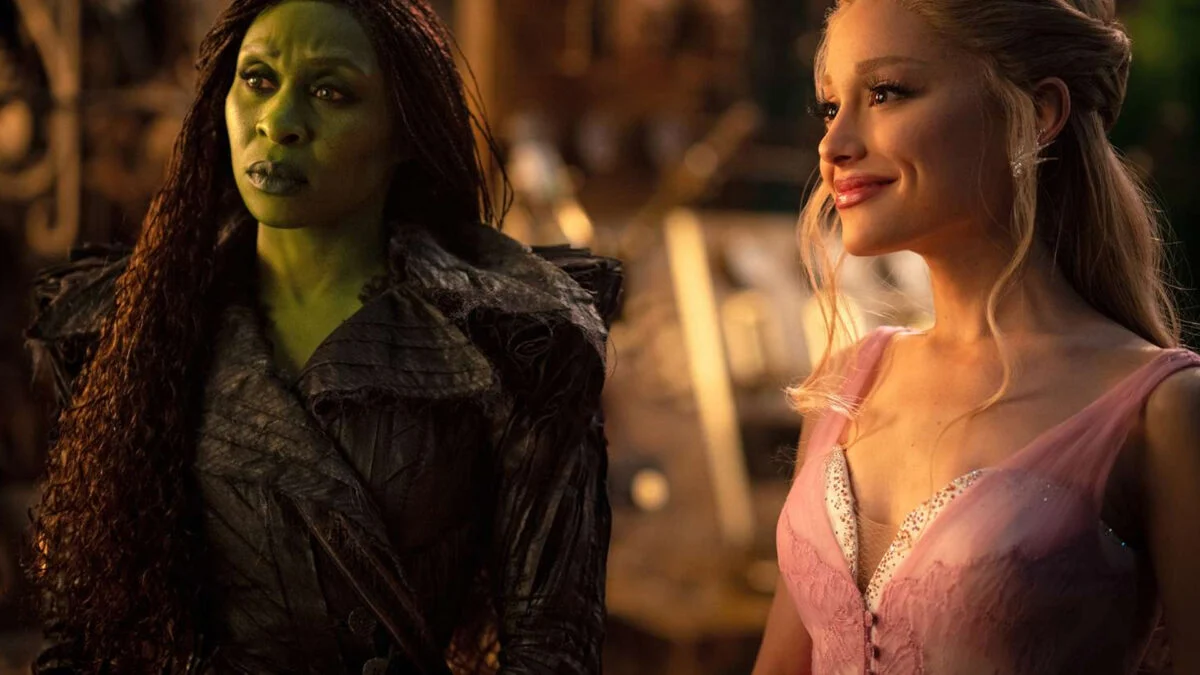
If you’ve been eagerly anticipating the release of For Good, the sequel to Wicked, you’re likely aware that both productions are rich with quirky language unique to the Land of Oz. One phrase that stands out is “a clock tick.” Characters frequently say they’ll return in “a clock tick,” which might leave you scratching your head. Why is this particular phrase repeated so often, especially when other moments embrace a more varied lexicon?
As a big fan of both the musical and its literary roots, I can appreciate how they intertwine elements from Gregory Maguire’s original novel. In Maguire’s version, the Clock of the Time Dragon isn’t merely a background element; it serves an important role in Ozian culture. Unlike the musical and the film adaptations, which tend to gloss over it, the clock is central to understanding time and prophecy in Oz.
1. The Oddity of “Clock Tick”
It’s jarring to hear “a clock tick” pop up repeatedly in For Good when a simpler phrase like “just a sec” is already available in the Oz vernacular. While it’s reasonable to believe that “a clock tick” denotes a short period, its overuse begins to draw attention away from what else is happening in the story.
2. Time in Oz
The relationship with time in For Good is intriguing. The film gives little clarification on how much actual time has lapsed since Elphaba’s theft of the Grimmerie, as Madame Morrible casually mentions “12 tide turns.” Without a clear explanation of the time frame, it’s easy to get lost.
3. Clock of the Time Dragon
In his novel, Maguire elevates the Clock of the Time Dragon to something almost spiritual. It serves as a traveling puppet theater, offering prophetic insights through its performances. Elphaba shares a deep bond with this mystical clock, as she’s born within it and learns about her heritage through one of its shows. Why hasn’t this crucial element found a more prominent role in the musical adaptations?
4. The Lack of Clock Significance in Adaptations
While the musical includes a representation of the Clock of the Time Dragon, it’s more of a decorative nod than a narrative focus. The clock adorns the stage, but its lack of significant plot involvement raises questions about the repeated phrase “clock tick” in For Good. Could this be an unintentional link back to something deeper in the narrative? It certainly feels peculiar.
5. Curious Reception from Fans
Viewers have noted the oddity of this phrase. Some find it charming, while others view it as excessive. Will audience members embrace this quirk, or is it just a distraction from the plot? The mixed reactions point to the uniqueness of Oz’s language, which thrives on creativity, but also on balance.
What does “a clock tick” actually mean? In the context of For Good, it likely serves as a casual way to say “a moment” without anchoring time too rigidly.
Are there other phrases in the Oz universe that stand out? Absolutely! The adaptation plays with whimsical terms just as much as it digs into deeper themes of friendship and identity.
Why is time such an important theme in both Wicked and For Good? Time drives the narrative, making each character’s journey all the more poignant. It points towards growth, change, and the choices that define who we are.
In conclusion, the odd repetition of “a clock tick” in For Good beckons us to consider how language contributes to our understanding of time in Oz. Despite its strangeness, it adds a layer to the already rich tapestry of Oz-isms. For those deeply invested in the lore, every phrase holds meaning. So, if you’re feeling intrigued, dive deeper into the world of Oz and see all that it has to offer.
Continue exploring more about the fascinating narratives of Oz and beyond at Moyens I/O.