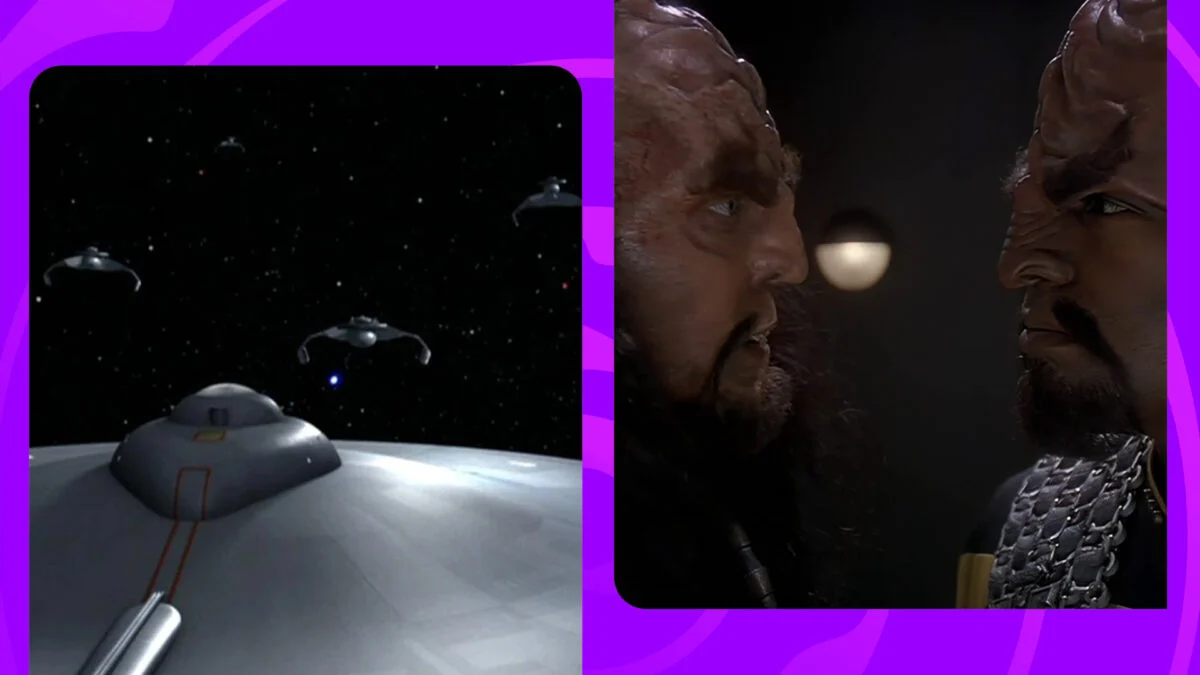
If there’s one thing that Star Trek loves, even in times of peace, it’s a good old scrap between Starfleet and the Klingons. You’ve got to appreciate the tension, right? These two factions have been at odds for decades, creating some of the most compelling stories in the universe. From their rocky beginnings to the complex alliances and betrayals, the history of Klingon-Federation conflict is anything but dull.
As a long-time fan of the Star Trek universe, I’ve dived deep into this tumultuous relationship. Let’s explore how it all began and how it transformed over centuries.
2151: The Broken Bow Incident
The saga kicks off in 2151 with the Broken Bow incident. Humanity’s first contact with the Klingon Empire came with a bang—literally. A Klingon courier named Klaang was shot down over Earth while being pursued by the Suliban, a shadowy group with its own agenda. When Klaang was rescued, Starfleet and Vulcan authorities got involved, but their attempt to return him to Qo’noS violated Klingon honor codes. Right from the start, Earth managed to get off on the wrong foot!
2220s: A Cold War Vibe
Fast forward to the 2220s, and things got tense again. With the formation of the Federation, both parties kept their distance, but the 2220s brought an era of cold war. They clashed over colonial expansions, notably at the Battle of Donatu V in 2245. The battle left both sides standing down for a decade, showcasing their long-standing rivalry.
2256-2257: The First Federation-Klingon War
By 2256, tensions finally erupted into open conflict during the First Federation-Klingon War. The Battle of the Binary Stars marked the beginning of a catastrophic war that saw significant losses on both sides. The Federation faced the united Klingon Empire, and by the end of the year, Klingon forces had reached striking distance from Earth. A desperate plan was hatched to destroy Qo’noS, but Starfleet’s actions shifted the tide and led to an unexpected armistice. The war left deep scars, with one hundred million lives lost and a diminished Starfleet.
2267: Another Round Begins
Just as things seemed to settle, the 2260s reignited the conflict. The Klingon Empire’s demands for territories occupied by the Federation led to war once more, particularly over the planet Organia. Starfleet’s flagship, Enterprise, couldn’t prevent the Klingon occupation, but the Organians, a powerful non-corporeal race, forced both factions to sign a treaty, ending hostilities almost as quickly as they began.
2267-2293: A Tenuous Peace
With the Treaty of Organia, a fragile peace followed, leaving both sides fuming over disputes. The Klingon government was under pressure, and disaster struck when Qo’noS’s moon, Praxis, exploded. Chancellor Gorkon’s attempts to forge peace through trade were cut short by his assassination, putting both factions in a precarious position once again.
2344: The Battle of Narendra III
A new challenge arose in 2344 during the Battle of Narendra III. The Klingon colony faced an invasion from the Romulans, and in a twist of fate, the Enterprise-C intervened and became embroiled in a temporal anomaly. This battle reshaped Klingon alliances, steering them closer to the Federation and resulting in a renewed Treaty of Alliance.
2372-2373: The Third Federation-Klingon War
Just when it seemed peace was settling in, the third war kicked off when Chancellor Gowron pulled the Empire out of the Khitomer Accords after the Federation opposed their invasion of the Cardassian Union. The war erupted, resulting in a tumultuous confrontation and a quick ceasefire due to the discovery of Dominion agents manipulating the situation. Starfleet and the Klingons had to unite against a greater threat, leading to yet another uneasy truce.
Bonus Round: The Black Path Crisis of 3069
Fast forward to the 31st century, and we encounter the Black Path crisis. Following the galactic event known as the Burn, a radical Klingon faction emerged, seeking to exploit the chaos. While things escalated far too quickly, their faction was thwarted, but not before a devastating attack on Earth. This left the United Earth questioning its place in the Federation. Fortunately, in the 32nd century, peace was rekindled, allowing Klingon cadets to return to Starfleet Academy.
What is the significance of the Khitomer Accords?
The Khitomer Accords were critical in formalizing peace between the Klingon Empire and the Federation, creating an established framework for diplomatic relations and cooperation.
How did the Federation handle initial Klingon conflicts?
The Federation approached early conflicts with caution, often attempting diplomatic resolutions but sometimes ending up in open warfare due to misunderstandings, notably stemming from cultural differences.
What was the impact of the First Federation-Klingon War?
The First Federation-Klingon War devastated both sides, resulting in the loss of millions of lives and significant damage to Starfleet’s fleet, deeply influencing future relations.
What role did the Organians play in the Klingon conflicts?
The Organians, a highly advanced race, intervened multiple times, leveraging their powers to halt hostilities and enforce peace treaties between the opposing factions.
How did the Klingon Empire evolve after the Treaty of Alliance?
Following the Treaty of Alliance, the Klingons realigned politically, moving closer to the Federation and establishing cooperative military strategies, which ultimately forged a longer-lasting relationship.
Klingon-Federation relations are a rollercoaster ride of conflict and cooperation, showcasing intricate storytelling that keeps fans engaged. What are your thoughts on the twists and turns of this epic saga? Let me know in the comments below!