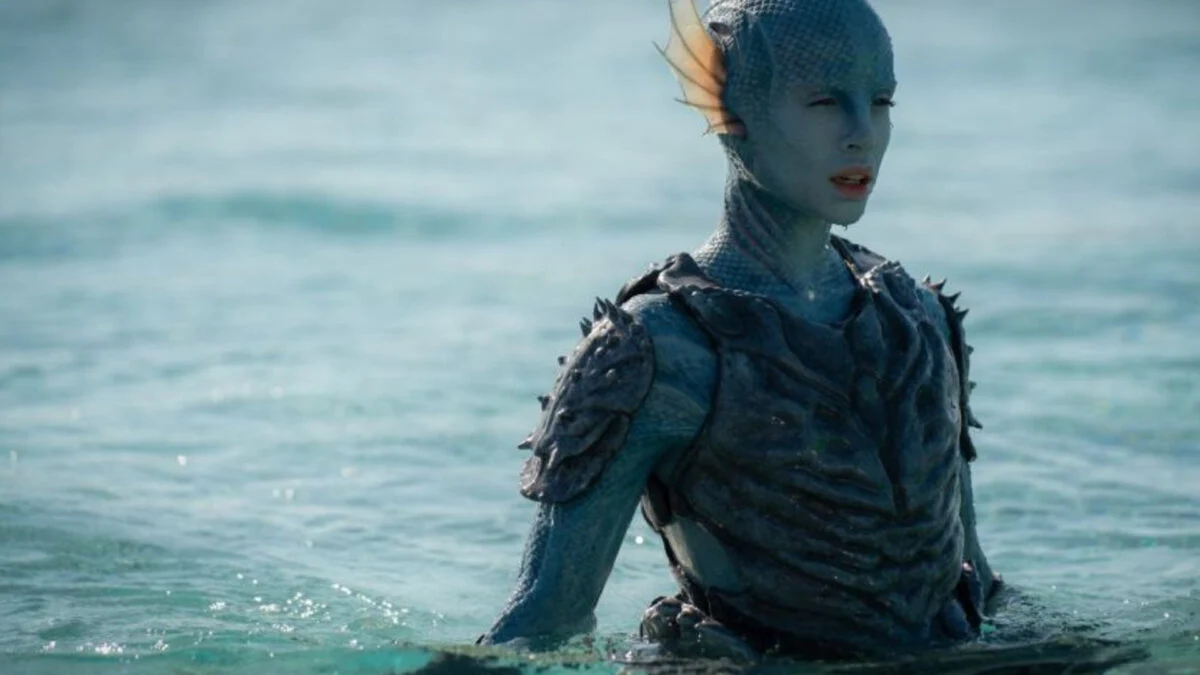
When news first broke about the Doctor Who spinoff The War Between the Land and the Sea, excitement bubbled to the surface. Fans wondered if this series could explore new dimensions within the beloved universe. Fast forward to the conclusion of its run, and it feels like that potential has washed away, leaving little more than a grim aftertaste during what many consider the darkest year for Doctor Who in recent memory.
The series began with promise, teasing complex themes involving the reborn Sea Devils, now known as “Homo Aqua,” and their turbulent relations with humanity. Sadly, those political threads got lost amidst what felt like an uncomfortable focus on a rushed romantic subplot between Salt, played by Gugu Mbatha-Raw, and Barclay, portrayed by Russell Tovey. While the chemistry was tangible, their whirlwind romance took center stage, stripping Salt of her previous role as a powerful advocate for climate change, making her just another player in an unconvincing love story.

The series attempted to address significant issues like climate change but ultimately sacrificed depth for drama. After the explosive introduction of Homo Aqua, I expected a battle of ideologies and struggle for coexistence. Instead, we got a flood of missed opportunities. The narrative pivoted awkwardly, showcasing a misguided desire for grand stakes, as evidenced by the ridiculous scene where Homo Aqua retaliates by summoning and eating every dog on Earth—a bizarre choice that left viewers scratching their heads.
Why Did The War Between Fail to Make an Impact?
What became painfully clear is that the series couldn’t decide what it wanted to be, leading to a frustrating viewing experience. The horror of humanity’s actions against the Sea Devils—the very creatures they hoped to form an alliance with—became an afterthought, resolved in the last moments of the finale through a hastily introduced virus called “Severance.” This left an unsettling impression, as the potential for moral exploration was thrown overboard.

What Themes Were Overlooked in the Spinoff?
While climate change was at the heart of this story, it became obscured by poorly implemented plot points and forgettable character arcs. For example, after Salt’s bold act of dumping waste onto land to show humanity’s negligence, the consequence disappeared like mist. By episode five, the earth was seemingly scrubbed clean of any lasting implications of those actions.
Could the Ending Have Been Different?
In a sense, humanity’s extermination of Homo Aqua might have provided a potent and dark ending, but again, War Between missed that mark. Instead of grappling with the ramifications of their choices, the narrative chose to dwell on the romance instead of the ethical implications of genocide. As the series closed, we were left to watch Barclay transform into an aquakind/human hybrid, a hollow victory overshadowed by the struggle for acceptance he was supposed to embody.

What Was the Tone of the Finale?
The final scenes were jarring, leaving viewers with more questions than answers. They introduced Kate, played by a familiar character from previous series, in a chaotic last moment where her anger towards a litterbug felt out of place amidst the emotional journey of Barclay and Salt. It signified a desperate lunge back toward the show’s original themes, a confusing juxtaposition that didn’t quite resonate.
Is The War Between Available for International Viewers?
Currently, The War Between the Land and the Sea streams in its entirety on BBC iPlayer in the UK. International fans will have to wait until 2026 to catch it on Disney+.
What Can Fans Expect from the Future of Doctor Who?
The recent rift between Disney and BBC means that the future of Doctor Who remains uncertain. With projects delayed and limited access to new content, many are left to wonder what will come next.
As for War Between, it serves as a reminder of unrealized potential within the Doctor Who franchise. Its narrative did little to resonate or inspire, leaving fans yearning for the depth and complexity that the series once promised. What are your thoughts on the spinoff? Did its ambitions impress you, or did it fall flat? Share your reflections in the comments below!