Starfleet General Order One, commonly referred to as the Prime Directive, plays a pivotal role in the universe of Star Trek. This guideline prohibits Federation members from interfering with pre-warp civilizations, keeping them oblivious to the vast array of societies beyond their own. But, as many fans of the series have noticed, the heroes often treat this foundational rule more as an inconvenience than a strict guideline. In fact, William Shatner, the original Captain Kirk, recently hinted at a deeper understanding of this narrative contradiction.
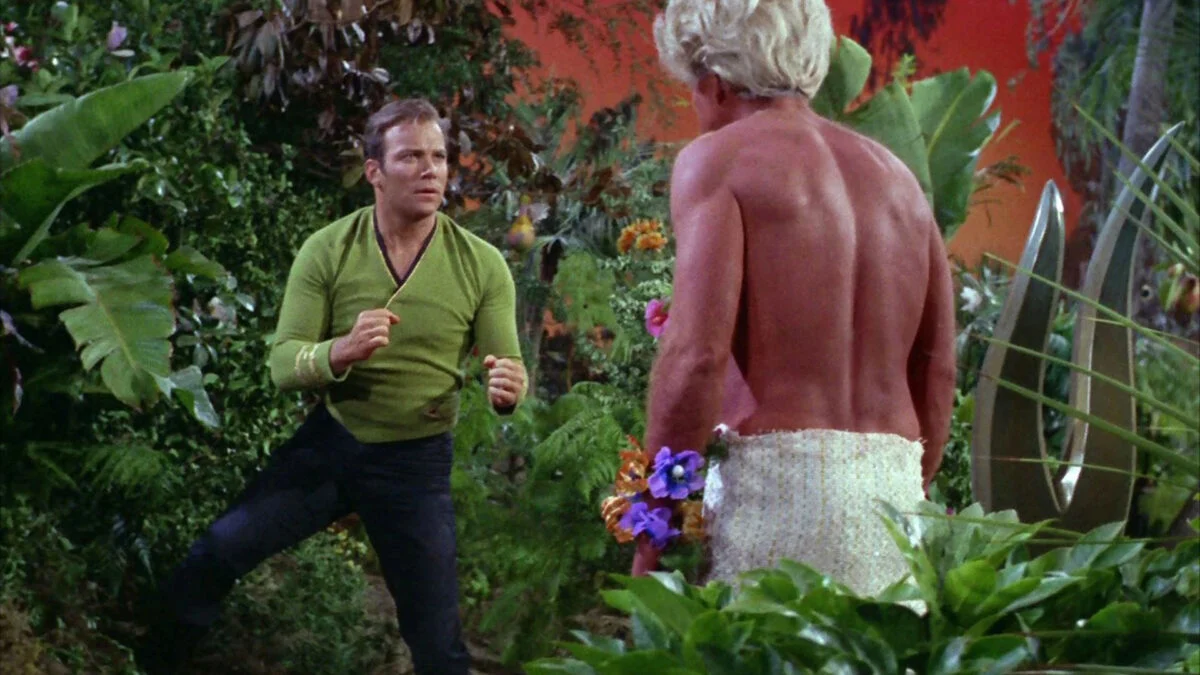
During a panel at the ST: CHI convention in Chicago, Shatner engaged with fans on the ethical dilemmas presented in episodes like “The Apple.” He expressed a candid viewpoint: “Was the Prime Directive violated? The directive was infinitely malleable,” he remarked. Kirk’s unyielding spirit often led him to challenge this rule, notably when he chose to save the inhabitants of Gamma Trianguli VI from the clutches of an oppressive supercomputer named Vaal, even in defiance of Spock’s logical reasoning.
Shatner humorously emphasized that without some level of interference, the essence of the adventure would be lost. “If you didn’t improve—I think one of them was: you can’t interfere with a civilization. Sorry, no show. That was the plot!” He compared the Prime Directive to a moral guideline similar to the commandment “Thou shalt not kill,” highlighting the many exceptions that context creates.
Beyond the humor, Shatner’s reflections align closely with Kirk’s character. The original Star Trek grappled with profound moral questions, frequently exploring the tension between immediate emotional responses and the greater good. Kirk was often portrayed as someone who disregards the Prime Directive when it clashed with his sense of morality, showcasing a bold and sometimes reckless approach.
Why is Captain Kirk Such an Iconic Character?
One of the enduring appeals of Captain Kirk is his acknowledgment of humanity’s imperfections. He led a utopian vessel but remained deeply flawed—a testament to the human condition. This complexity resonates today, reminding us that growth and self-improvement are lifelong journeys.
How Does Captain Kirk Compare to Future Starfleet Leaders?
Kirk’s style of leadership differs significantly from many of his successors. While later captains often adhered to protocol and the Prime Directive with unwavering commitment, Kirk’s cowboy diplomacy set him apart. This style, rich in braggadocio and charisma, often prioritized immediate action over bureaucratic caution.
Even as we recall Kirk’s boldness, it’s essential to recognize that he also embodied deeper qualities. His struggles with authority and ultimate desire for growth reflect not just a character flaw but a relatable aspect of humanity—an understanding that we can learn from our mistakes.
What challenges arise when trying to uphold the Prime Directive? Interference can often lead to unintended consequences, complicating relationships with alien civilizations and undermining their natural evolution.
Are there specific episodes where the Prime Directive stands out as a central theme? Yes, classics like “The City on the Edge of Forever” and “The Measure of a Man” delve into these ethical dilemmas, providing a framework for evaluating the consequences of interference.
Is there a philosophical basis for the Prime Directive? Many fans believe it draws from real-world discussions about ethics, imperialism, and how societies should conduct themselves in an interconnected world.
As you dive deeper into the rich narrative of Star Trek, consider the lessons of Captain Kirk and the intricate balance between morality and duty. The show continues to challenge our understanding of right and wrong in the face of complex realities. For more insights and analysis on your favorite franchises, visit Moyens I/O.