
The cell blinked awake in a prison bunk and a screenshot slid across a WhatsApp thread. For a moment the chat read like a dare: someone suggested Rockstar’s most guarded code had already escaped. You felt that small, cold certainty that a leak is no longer hypothetical.
I’ve tracked digital breaches from Lapsus$ to Nvidia and watched how one teenager can rattle giants. You should care because if source code for a massive title goes public, the fallout isn’t just a PR headache — it changes the game for developers and players alike. I’ll walk you through what’s on the record, what matters, and what to watch next.
He was jailed, yet messages kept arriving
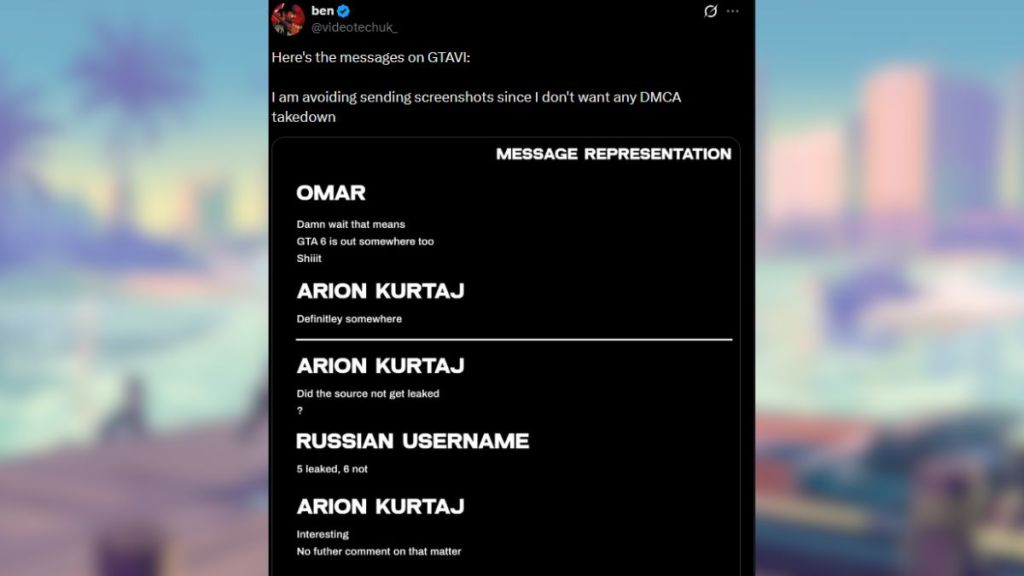
A WhatsApp screenshot showed a message sent from behind bars.
Arion Kurtaj — the 17-year-old linked to the Lapsus$ group — moved from headlines about Nvidia, Uber, and Microsoft to the biggest breach Rockstar has ever faced. Official filings once described him as unfit for trial and placed him under an indefinite hospital order; now reports say he’s been transferred to a conventional prison. From there he allegedly smuggled a cell phone and began stirring the pot on X (formerly Twitter) with claims that the GTA 6 source code is “out there.” You’re hearing this on platforms you already use: WhatsApp snippets, X reposts, and screenshots that travel faster than any correction.
Could the GTA 6 source code actually be leaked?
Short answer: possibly, but evidence is thin.
In a shared image, Kurtaj appears surprised the code hasn’t surfaced yet and calls the situation “Interesting,” then goes quiet. That’s a classic tease: enough to spark curiosity, not enough to prove a leak. If someone truly held readable source code — the human-friendly instructions that power every mechanic — they could share assets, bypass DRM, or expose engine details. But a single message isn’t a smoking gun. I’d treat claims the same way I treat any viral tip: verify, cross-check with developers’ signals, and watch for artifacts that only insiders could produce.
A single phone and an Amazon Fire Stick changed the threat model
An Amazon Fire Stick and a phone — that’s reportedly all he used to break in.
That detail matters. If an attacker can pivot from consumer hardware into a high-security corporate environment, the perimeter you trusted is porous. Rockstar, a studio that manages huge IP and relies on tight code custody, suddenly has a different risk calculus. You should think about this like two things: one, a loose thread on a sweater — if pulled, the whole garment can come apart; two, a prairie fire that begins in a single dry patch and can consume an entire field before anyone notices. Those metaphors explain why companies treat source code like nuclear material: exposure can propagate fast through clones, DRM circumvention, and modding communities.
What would a source-code leak mean for Rockstar and players?
It would be expensive and chaotic.
Source code leaks can force publishers to delay launches, rewrite systems, and deploy legal takedowns. Rockstar could face cloned animations, exploitable server endpoints, or compromised DRM that requires months of fixes. For players, that might mean a delayed release, broken online features, or unofficial mods flooding the ecosystem before the studio can respond. We’ve seen similar cascades in other breaches — companies like Microsoft and Uber handled fallout that bled reputationally and operationally — and Rockstar would likely mobilize its security and legal teams to contain damage.
People spread doubt faster than facts
A screenshot on X ignites a thousand theories.
Rumors about leaks feed on platforms: X, Discord, and forum threads amplify uncertainty. You should watch for corroboration from credible sources — such as Rockstar statements, forensic confirmations from cybersecurity firms, or verifiable artifacts in leaked files. Tools like VirusTotal, repository forensics, and basic metadata checks can reveal whether a file is authentic or a doctored salami slice of reality. Industry figures who monitor breaches will flag anomalies quickly; keep an eye on researchers and firms that handled past Lapsus$ incidents.
I won’t claim to have all the answers. What I will do is follow the signals: public posts from Kurtaj, any Rockstar response, and forensic evidence that can be validated off-chain. You should treat any single post as a lead, not a verdict.
So tell me — do you think this is a bluff, a breadcrumb to bait attention, or proof that the biggest gaming secret has already slipped out?