
I was sitting in the back of a crowded GDC theater when a slide flashed and my email bleated like a warning siren. You could feel conversations pause: Microsoft had just made a bet that changes how console companies think about hardware. For a few minutes, the industry map looked different.
At GDC, a single slide laid out Project Helix’s specs — Xbox Confirms New Project Helix Hardware Details and Alpha Date
I’ve followed hardware cycles for years, and this feels like one of those rare pivots where strategy and silicon intersect. You already know the headline: Project Helix will play both PC and Xbox games and Microsoft plans to ship alpha units to developers in 2027. Jason Ronald, Xbox’s Vice President of Next Generation, confirmed the developer alpha timeline and framed the idea as making “the Xbox experience consistent across screens,” a line that should make engine teams at Unreal Engine and Unity take notes.
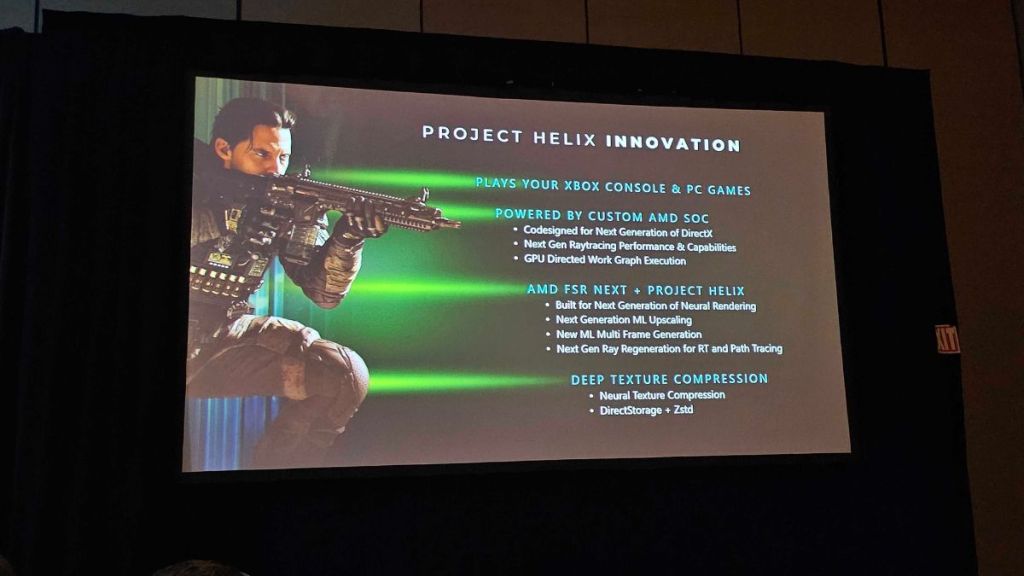
Here’s what the slide actually listed — short, specific, and designed to speak to developers and store platforms alike:
- Powered by a custom AMD SoC
- Next‑gen ray tracing performance
- AMD FSR Next support
- Next‑gen ML upscaling and new ML multi‑frame generation
- Next‑gen regeneration for RT and path tracing
- Deep Texture Compression
Those terms aren’t marketing fluff. They map directly to tools devs use every day: plug‑ins for Unreal Engine and Unity, middleware for texture streaming, and runtimes that need to play nice with Steam, the Epic Games Store, and the Microsoft Store on Windows. Asha Sharma, Xbox’s CEO, has been explicit about combining Windows and Xbox experiences — which means Helix is as much about platform plumbing as raw frame rates.
When will Project Helix alpha hardware ship?
Xbox says alpha units go to developers in 2027. From a product rhythm standpoint that signals a possible retail window around holiday 2027, though Microsoft hasn’t committed to a consumer ship date. If you’re a studio planning a 2028 release, now is the moment to test on Helix hardware.
Will Project Helix run both PC and Xbox games?
Yes — that’s the explicit promise. Helix is engineered to let you play titles bought on console and PC storefronts, with Windows compatibility at the center. For players, that means fewer silos; for publishers, it suggests a single build path that can reach Xbox consoles, Windows PCs, and Helix boxes without rewriting major systems.
What hardware will Project Helix use?
Microsoft confirmed a custom AMD SoC and a focus on next‑generation ray tracing and machine learning features. Expect tech similar to AMD’s RDNA and CDNA family innovations, plus bespoke firmware and drivers tuned by Microsoft and AMD together. In short, Helix is being designed as an AMD‑powered appliance that sits between a console and high‑end PCs — like a Swiss Army knife for players who want everything in one box.
There’s also a strategic angle you should notice: by building a closed hardware SKU that runs Windows and Xbox ecosystems, Microsoft forces a rethink of how Sony times PlayStation 6 and how PC retailers position gaming rigs. If Helix hits the market at a competitive price — rumors peg early models near $799 (€740) — it could reshape holiday buying lists and developer roadmaps.
Developers will get the first look in 2027, and that early access is a classic scarcity play: studios that test sooner will be better placed to optimize for Helix’s ML upscaling and path‑tracing regeneration. If Microsoft pulls this off, Helix could serve as a bridge between islands of console and PC development, collapsing ports and QA cycles.
I can tell you what I’m watching next: how well Microsoft integrates FSR Next into developer workflows, how AMD’s custom SoC performs under sustained loads, and whether tools from Unity, Unreal, and platform partners like Steam will report consistent results. You should watch those too — because where devs invest time is where features and experiences will follow.
Is Project Helix a smart bet for Microsoft, or a risky bet that forces companies like Sony to answer in kind?