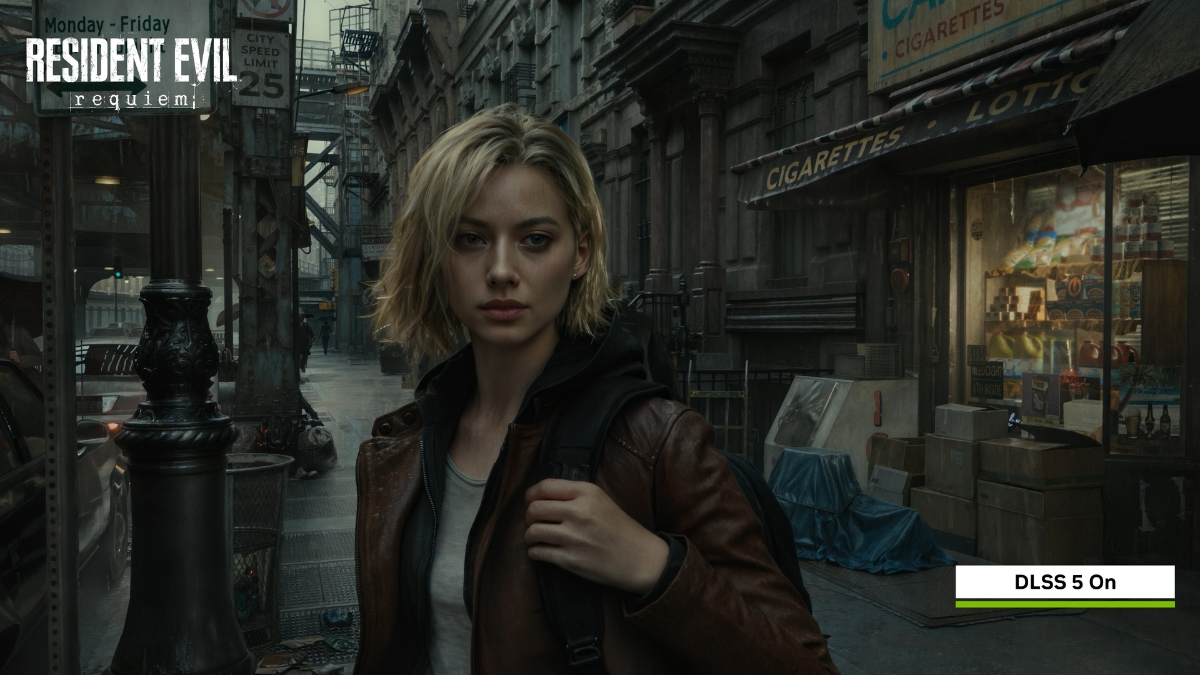
NVIDIA DLSS 5 Reveal Backfires as Gamers Mock “AI Slop”
At GDC the demo clip froze the room—Kratos went from battle-worn to coiffed in a heartbeat. I watched the chat splinter between awe and a kind of furious laughter. You could feel the momentum flip from curiosity to ridicule within minutes.
What is DLSS 5?
On the stage, NVIDIA described DLSS 5 as a frame-generation model that studies a single frame and then synthesizes new frames to increase framerate and fidelity. I’ve used DLSS 4.5 and can tell you it already reduced ghosting and sharpened edges; DLSS 5 promises to add photoreal lighting and materials that the company says will narrow “the gap between rendering and reality.”
In GeForce marketing, Jensen Huang called this the “GPT moment for graphics,” a bold authority cue that signals ambition and risk. You should weigh that claim alongside how the model treats art direction: DLSS 5 mixes hand-crafted rendering with generative AI, which is why studios from Bethesda to CAPCOM, Ubisoft to NetEase are listed as launch partners.
Will DLSS 5 ruin game art?
On social feeds, players mocked the footage with one-liners that spread faster than the demo itself. I saw Kratos jokes and memes — people calling the result “AI Slop” after clips showed faces, hair, and fabric altered in ways that stray from studio intent.
At scale, this matters because players invest emotion and money—some of you build rigs that cost $3,000 (€2,770) to chase a particular aesthetic. I’m not surprised the backlash landed hard: when an AI repaints a character’s face, it can feel like a makeup artist gone rogue.
In forums I tracked, complaints clustered around identity and fidelity: famous heroes becoming unfamiliar, subtle lighting turned theatrical, and hair or skin textures that read as generated rather than authored. I think that tension—between what artists wanted and what the model invents—is the core of the outrage.
Is DLSS 5 free and when does it arrive?
On NVIDIA’s timeline, DLSS 5 lands this fall as a free update for RTX users through the NVIDIA app. I checked the company copy: owners of RTX GPUs will get the feature without additional charge, and publishers across Asia, Europe, and North America are on the compatibility list.
At launch, developers such as Bethesda, CAPCOM, Hotta Studio, NCSOFT, S-GAME, Tencent, Ubisoft, and Warner Bros. Games are said to support it, which means the model will touch both single-player story work and live-service titles. You should ask how much control studios will keep over the output versus how much TL;DR AI will auto-correct artists’ choices.
On the technical side, I watched early comparisons between DLSS 4.5 and 5: the latter tends to invent detail where none existed, rendering hair or fabric with confident but not always faithful strokes. I will tell you plainly: that kind of creative liberty can read as helpful in one scene and uncanny in the next—like a drunk sculptor tinkering with a marble face.
On the user-experience front, there’s a trade-off: DLSS 5 aims to boost performance and lower VRAM strain on mid-range cards—imagine an RTX 2060 delivering visuals closer to a 3070 Ti—so the technology can be a real win for frame rates and accessibility. I suspect many players will test it, flick it on, then flick it off if the AI’s taste clashes with the game’s vision.
On community influence, the mockery matters because it shapes perception before players get hands-on time. I’ve watched threads seed skeptical frames and then harden into memetic opinion—public sentiment can steer developer decisions and, in tight markets, sales momentum.
On trust, you should ask whether an algorithm that alters faces and materials preserves authorship and consent, especially when big brands like NVIDIA position DLSS 5 as a cinematic leap. I believe the conversation that follows—between studios, tech vendors, and players—will determine whether DLSS 5 becomes celebrated or deferred.
On a practical note, expect a soft rollout tied to title-by-title implementation, developer tools inside NVIDIA’s SDK, and community tests on Steam and GeForce NOW; I’ll be watching those early patches closely. You can already preview footage and judge whether you’ll flip the switch when the update arrives this fall.
On balance, DLSS 5 is a bet: NVIDIA offers a free performance and fidelity upgrade to RTX owners, and publishers give it reach—but the backlash shows that technical prowess doesn’t guarantee artistic approval. You tell me—will you let AI repaint your favorite heroes, or will you defend the artist’s original vision?