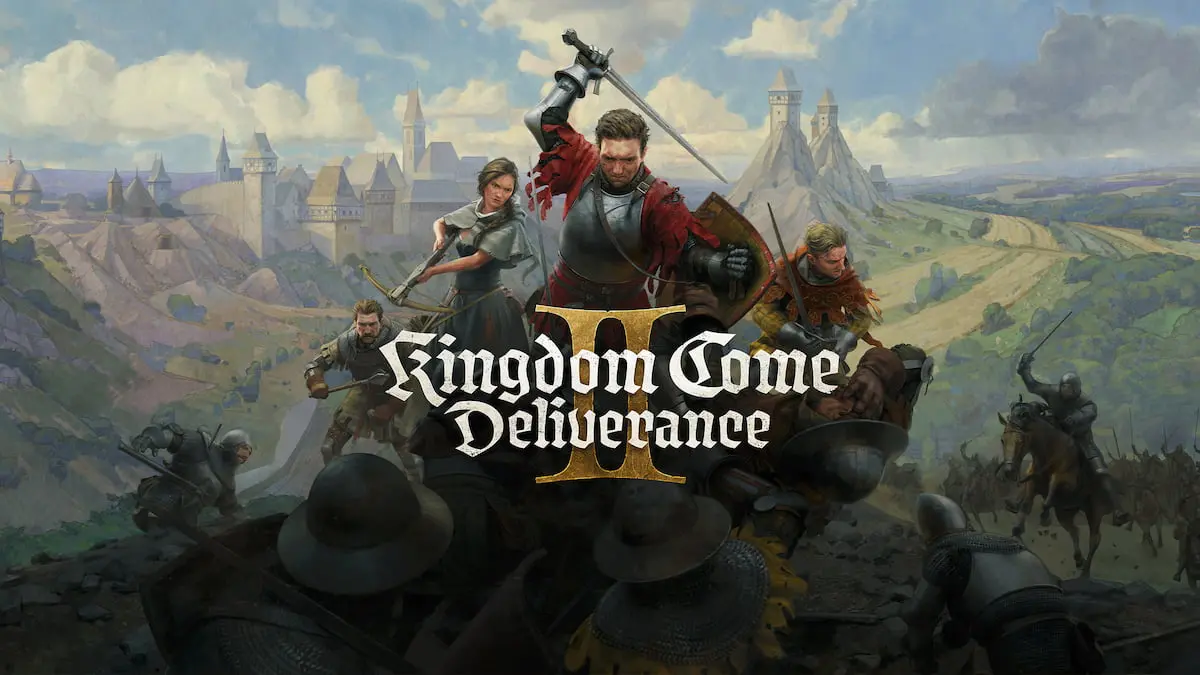
An empty chair at Warhorse: Kingdom Come Deliverance translator allegedly fired amid AI push to ‘save finances’
I open the Reddit thread and feel the room shrink. A translator—called into a meeting with no warning—was told their role would be “obsolete” next month. You can hear the quiet panic between the lines.
I’m not just reporting; I’ve sat with source text for hours, coaxing nuance from another language into English. You’ve seen promises of AI efficiency before; this one smells like cost-cutting wrapped as progress.
Someone at Warhorse received a terse HR message — the allegation and what it looks like on the ground
Max H, who says they spent roughly four years translating Kingdom Come: Deliverance from Czech to English, posted a moderator-verified Reddit thread claiming they were told their role would be replaced by AI. The company named in the thread is Warhorse Studios, the Prague-based developer behind the series.
That’s a practical detail with big implications: this is not a junior menu-text role. It’s the lead line of a localization pipeline that must ferry Slavic inflection and historical slang into English without flattening it. You don’t rip that out without consequences.
One early sign was spreadsheets of projected savings — why studios make this call
Studios chasing lower production budgets can point to clear math. Swap a human translator for machine-assisted workflows and you might save a few dozen thousand USD — roughly $30,000–$50,000 (€28,000–€46,000) per project phase — on paper. For games that cost tens of millions of USD to produce, that seems like small change: $20M–$50M (€18M–€46M) in total budgets.
Still, you and I both know corporate spreadsheets rarely count the cost of diluted voice, player backlash, or a fractured community. Replacing a translator who understands cultural context is like patching a stained quilt with cheaper fabric; it holds, but the pattern is gone.
Can AI translate games accurately?
Short answer: sometimes, for literal copy. Longer answer: not in ways players will forgive. Machine translation systems—DeepL, Google Translate, and models from OpenAI—handle syntax and straightforward sentences fast. But game text is often poetic, ironic, and historically specific. That subtlety is where the human translator earns their keep.
I translate Montenegrin to English occasionally, and I can tell you: idioms, cadence, and implied meaning resist automation. When you rely on a model that averages meaning, you get serviceable text that reads like an endorsed translation, not a living voice.
One internal memo might say “efficiency” — the tech behind the push and the limits you should watch
Studios often combine AI services with computer-assisted translation tools such as SDL Trados or Memsource to speed throughput. They may funnel content through DeepL or custom models built on OpenAI to create first drafts. For routine UI, this works fine. For character-driven dialogue, it’s a different animal.
AI models tend to smooth extremes and remove risk. That conservatism can sterilize humor, erase regional flavor, and misplace cultural references. It’s a Trojan horse slipping past the gate: it promises scale, then slowly replaces what made the game memorable.
Why would a studio replace translators with AI?
Because it’s tempting and defensible. Executives can point to faster turnaround, lower immediate payroll, and predictable costs. In an industry where publishers pressure studios to shave budgets, swapping skilled labor for a plugin or API call looks like responsible stewardship.
But you should ask: what does “predictable” trade off? When localization is reduced to a cost center, narrative risk-taking, voice continuity, and long-term brand trust can all erode.
A community thread lit up — what this does to reputation and player trust
Warhorse built credibility on historical accuracy and an uncompromising voice. Players reward that authenticity with attention and sales. If translations become generic, the company risks losing a fraction of their goodwill every release.
Reputation is not an instant expense item you can mark down on a balance sheet. It’s an asset that compounds—or decays—over time. When your text reads like a formula, players notice. Your studio becomes another anonymous content factory.
One practical step for translators and studios — options when AI is introduced
If you’re a translator, catalog your unique contributions: cultural research, alternate phrasings, tone notes, and character-specific choices. If you’re in a studio, require human-in-the-loop checks for any narrative or character-driven copy and audit AI outputs against past localizations.
Tools will be part of the pipeline—SDL Trados and Memsource for memory and consistency, DeepL or custom language models for drafts—but the final stamp should be human. Otherwise you’re assembling dialogues the way a factory builds parts, not stories.
One blunt question for the industry — what do we value most?
Warhorse’s alleged move is a flashpoint: it forces a choice between short-term savings and the integrity of cultural work that players value. You can prioritize quarterly margins, or you can protect craft that builds legacies.
When the decision feels like a cost-cutting exercise disguised as efficiency, you have to ask who benefits and who bears the loss. Will the community forgive a game that sounds flattened? Will critics?
Machines will write more copy. They’ll score on speed and scale. But when voice matters, when regional cadence and lived context are the product, a machine is rarely the right final editor — and that tension should shape how studios proceed. Does saving payroll today justify hollowing out the very textures that made your game worth playing?