
The campfire dies and a howl answers from the trees — you realize you should have brought backup. You can call allies in Crimson Desert, but timing is the difference between escape and a respawn. I’ve chased Damaine and Oongka through ruined market streets so you don’t have to learn by dying.
I’ll walk you through the simple gestures and the invisible rules that govern companions: how to call them, when they’ll help, and where they won’t. Read fast, practice once, and the game shifts in your favor.
When your phone buzzes, you answer. How to summon companions in Crimson Desert
Start with the obvious: Damaine and Oongka join you only after you meet them in the main campaign. If you’re new, they’ll appear naturally as you progress; they remain available once you meet them, no timed events or daily gates.
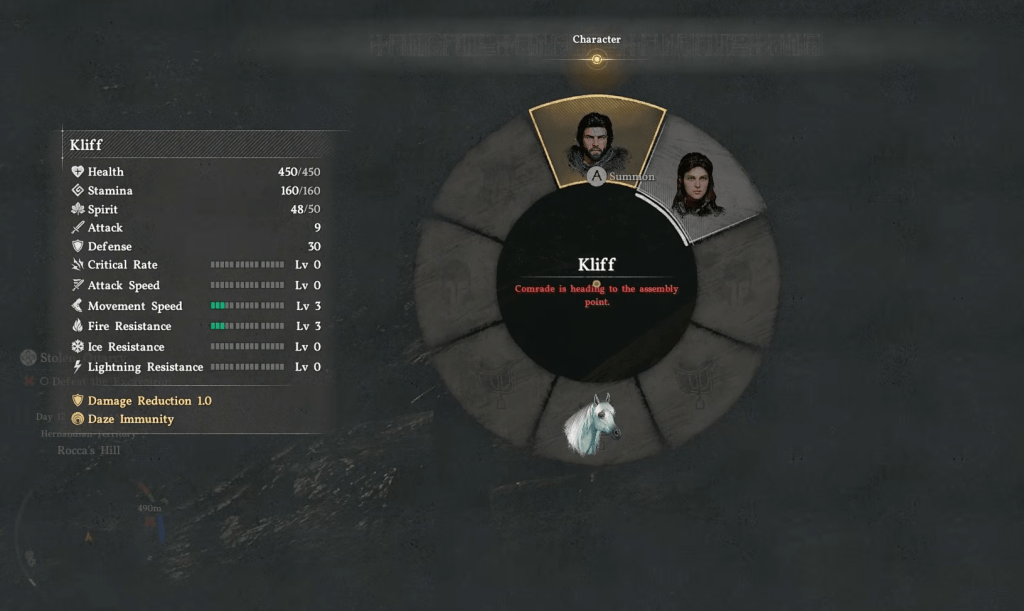
How you call them, step-by-step:
- Open your character radial menu (controller or keyboard hotkey depending on Steam/PlayStation/Xbox settings).
- Select the companion you want—Damaine or Oongka—and hit Summon.
- Wait a few seconds for them to appear; they’ll trail you and engage nearby enemies.
Remember: you can control only one player at a time. Swap from Kliff to Damaine and the previous character becomes AI-controlled. Think of it as handing the wheel to someone else while keeping the map in your head.
How do I summon companions in Crimson Desert?
Open the radial menu, pick a companion, and summon. The UI is quick—radial selection works with both mouse/keyboard and controllers—so practice pulling it up in a busy district to save time later.
Can companions fight bosses in Crimson Desert?
No. Boss encounters are designed for solo play: companions won’t enter those arenas. Use them for overworld skirmishes and trash mobs; save the big fights for you alone.
A good teammate knows when to stand back. Tactics and limits: when companions help
Companions prove their worth in open-world combat. They draw attention, deal extra damage, and let you flank or strip focus. A companion that picks off a stray bandit is like a loyal guard dog—small, steady benefits that add up across a session.
Pets are different: they don’t fight. They sweep loot toward you automatically, saving repeated trips to corpses. If you care about time-to-loot on long routes, a pet is efficient; it acts as if you’d snapped a compass onto your belt, saving seconds that turn into minutes.
Practical tips I use when I play on Steam or watch streamers on Twitch:
- Summon companions before entering a hotspot; they arrive quickly and give you an edge.
- Don’t rely on them for boss mechanics or puzzle solutions—those remain your tasks.
- Switching characters hands control to AI—use that for roleplay or a different combat style, but expect the AI to be basic.
- Join Xbox or PlayStation communities and Discord servers for loadout ideas if you want to squeeze more synergy from companions.
Can I play as Damaine and Oongka?
Yes. Once you meet them in the campaign they’re playable. If you choose to be them, the character you left will be governed by the AI until you swap back.
Between companions and pets you gain practical advantages: extra damage, distraction, and automated loot collection. They don’t erase the challenge, but they reshape how you approach fights and exploration — and that change matters. So, do companions make Crimson Desert smarter play or lazy shortcuts?