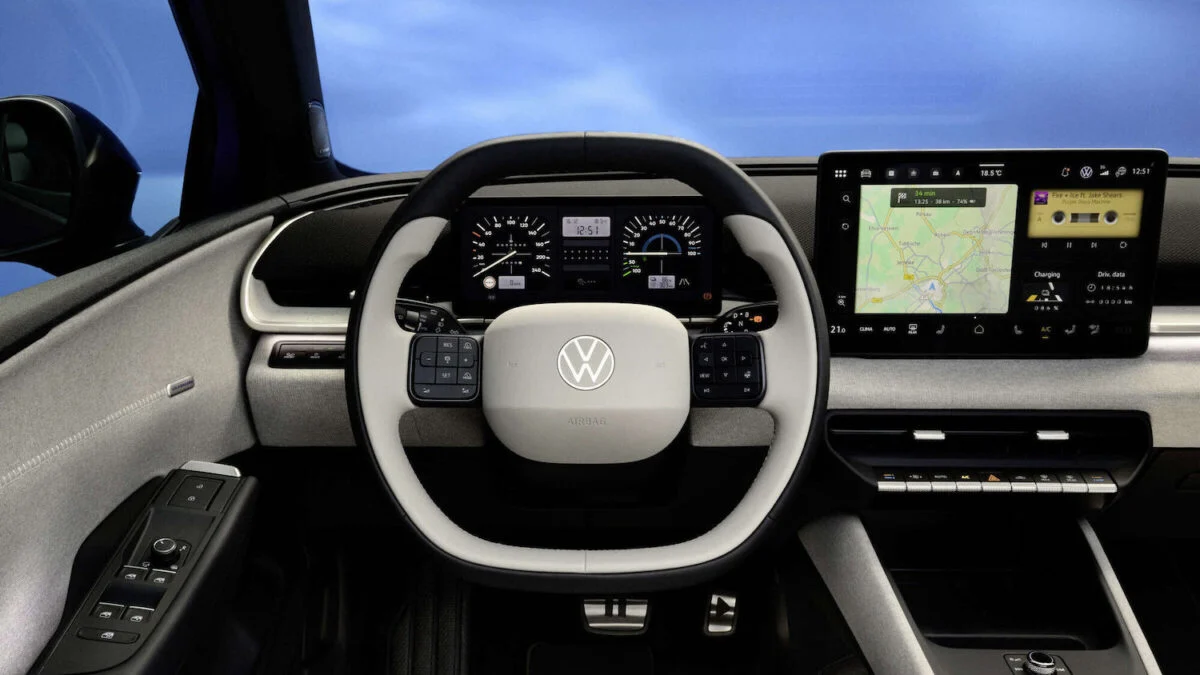
Exciting news from Volkswagen! The upcoming ID. Polo reveals a significant shift back to physical buttons inside its cabin. This small, budget-friendly electric vehicle (EV) may not be hitting U.S. shores anytime soon, but it signals a larger trend for the brand’s future models.
For quite some time, drivers have expressed fatigue over car interiors that resemble tablet screens more than vehicle dashboards. Volkswagen isn’t entirely abandoning its sleek infotainment style but is instead adding some tactile feedback with new physical buttons. This change is also a response to issues raised about controls on Volkswagen steering wheels.
Understanding VW’s Shift Back to Buttons
Volkswagen’s design chief, Andreas Mindt, openly discussed the company’s previous mistakes regarding touch-sensitive controls. “We will never, ever make this mistake anymore,” he stated in an interview with Autocar. “On the steering wheel, we will have physical buttons, allowing for real feedback that drivers appreciate.” The frustration from users who struggled with non-clicky buttons is clear. Mindt recalls that many essential controls were removed, but going forward, they are committed to reinstating them in every future model.
What New Features Can We Expect?
In the ID. Polo, features like volume control, climate settings, fan speeds, and hazard lights will all have dedicated physical buttons located below the screen. Mindt assures that from the ID. 2all and beyond, drivers can expect a more intuitive design focused on user experience.
What’s Special About the Steering Wheel Design?
Now, about that steering wheel: The ID. Polo sports a non-circular design, which has become trendy. While it doesn’t quite resemble the infamous Tesla yoke, it does diverge from conventional steering wheel shapes. Volkswagen has been gradually moving in this direction, and fans have mixed feelings. Some may prefer a traditional round wheel, while others might appreciate the change.
Why Physical Buttons Matter
The return of physical buttons inside vehicles connects directly with consumer needs. Drivers want straightforward controls that don’t require them to take their eyes off the road. Mindt aptly notes, “It’s a car, not a phone.” This kind of thinking represents a significant shift in how automakers approach design.
How Will These Changes Impact Driving Experience?
This new interior architecture aims to create a more intuitive operating environment. Volkswagen’s focus on adding tangible controls shows a commitment to safety and user satisfaction. It’s about making the driving experience more enjoyable and less distracting.
Will Other Models Follow Suit?
Absolutely! As Mindt pointed out, these physical buttons are set to become a standard feature across all VW models. This approach signals a broader movement within the auto industry towards prioritizing user-friendly designs that enhance driver control.
In summary, Volkswagen is listening to its customers, taking note of what works and what doesn’t in car interiors. The new ID. Polo is set to lead the way with a more user-friendly cockpit featuring physical buttons and a unique steering wheel design. Are you excited to see all these changes from VW, or do you think the traditional designs are better? Share your thoughts in the comments below!