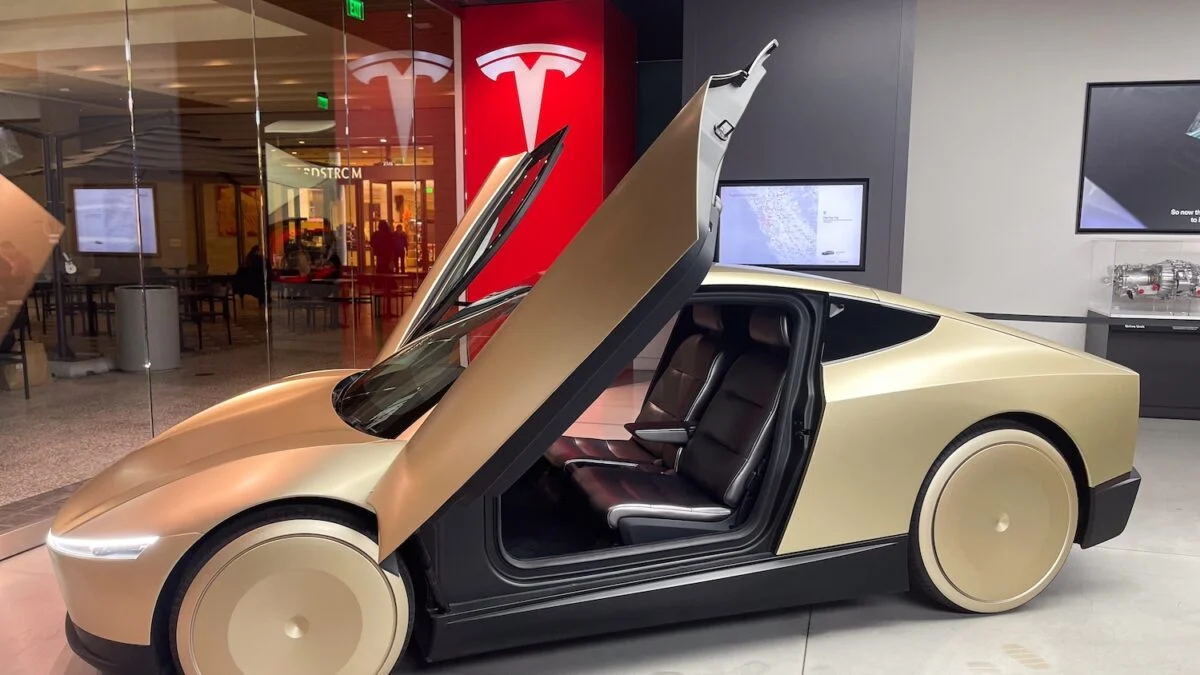
Imagine you’re about to launch your dream project, only to find out someone else is trying to snatch its name right out from under you. That’s the situation Tesla might be facing with its “Cybercab.” A French company making hard seltzer might have gotten there first, potentially throwing a wrench in Tesla’s plans.
Having followed Tesla’s journey for years, I’ve seen them navigate some tricky situations, but this one’s a bit different. It’s not about tech; it’s about trademarks, and it could impact Tesla’s future in a surprising way.
1. What’s the Difference Between Tesla’s Robotaxi and Cybercab?
Tesla uses “Robotaxi” as the name of its app for hailing self-driving rides. “Cybercab,” on the other hand, is meant to be the name of a specific Tesla car model designed without a steering wheel or pedals, intended for the Robotaxi program. It’s easy to see how some people might find the naming a bit confusing. I can admit that I was a little confused at first.
2. How Did Tesla’s Cybercab Trademark Application Get Suspended?
Tesla’s application for the “Cybercab” trademark hit a roadblock because a French hard seltzer company, Unibev, applied for the same trademark first. According to a document publicized in November, the United States Patent and Trademark Office (USPTO) suspended Tesla’s application because Unibev’s application had an earlier filing date.
3. Did Elon Musk Confuse the Cybercab and Robotaxi Names?
Yes, even Elon Musk used “Cybercab” and “Robotaxi” interchangeably during the 2024 event where the Cybercab was announced. This happened before Tesla had secured either trademark. It highlights a bit of haste in their approach, and now they might be paying the price.
4. Why Did Tesla’s Robotaxi Trademark Application Fail?
Tesla’s attempt to trademark “Robotaxi” was rejected by the USPTO because the term is considered generic. Amazon’s Zoox division even uses the slogan “It’s not a car. It’s a robotaxi built around you,” proving that the term is already in common use.
5. What is Trademark Squatting and Is Unibev Doing It?
Trademark squatting is when someone registers a trademark similar to an existing one, often in a country with weaker laws, to profit from potential confusion. In this case, it seems Unibev applied for the “Cybercab” trademark shortly after Tesla announced the name but before Tesla filed its application. While it’s speculation, it might be a way to disrupt Tesla’s plans or get a payout.
6. What Does the USPTO’s Suspension Letter to Tesla Say?
The USPTO’s letter states that because Unibev’s application has an earlier filing date, there’s a “likelihood of confusion” if Tesla’s mark is registered. The application is suspended until Unibev’s application is either registered or abandoned.
7. What Happens if Tesla Can’t Secure the Cybercab Trademark?
If Tesla can’t secure the “Cybercab” trademark, it might need to rebrand the vehicle. Alternatively, as some reports suggest, they might try to reach a deal with Unibev. Securing the trademark is important, as it would protect the company from other businesses using the name.
Could Tesla buy the trademark from Unibev?
It seems that Tesla and Unibev might be trying to negotiate a deal. It’s plausible Tesla could offer a financial incentive to the French company to secure the “Cybercab” trademark, but the details remain confidential.
What arguments did Tesla make to the USPTO?
Tesla submitted arguments to the USPTO against the rejection of their application. However, the USPTO “carefully considered applicant’s arguments… but does not find them to be persuasive.” It seems like Tesla has an uphill battle.
Could I ride in a Cybercab in France?
That’s still up in the air. If Unibev succeeds with its trademark, maybe we’ll see a “Cyberpunk Cabernet tour of Bordeaux,” as some have joked. However, the more likely scenario is that Tesla will find a way to resolve this issue.
This trademark battle shows how even giants like Tesla can face unexpected challenges. It’s a reminder that securing your brand is just as important as innovating the product. What do you think Tesla should do next, and are you surprised a beverage company holds the cards right now?