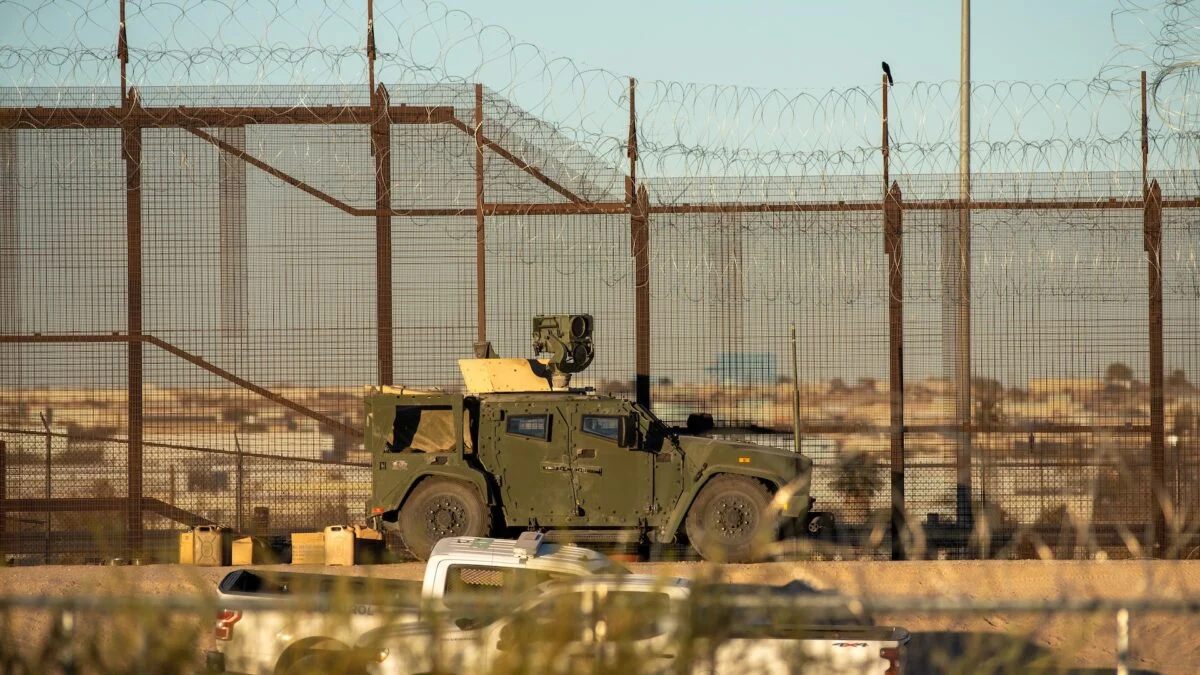
Imagine the chaos as medical evacuation flights scramble to divert from El Paso to New Mexico, their missions disrupted by an unexplained FAA shutdown. For ten tumultuous days, the skies over El Paso were a no-fly zone, the initial order cloaked in confusion and fear. Then the rationale was unveiled: supposed cartel drones invading U.S. airspace, a claim that feels more like a plot twist in a thriller than a grounded reality.
According to a recent report from CBS News, the turbulence in El Paso’s airspace seems to stem from a brewing conflict between the FAA and the Department of Defense. This week, the DOD activated anti-drone technology, aiming at foreign drones perched at the border. To the surprise of many, a party balloon was among the casualties, as CBS uncovered, revealing the absurdity of the situation.
At a press conference earlier, El Paso Mayor Renard Johnson underscored the severity of the disruption, likening it to a historical flash, reminiscent of 9/11. “Medical evacuation flights were forced to divert to Las Cruces. All aviation operations were grounded, including emergency flights. This was a major and unnecessary disruption,” Johnson stated, his voice carrying the weight of the city’s anxious pulse.
How Many Flights Were Diverted Due to This Airspace Shutdown?
Pressed for specifics, Mayor Johnson remarked that while he didn’t have an exact figure, discussions with hospital operators illuminated the gravity of the situation. “Surgical equipment intended for crucial procedures failed to arrive,” he lamented, highlighting the real-world impact of bureaucratic blunders.
The initial notice of the airspace closure was not just sudden; it swept across a wide spectrum, encompassing all aviation—from cargo to military flights. It was lifted within hours, leaving many scratching their heads over the legitimacy of the government’s explanations.
“The FAA and DOD acted swiftly to address a cartel drone incursion,” tweeted Transportation Secretary Sean Duffy, using a curious abbreviation for the “Department of War.” Yet, aviation experts remain skeptical. Was a balloon truly worthy of such drastic measures?
What Drones Does the DOD Really Target Near the Border?
As CBS News illuminates, a clash of policies between the Pentagon and the FAA birthed this absurdity. The military had engaged in tests involving anti-drone tech, including lasers—technologies that have evolved but seem ill-suited for such a whimsical target as a balloon.
DEFEND THE HOMELAND pic.twitter.com/WCUZ6uxwei
— Department of War CTO (@DoWCTO) February 11, 2026
As we unpack what transpired, it becomes clear that communication failures compounded the chaos. “No one from the local government or the military base received advanced notice beyond a few moments,” El Paso City Rep. Chris Canales told the Wall Street Journal. Such abrupt actions are troubling, raising questions about the motives behind them.
This sudden lockdown, covering a major city, feels more like a smokescreen than a safeguard. Why would a balloon—yes, an innocuous party balloon—trigger this level of alarm? With drone activity rampant along the border, what truly warranted such an extreme strategy?
In a meeting at the White House, the airspace closure received immediate attention, leading to its swift lifting. Was President Trump part of the conversation? The unanswered questions linger, invoking fear about what other actions may lay hidden.
This article was updated to reflect that, according to CNN, at least four party balloons met the same fate as the first.