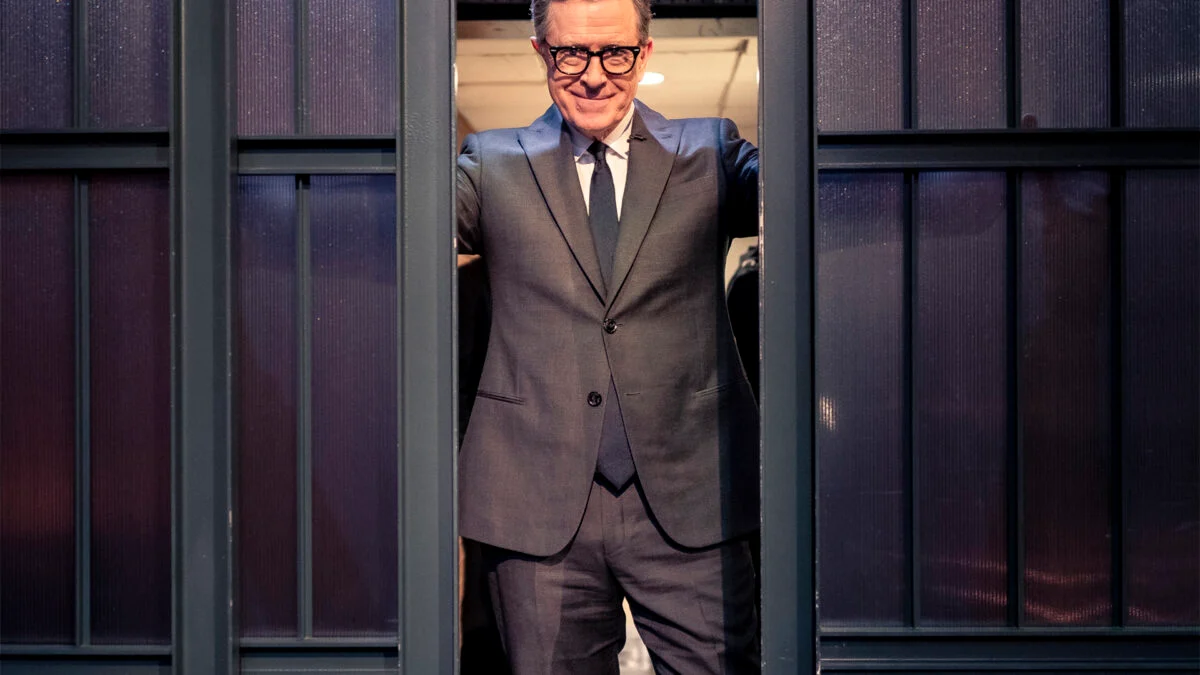
I watched Stephen Colbert halt mid-routine and say the words nobody on a late-night stage wants to hear: “We were told we could not have him on.” I felt the room tighten — a scheduled guest erased by lawyers, an interview rerouted to YouTube. You can feel how quickly a live show becomes a chessboard of legal and political moves.
Lights blinked at the control room; the guest slot was gone.
I was on that couch in spirit—listening as Colbert told viewers that CBS lawyers called and said Texas State Rep. James Talarico could not appear. The host added that the network even warned him not to say he’d been told not to book the guest, so he did what any stubborn broadcaster would: he posted the conversation on the Late Show’s YouTube channel and quietly nudged viewers toward the clip.
You should note the specific chain: Colbert framed the decision as the network responding to pressure linked to a public letter from an agency leader. He described being blocked from giving a URL or QR code on-air; the interview still exists online, but the on-television silence is deliberate and contagious.
What is the Equal Time Rule?
The Equal Time Rule is an old FCC requirement that says broadcast stations must offer equal opportunities to candidates in the same race. It traditionally carved out exceptions for news interviews and for entertainment programs like late-night shows. Colbert’s complaint centers on the suggestion from FCC Chairman Brendan Carr that those exceptions could be narrowed — a shift that left network lawyers treating intention like policy and guests like risk.
An email arrived in editors’ inboxes; the newsroom posture changed.
When FCC officials publicly signaled they might remove the talk-show exception, newsroom attorneys started treating possibility as reality. That single administrative nudge turned casual guest booking into a legal minefield, and networks began to act as if regulatory enforcement was already forthcoming.
Democratic FCC Commissioner Anna Gomez called the agency’s recent posture partisan, and Colbert cited that partisan context while naming the players:CBS, Brendan Carr, and the wider debate over who controls broadcast speech. YouTube, by contrast, remains outside the old broadcast framework — which is why Colbert used it as a detour.
Can the FCC force networks to cancel interviews?
Short answer: not overnight. The FCC enforces rules on licensed broadcast channels; it can interpret and apply the Equal Time Rule, but policy changes usually require process. What scares networks is not an immediate takedown so much as fines, license scrutiny, and the business risk of drawing a regulator’s ire. Streaming platforms like YouTube are not subject to the same broadcast rules, which is why Colbert’s solution was to post the segment there.
Audience clicks shifted; the political stakes grew.
You tuned in because this isn’t just about one guest — it’s about how regulatory signaling rewires what viewers can see. Talarico is running in a high-profile Democratic primary against Rep. Jasmine Crockett for a March 3 primary that could influence efforts to flip Senator John Cornyn’s seat. That’s why late-night appearances matter: they reach voters and shape narratives outside traditional campaign ads.
Colbert described Talarico saying Republicans are trying to control “what we watch, what we say, what we read.” Whether you take the quote as campaign heat or a genuine warning, the tactical result is the same: networks weigh legal exposure against editorial choices and often defer to lawyers — a velvet rope now sits between some candidates and broadcast platforms.
One production desk light went off; the broader norm dimmed.
I want you to see the momentum: when a network self-censors to avoid enforcement risk, the conversation moves away from voters and back toward gatekeepers. ABC’s The View reportedly drew FCC attention after an interview with the same congressman, and other hosts have publicly fretted about where the line will be drawn next. The cumulative effect chills appearances, narrows exposure, and shifts debates into platforms that lack broadcast reach.
This is not academic theater. It’s practical politics, media economics, and bureaucratic influence layered into a single late-night decision. CBS treated a regulator’s letter like law; Colbert treated that treatment like a story worth airing — just off the air.
Small move onstage, big question offstage.
You saw a comedian post an interview to YouTube because a broadcaster feared regulatory consequences. I want you to follow the throughline: a policy note from an agency head cascades into legal caution, which cascades into editorial restraint, which cascades into fewer on-air moments for certain candidates. The platform that survives this shift is often the one with no broadcast license and more permissive distribution.
So now ask yourself: if networks preemptively silence guests to avoid possible fines, who ultimately decides what you get to watch?