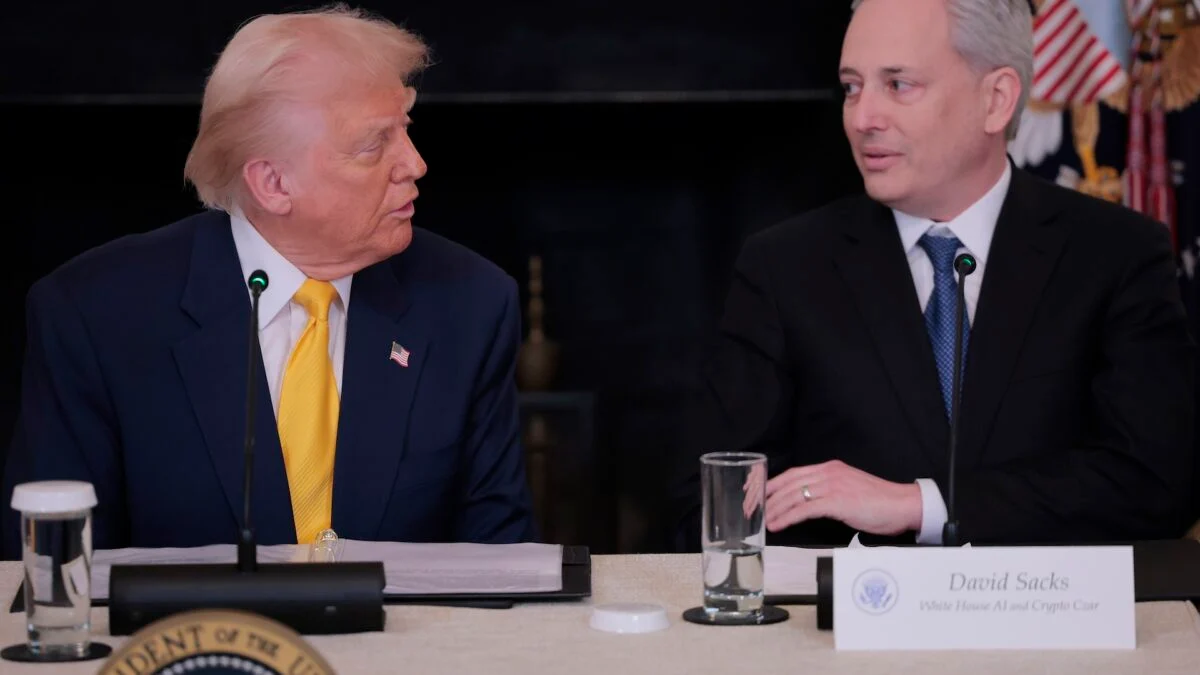
The morning I heard David Sacks describe a scene where Gulf desalination plants burn, I stopped what I was doing. You could feel the scale of the risk shifting from abstract to immediate. I want to walk you through what that means — and why one former speaker suggested detonating nuclear bombs to fix a shipping choke point.
President Donald Trump’s campaign of strikes against Iran has a human and monetary tally that isn’t theoretical: an estimated $16 billion (€15 billion) in early costs, 13 American deaths, and more than 1,300 fatalities inside Iran. On the All-In podcast on March 13, David Sacks — Trump’s AI and crypto adviser — warned that further escalation could move the conflict from oil chokepoints to something far more intimate: water.
Satellite imagery and reporting show damaged desalination plants — and that matters because Riyadh gets most of its water from desal
I heard Sacks lay out the specific risk: Iran could aim at desalination facilities, not just oil rigs. The New York Times has documented incidents; Saudi Arabia relies on desal for roughly 70 percent of its municipal water.
Sacks said the destruction of that infrastructure would “literally render the Gulf almost uninhabitable.” If you hold a map of population centers next to reports of strikes, it’s chilling — the water system that supports millions sits exposed.
The human logic is simple: water shortages become humanitarian crises fast. The Gulf would be a drying sponge, with catastrophic ripple effects on food, power, and migration.
How could Iran target Gulf desalination plants?
They can strike coastal infrastructure with missiles, drones, or sabotage, and mines and harassment at sea make repairs and supply deliveries dangerous. Media blackouts and censorship — reported in outlets such as 972 Mag — complicate verification, so you often learn about damage in fragments.
Commercial trackers and naval reports show mines and attacks in the Strait of Hormuz — and that’s why oil markets are jittery
Vessels and shipping data show Iran has laid mines in the Strait of Hormuz and targeted transits with rockets and drones. About 20 percent of global seaborne oil moves through that corridor.
The market reaction is visible at the pump: the national average for a gallon of gasoline is about $3.71 (€3.50) now, up from $2.90 (€2.73) before the strikes began on Feb. 28, according to AAA. That jump feeds inflation across the economy.
Analysts at CSIS and reporters at NBC say the White House receives options daily, but Trump’s public answer remains the same: “soon.” That ambiguity keeps a risk premium baked into markets.
Will gas prices drop if the U.S. withdraws?
Not necessarily. Markets price future risk and spare capacity, and a withdrawal doesn’t erase mines or Iran’s ability to disrupt transit. A pullback might ease political pressure, but physical and psychological supply shocks can linger.
A public tweet and an old Cold War proposal resurfaced — and that explains how a former speaker suggested nukes for a canal
Newt Gingrich tweeted a single-sentence proposal: cut a new channel through friendly territory with thermonuclear detonations. He linked to a Substack that riffed on Project Plowshare, a real 1950s idea about using nuclear blasts for earth-moving projects.
Instead of fighting over a 21-mile-wide bottleneck forever, we cut a new channel through friendly territory. A dozen thermonuclear detonations and you’ve got a waterway wider than the Panama Canal, deeper than the Suez, and safe from Iranian attacks. https://t.co/Et21kHCiAw
— Newt Gingrich (@newtgingrich) March 15, 2026
The Project Plowshare reference matters because the idea has a paper trail: engineers once proposed using nuclear blasts to dig harbors. Technically conceivable on paper, politically and environmentally catastrophic in practice. A canal built with nukes is a blunt scalpel — it might cut the problem but would scar the region for generations.
Can you build a canal with nuclear bombs?
Historically, governments studied it. Today it would face global legal, environmental, and diplomatic barriers, not to mention radiation, displacement, and economic disruption. The Substack piece Gingrich shared ends with a line about brain cells for a reason.
Daily briefings and pushback from some advisors show unease — and the president is still signaling new theaters of action
David Sacks has been loyal to Trump, yet his warnings are stark. He flagged Israel’s reported retaliatory vulnerability and the possibility of nuclear escalation if the conflict broadens — remarks he made on YouTube and in public interviews.
Other conservative voices pushed for off-ramps; some MAGA fans privately plead for de-escalation. Meanwhile, Trump has publicly said Cuba “is next,” and the president’s comments appeared on BlueSky and other platforms when a U.S. energy blockade left Cuba’s grid in crisis, according to the AP.
Trump: “I do believe I’ll be having the honor of taking Cuba. That’s a big honor. Taking Cuba in some form. I think I can do anything I want with it, if you want to know the truth.”
— Aaron Rupar (@atrupar.com) March 16, 2026 at 2:27 PM
I’ve watched wars begin with confident lines about “soon” and end with stretched supply chains, refugee flows, and geopolitical backlash. You should watch the signals: advisors warning of a nuclear spiral, experts tallying economic fallout, and public figures suggesting impossible engineering fixes. Which of these warnings will force a different course before it’s too late?