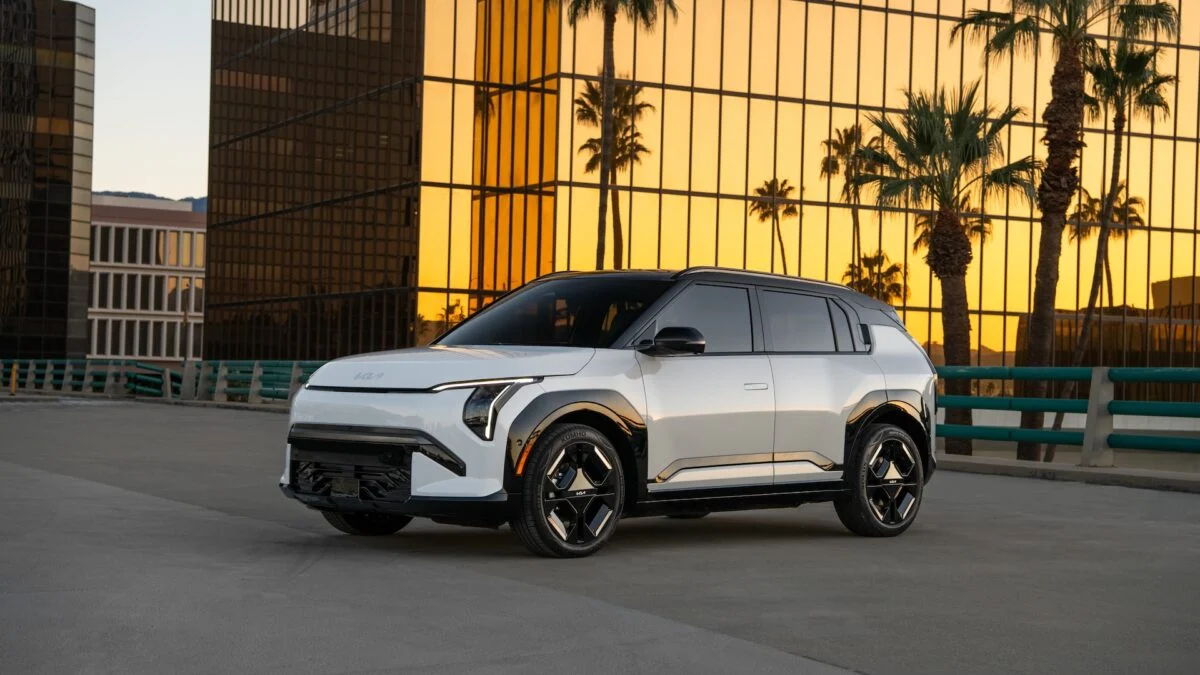
I was under the Kia tent in New York when someone muttered, “By the end of 2026.” You felt the small electric-car market shift a few degrees—hope mingled with hesitation. I’ll tell you what Kia’s EV3 actually brings, and what it means for your next trade-in.
At the New York Auto Show Kia confirmed the EV3 will arrive in the U.S. this year
Kia quietly moved the EV3 onto the U.S. schedule on press day, more than a year after early plans. That delay followed the loss of the $7,500 federal tax credit and a period of tariff and supply swings that reshaped many automakers’ small-EV plans.
The EV3 is pitched against the Chevrolet Bolt and the redesigned Nissan Leaf, and it arrives into a market where thousands of used EVs will likely be traded this year as drivers wrestle with rising pump prices and tighter budgets.
When will the Kia EV3 arrive in the US?
Kia says the EV3 will go on sale by the end of 2026. I’d expect dealer availability to roll regionally—look for metro areas with stronger EV incentives and charging networks first.

At the charging station you’ll notice the EV3 supports Tesla’s NACS port
Kia built the EV3 with native NACS, which reduces friction for buyers used to Tesla Superchargers and third-party networks adopting that plug standard. That’s practical: fewer adapters and more usable fast chargers during a long drive.
The EV3 won’t use an 800-volt architecture like Kia’s EV6 and EV9, but engineers kept charging speed respectable—Kia claims 10% to 80% in about 30 minutes on high-power DC fast chargers.
What range can the EV3 achieve?
Two battery options: a standard 58.3 kWh pack on the base Light model and an 81.4 kWh pack on the rest, including a dual-motor EV3 GT with 288 hp. Kia targets roughly 220 miles for the small battery and about 320 miles for the big-battery versions on EPA tests.
At the dealership you’ll compare price, cargo, and features
Kia didn’t release U.S. pricing at the show, but early estimates hovered around $35,000 (€32,000). That would place the EV3 above some value entries but still within reach for buyers seeking a little more tech and options.
How much will the Kia EV3 cost?
Estimates from the model’s Korean launch put a U.S. starting point near $35,000 (€32,000). For context, the redesigned Nissan Leaf starts at about $31,500 (€29,000) with an EPA figure near 303 miles, while General Motors has returned the Chevy Bolt at roughly $29,000 (€26,500) with a 262-mile EPA estimate and optional SuperCruise.
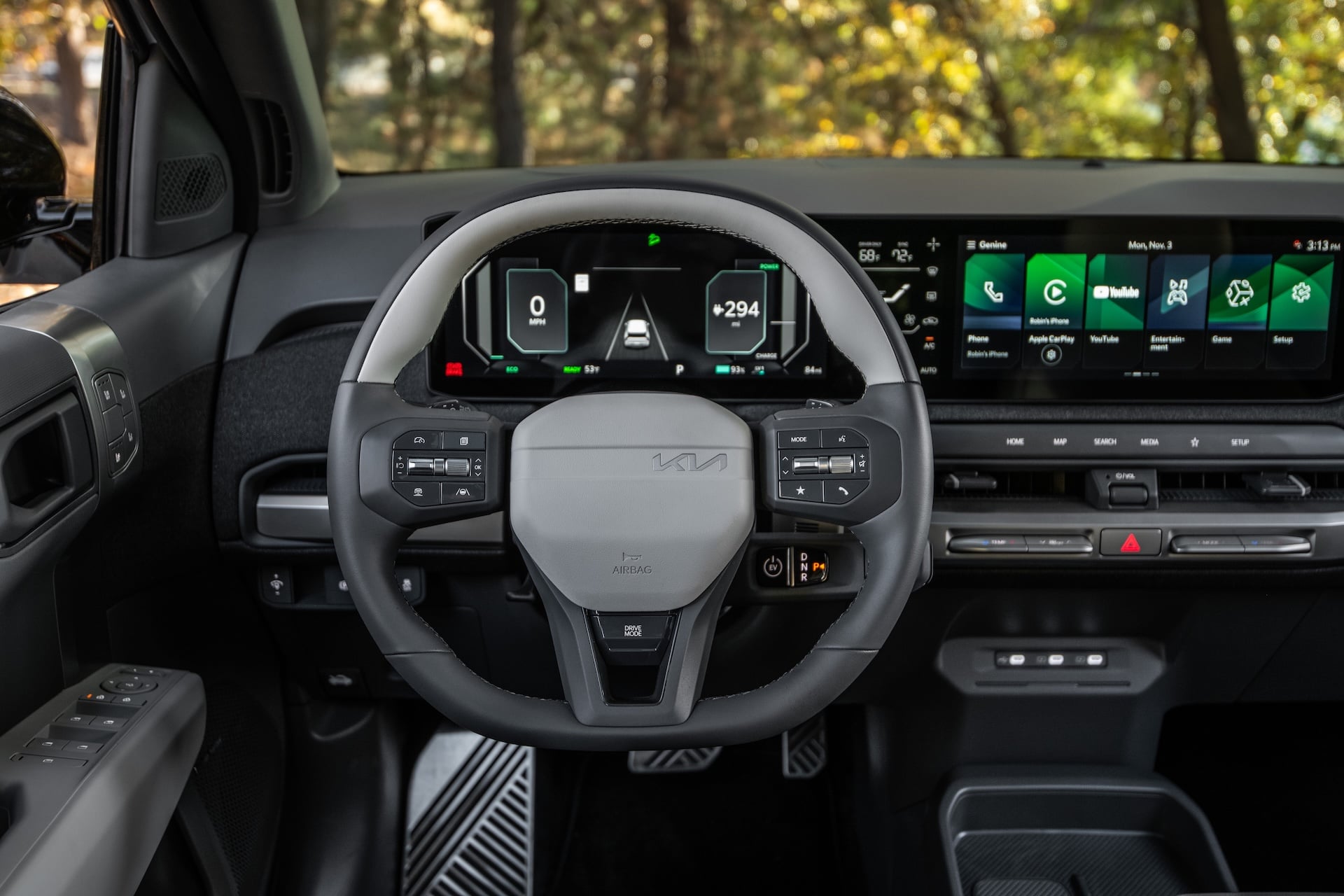
If the EV3 lands near that $35k (€32k) mark, it will trade some range and power for a broader model spread: more cargo behind the rear seats, all-wheel-drive variants, and a performance GT for buyers who want flair without moving up to a larger SUV.
I run an eye over features that matter: two 12.3-inch displays, vehicle-to-load and vehicle-to-home capability that can power tools or keep a house humming during outages, and the Kia Connect app store now carrying Netflix and YouTube for that half-hour charge stop.
The EV3 arrives into a market that’s been reshaped by policy shifts and corporate retrenchment. Volvo pulled the EX30 from the U.S. line after a price cut elsewhere; Honda deferred multiple EV launches and wrote down investments; Kia delayed the sibling EV4 sedan indefinitely. The market is a pressure cooker—and small, affordable EVs have felt the heat.
The EV3 is, in many ways, a Swiss Army knife: compact but offering a surprising range of tools. For shoppers you’ll have to weigh price, real-world range, and the local charger map—Tesla Superchargers, Electrify America, and regional networks will determine how useful that 10–80% claim feels on a three‑state drive.
InsideEVs, EPA estimates, Kia’s own product information, and the renewed availability of the Bolt are the practical data points I’m watching. If Kia prices the EV3 aggressively, it could carve out a niche between stripped-down bargains and larger, pricier crossovers.
So will the EV3 be a practical daily runner, a budget-conscious tech-forward choice, or a niche performer that never finds a mass audience?